Science at Hull

39 Followers
17 Following
28 Posts

Representing staff and students working in science at the University of Hull.

Home of the E.A. Milne Centre for Astrophysics, The Hull International Fisheries Institute, the Chemistry for Sustainability, Health and Smart Materials projects, and Conservation projects in collaboration with The Deep.

Websitehttps://www.hull.ac.uk/faculties/departments/school-of-natural-sciences

What's that you say? You want an undergraduate practical course that teaches #MinION sequencing of the skin microbiome? Here you go:

https://www.biorxiv.org/content/10.1101/2024.07.22.600610v1

#Biology #Hull #microbiome #UKHE

Adejumoke Owolabi, an MSc student working under Dr. Kevin Pimbblet, from Astrophysics and director of the Data, AI and Modelling centre, have created a novel way of detecting generated images by examining reflections in eyes, and got a mention in Ars Technica for their trouble:

https://arstechnica.com/information-technology/2024/07/astronomers-discover-technique-to-spot-ai-fakes-using-galaxy-measurement-tools/

Astronomers discover technique to spot AI fakes using galaxy-measurement tools

Researchers use technique to quantify eyeball reflections that often reveal deepfake images.

Ars Technica

Graduation was yesterday for finalist students in the Faculty of Science and Engineering.

Chancellor Alan Johnson gave a speech of the challenges facing Higher Education after years of neglect by the government, and also specifically praised the work done at Hull on single-use plastics, as part of a collaboration led by Carl Redshaw (Chemistry) and Pauline Deutz (Geography).

https://www.hull.ac.uk/work-with-us/research/institutes/energy-and-environment-institute/our-work/plastics-collaboratory

#Environment #Plastic #Microplastic #HigherEd #Science

Plastics Collaboratory

The Plastics Collaboratory is a diverse team of academics taking a multidisciplinary, holistic approach to the plastics problem.

Tonight, as part of the National Astronomy Meeting, a public talk from two astronauts and scientists, Helen Sharman (UK, Chemistry) and Reinhold Ewald (Germany, Physics).

This included Reinhold, as President of the Association of Space Explorers and having flown over especially, presenting Helen with her Universal Astonaut Insignia: a pin badge, devised only in recent years, awarded to everyone who has flown in space regardless of nationality.

The School's second Postgraduate Research Conference saw research students talk about using neutral networks to make predictions about galaxies, algorithms to detect bat species from audio recordings, nanotechnology to efficiently produce hydrogen, and a keynote from Alicia Heys and Jay Wadhawan on methods to track the impact of modern slavery on the production of key elements and minerals across the world.

#Science #PhD #Biology #Physics #Chemistry #Mathematics

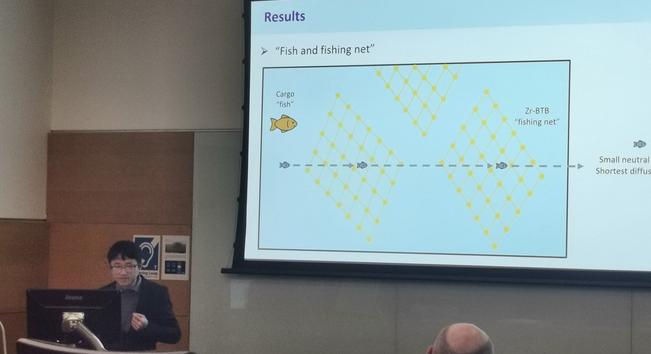
Welcoming Dr Jiangtian Tan, from the University of Sheffield, to talk about metal-organic-nanosheets, which can be used to form gels with water purification applications.

Here, he explains the performance of the gels with a "fishing net" analogy.

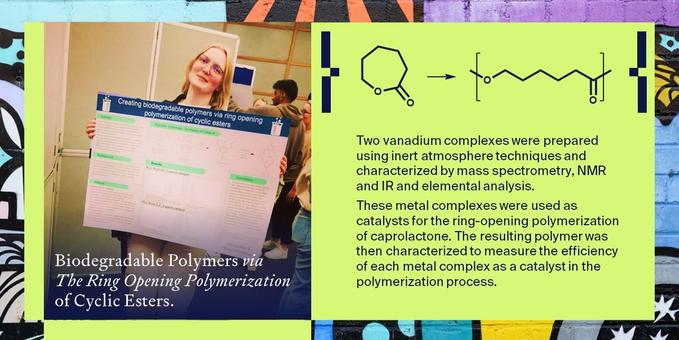
Some of our third-year #Chemistry students are working on catalysts to make biodegradable polymers, and presenting it at the end-of-year Undergraduate Symposium.

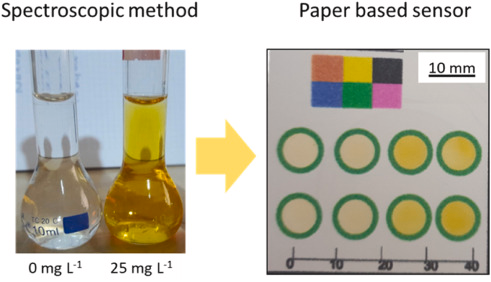
Testing chemicals (especially pharmaceuticals) can be time-consuming and expensive.

Hull's Analytical chemists have had a long interest in paper-based microfluidic reactors, which create reliable tests that are quick and simple to use -- and in some cases can even be analysed using a camera phone. It's well established for detecting phosphate in water sources.

In this paper, the technique has been extended to amoxicillin.

https://www.sciencedirect.com/science/article/pii/S240584402400999X?via%3Dihub

#Chemistry #Biochemistry #Science

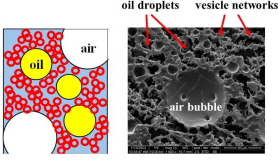
Everyone knows solids, liquids and gases: but you can also mix them to make far more complicated substances.

Gases embedded in liquids are foams.

And if you mix two immiscible liquids you get emulsions.

And if you put those two together, you get... foamulsions!

But these aren't typically stable for very long. One of the aims of the surfactants group, working under Prof. Binks, is to make these structures stable enough to be used in edible products.

https://www.sciencedirect.com/science/article/pii/S0167732222026058?via%3Dihub

#Chemistry

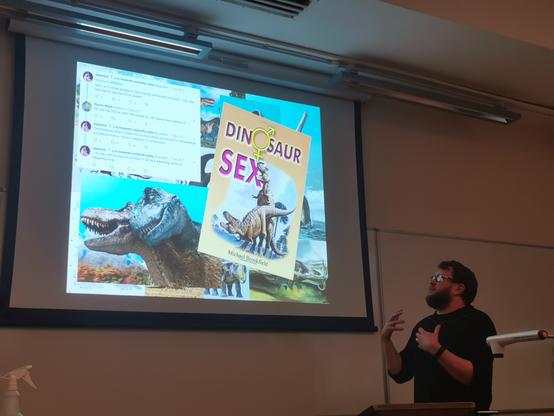
Thanks to Darren Naish (University of Southampton, consultant for Apple TV / BBC's Prehistoric Planet) for today's biological science seminar on reconstructing the lives of dinosaurs by looking at extant phylogenetic bracketing [EPB] -- in words that those outside the Biosciences can understand: "so how do birds and crocodiles do it?"

#dinosaurs #biology #paleontology