And if a layer is not used, we disable its computation, which saves resources and improves performance.,,
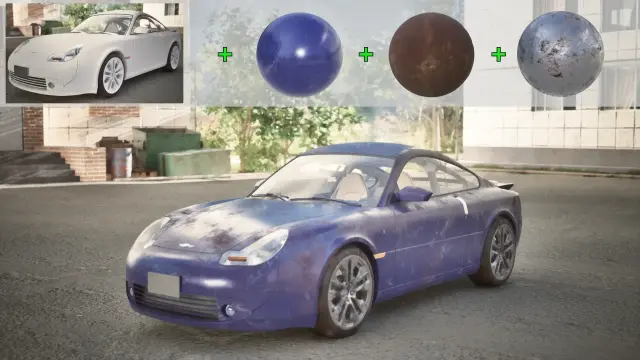
This lets you quickly create beautiful, realistic surfaces, adding details from our library like dirt, rust, and scratches without changing the base material each time. The approach saves time and resources, letting you adjust only what you need - simply and efficiently.
Unreality Layers
Material Layers is a builder for creating complex materials from multiple layers that stack on top of one another.,,
Each layer adds color, texture, or an effect, and we easily control their combination - adjusting order and blending intensity. We configured the material so a layer can be applied to different objects, both with our seamless world material and with an atlas material....
#rendering #material
strength (how pronounced the relief will be) - allowing quick assembly of any variations, from plastic to rusty metal.,,
This approach speeds up the entire development process and opens the door to a multilayer material system, where you can add dust, dirt, and wear effects layer by layer.
Material - with every pixel used as efficiently as possible - instead of dozens of one-off solutions where a unique texture bloats memory, increases project size, and complicates development focus. We use simple yet flexible controls - toggles to add gloss or remove metalness, and intensity parameters that adjust the...
World Scale Matters
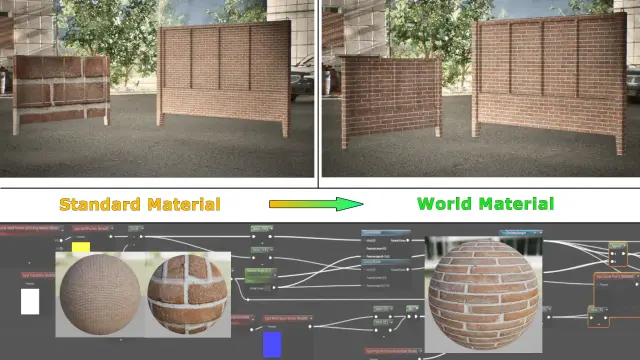
World Material works as a universal, flexible wrapper for static objects, where textures keep a constant scale in world space. No more stretched or tiny texture patterns when scaling a model - they fit properly both on a tiny screw and on a building roof. Any model rotation angle is handled as well.,,
All channels are synchronized with each other (color, height/relief, metalness, roughness), using a single coordinate system and scale.,,
One World...
#rendering #material
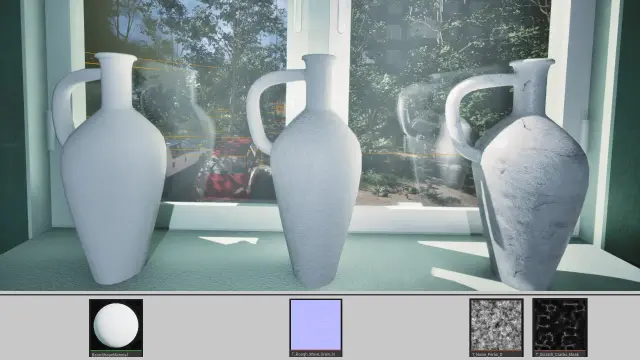
Noise is often used as masks for blending materials and layers (for example, dirt over paint), producing rich, detailed compositions with smooth transitions. Patterns and noise also help fine-tune roughness and normal maps, making reflections and lighting more realistic and less plasticky and flat.,,
In the future, we aim to implement procedural generation and combination of patterns and noise to save memory and improve project performance.
Open-source repository: github.com/fallintodusk/alis
Via material parameters they are easy to tune - adjusting the intensity, scale, and character of patterns and noise - which simplifies making variations and adapting to different objects.,,
Patterns can be combined and layered in multiple passes. Their combinations and scaling create more complex visual effects - for example, metal wear with subtle rust and scratches....
Rhythm and Improvisation
Patterns and noise are foundational tools for creating believable, varied, and efficient materials. They save significant resources because they are not baked into a unique texture, and they also let us build universal materials without a primary object-bound texture.,,
With them, a base material can be quickly modified by layering different patterns, wear, scratches, relief, and other effects without creating new textures....
#rendering #texture
many unique objects is significant project size growth, degraded performance, and increased complexity in controlling and maintaining code and assets.,,
We aim to build a universal and scalable structure based on combining reusable abstractions of materials and meshes.
Mastering Entropy: Embodiments
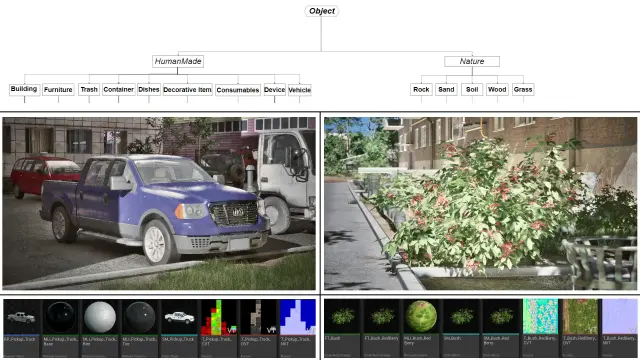
Objects is a repository of grouped game entities with unique identity, placed in the game world.,,
As in Elements, the structure keeps a clear split into Human Made and Nature, each with its own internal hierarchy and subcategories.,,
An object folder contains static or skeletal meshes and, when necessary, unique materials and textures, blueprints, and other relevant assets required to fully describe the object.,,
The main issue with...
#architecture #object