 Charlie Stross
Mad SF/horror concept: Roku's Basilisk. It's a set-top box that downloads any pirate movie you can imagine as long as it doesn't already exist in *our* parallel universe. A certain subset of movies on the Basilisk are amazing—Academy award winning performances from actors who died too young or directors who never got their launch. A smaller but significant subset make you kill yourself or your friends and family.
BitterOldPunk
- 592 Followers
- 249 Following
- 488 Posts
I could tell you, but I’d have to bore you. Fan of tuna noodle casserole and ugly music. Trying to run a Traveller campaign. Tell me about your D&D character.
Fun session of Traveller today. My Monday/Tuesday TTRPG sessions are the highlight of my week.
Alien species from the #Traveller rpg, ranked:
1) Hivers. One of the best alien species in all of science fiction, across all formats. They’re creepy, puzzling, and hideous-looking. They always have fallback plans and secret motives. But they’re also wacky and gregarious and basically benign. Love me some Hivers.
2. Droyne. Little green gremlins who are walking plot hooks. Are they the remnants of the Ancients? Why do they DO [whatever the game master needs done in that moment]? MYSTERIOUS!
3. Aslan. The game goes to great lengths to explain that the Aslan are Emphatically Not Cat People. Everybody plays them as cat people anyway. Meow.
4. Vargr. Dog people, and enthusiastically, canonically so. Corsairs! They travel in packs! Fun for growly role-play.
5. Uplifted Terran Dolphins. Because fuck yeah, talking dolphins. And anti-grav vac suits grow on trees in Traveller, so you can take your dolphin anywhere.
99. K’kree. Militant vegan centaurs. I hate the whole idea of these guys.
 Sumana Harihareswara
Saved @naomikritzer 's new @clarkesworld story "Better Living Through Algorithms" for a quiet Sunday morning https://clarkesworldmagazine.com/kritzer_05_23/ . It's as charming and inspiring as others have said.
In a similar spirit to her "Cat Pictures, Please" short story and Catnet books; also engaging with some of the same ideas as https://www.lightspeedmagazine.com/fiction/maneki-neko/ Bruce Sterling's "Maneki Neko" (a story I find way less engaging) and Neal Stephenson's "The Diamond Age".

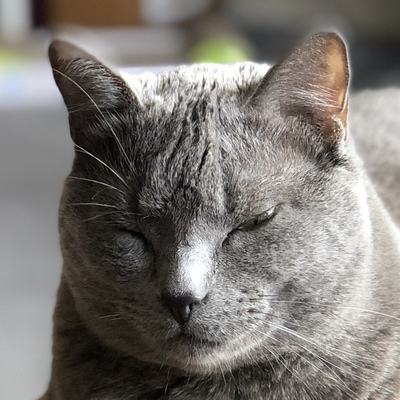
Because I failed to feed the cat on his preferred breakfast schedule, he has retreated beneath the bed to sulk, ignoring the food I subsequently offered, which will sit uneaten until he deems it lunchtime, at which point he will emerge to sniff at it and deem it insufficiently fresh.
Then he will get in my face all Pity Kitty and howl because I am a vile and despicable starver of cats.
What a manipulative asshole. Good thing he’s cute.
Woke up at 4:20 this morning then waited 69 seconds to get out of bed so my day would have a nice start
My podcast app says I’ve listened to all the unplayed episodes of every podcast to which I’m subscribed. That’s never happened before. Only took two and a half years of driving a delivery van to accomplish.
Trump will never pay one penny of that $5 million settlement. Although, as he is utterly venal and colossally stupid, we can always hope he tries to use campaign funds to pay it and thus commits yet another federal crime…
I asked ChatGPT to review Applebee’s riblets in the style of Kant’s “Critique of Pure Reason”. It refused to condemn the riblets as a moral abomination, and instead indulged in sophomoric equivocation. Stupid AI, too ignorant to hate on Applebee’s riblets:
“… (W)hile our experience of the riblets is grounded in sensory perception, our understanding of them is shaped by mental categories and universal principles. Ultimately, our judgment of the riblets must be based on a careful analysis of both their sensory qualities and our own cognitive frameworks.”
 jared
jared“People who criticize new technologies are sometimes called Luddites, but it’s helpful to clarify what the Luddites actually wanted. The main thing they were protesting was the fact that their wages were falling at the same time that factory owners’ profits were increasing, along with food prices. They were also protesting unsafe working conditions, the use of child labor, and the sale of shoddy goods that discredited the entire textile industry. The Luddites did not indiscriminately destroy machines; if a machine’s owner paid his workers well, they left it alone. The Luddites were not anti-technology; what they wanted was economic justice. They destroyed machinery as a way to get factory owners’ attention. The fact that the word #Luddite is now used as an insult, a way of calling someone irrational and ignorant, is a result of a smear campaign by the forces of capital.”
Ted Chiang in the New Yorker.