
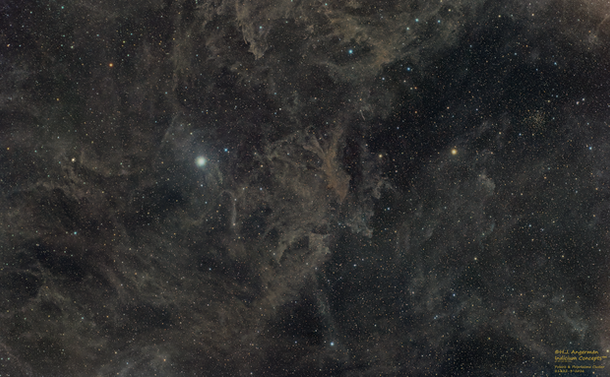
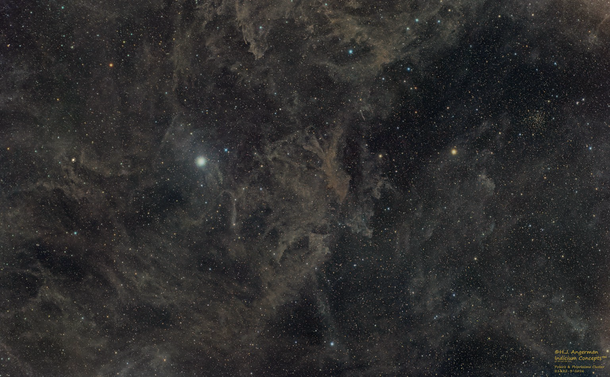
🔭 Hobby update! Polaris & NGC 188
Polaris: the North Star.
For centuries, the fixed point in the sky used for navigation. Reliable, constant… almost boring, until you look a bit deeper.
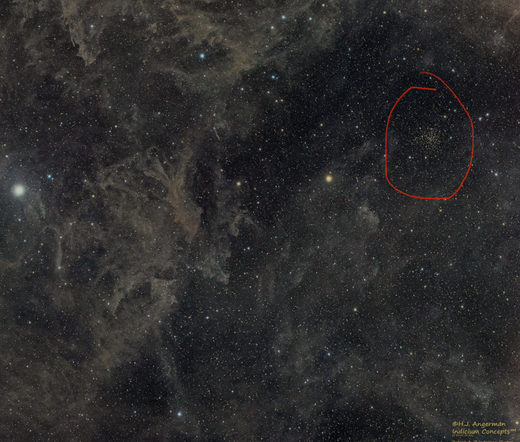
In the same field lies NGC 188, one of the oldest known open clusters in our galaxy (~6–7 billion years old), quietly orbiting the Milky Way while Polaris guided travelers on Earth.
But what makes this region really challenging is something far more subtle: IFN (Integrated Flux Nebula). The dust part.
This faint, dusty structure is not illuminated by nearby stars, but by the combined light of the entire Milky Way. It’s extremely dim, easily drowned by light pollution, and requires careful processing to even reveal.
A guiding star, an ancient cluster… and barely visible interstellar dust connecting it all. Insane, isn’t it?
Technically one of the more challenging fields I’ve captured; not because of complexity, but because of how little signal there actually is. And ok; framing and alinging, and keeping track is … complicated, if you know. You know. Aligning on Polaris is like aiming at a coin from tens of kilometers away; we do that before every shoot.
But there’s always more in the frame; if you push the data far enough and keep track on an asset that basically doesn’t move. 😬
Technical:
• Telescope: William Optics MiniCat 51
• Camera: ASI2600MC Pro
• Filter: Baader Sky & Moon 2”
• Mount: AM3


 Have I Been Pwned
 TheHackerWire