“The reply took and the closure of the ticket took half an hour or so. The reasons behind it took five hundred years to pile up, and they involve a twice-mutilated vizier, a Qurʾān that vanished for four centuries, a Beirut newspaperman with a deadline, and an Egyptian physician who taught himself font engineering for fun (or that what I imagine about him). Walking through these, ended up to be the most enjoyable couple of weeks in that job, and I want to go through it here too.”

I haven't read this yet, but how could I not?

https://lr0.org/blog/p/arabic/

An interactive introduction to the terrific experience of rendering Arabic typography and its technical debt

This post was discussed in Lobsters and HackerNews

La Vita Nouva

This article on Arabic script typesetting and justification is turning out even better than I had hoped.

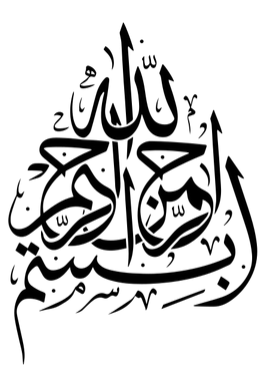
“My favourite resident of the block, and one of my favourite characters in all of Unicode, is U+FDFD, ﷽ : four-word invocation, bismillāh ar-raḥmān ar-raḥīm, as a single codepoint. A monument from the era when rendering was baked into the encoding because nobody trusted the renderer to do anything, preserved forever, like a fly in amber that recites.”

https://lr0.org/blog/p/arabic/

This character is amazing. Here's the glyph for it on my Android phone. I spent a fun fifteen or thirty minutes figuring out how it was composed. “Bismillah”, it transpires, is a contraction of “bismi Allah” (“in the name of God”), and in this one the "bismi" starts at farthest right and runs all the way through the tall part of the "ar-" in "ar-raḥman", with the ‘m’ part over on the left, and the mim's hanging final tail joining up with the ‘n’ of raḥman.

The "Allah" part is atop that, in the middle.

When I first wrote that I mixed up left and right because I was reading starting from the right and ending at the left (as one does in Arabic) and apparently my brain insists that ‘left’ means the beginning of the line, and “right” means the end of the line, regardless of which way the script actually goes.

Here's the version that is rendered by Firefox on my desktop computer. This time it's all one one line, with the four words clearly separated.

The rightmost at the beginning of the line is “bismi”, with a long swash in the middle, bis—mi. Next is “Allah”, then “ar-raḥman” and finally “ar-raḣim” with another long swash, “ar-ra—ḥim”.

(That might be easier to make out if you know that the actual spelling of “ar-raḥim” is “al-raḥim” but the ‘l’ is pronounced like ‘r’ when it appears before an ‘r’; same for “ar-raḥman”.)

Why the long swashes? I don't know.

The morphology of “bismillah” is interesting too, at least to a person like me who knows next to nothing about Arabic.

Words in Semitic languages like Arabic and Hebrew have a root, which is a group (usually a triple) of consonants. Then one varies the vowels to get different variations on the root meaning. So for example the root s-l-m pertains to peace, surrender, or submission. From this we have salām (سَلَام), “peace”, akin to Hebrew “shalom”, and ”Islam” (أسلم) “surrender [to God]” and “Muslim” (مسلم) “one who surrenders”, where the “mu-” prefix makes the verb into a noun.

With “bismi” the root is s-m-w and pertains to names. So “ism” (اسم) means a name (I think the ‘w’ part of the root got lost somewhere between proto-Semitic and Arabic) and adding the “b-” prefix (“in”) gets us “bismi” (بِاسْمِ), “in the name of”.

Note: As I said I know next to nothing about Arabic, so probably at least 30% of this is wrong, and I quail with dread at the inevitable replies pointing out my many mistakes. Nevertheless, please bring it on.

Now I have an exciting new evening activity: take something like this, which says “bismi Allah al-Raḥman al-Raḥim” and figure out _how_. There must be 19 letters, but where are they exactly?

The Wikipedia page has a dozen or two of these puzzles, and there must be thousands more.

https://en.wikipedia.org/wiki/Basmala#Gallery

Apparently the Bahá’í say something about how the year is not 360 + 5 days, it is 361 + 4 days, because 361 = 19² and there are 19 letters in the basmala, in words of 3+4+6+6 letters, so that the year should be understood as four sections of 3×19 + 4×19 + 6×19 + 6×19 days respectively.

I need to look into this more carefully.

@mjd the 19 thing is a whole other can of worms... (so much that it's almost a meme now) https://en.wikipedia.org/wiki/Quran_code
Quran code - Wikipedia

@mjd In Chinese culture the 19x19 grid points of a Go board have been said to represent the days of the year: https://link.springer.com/chapter/10.1007/978-981-97-4511-1_38
Weiqi: A Game of Wits

Weiqi (go) is an important board game with origins in China from more than 4,000 years ago. It was introduced to the Korean Peninsula and Japan over 1,000 years ago and has since become a favorite pastime of many people there. Today, weiqi still serves...

SpringerLink
@mjd it’s also fun to decode square kufic lettering
@mjd These are read from down up, but the name of God is always put on top regardless of the reading order. It is also a really bad calligraphy (computer generated/assisted). Any calligrapher worth their salt would not distribute the alifs so randomly or do this twisted lam-reh-hah thing.
(For the people who might have noticed already: yes, it's the same "Bismillah" that was used in Queen's "Bohemian Rhapsody".)

@mjd This was a bad form of the basmala, that we eventually fixed in Noto Naskh Arabic, but Android hasn’t updated its Noto fonts in ages (which is funny, given that Android is the reason Noto fonts exist at all).

Edit: the image below is the fixed version.

@khaled Bad how?
@mjd Everything, the uneven overall shape, the bizarre fusion of the letters, the lost reading order for no good reason (it is not a calligraphic artwork), and the fact it is unsuitable for the purpose this codepoint exists for (as an opening sentence in documents).

@khaled Thanks! Can you tell me: when you said "this" was a bad form, did you mean the "this" from https://mathstodon.xyz/@mjd/116748713103195512 or "this" from https://mathstodon.xyz/@[email protected]cial/116751032725791630 ?

If it's the first one I think I understand what you mean about the reading order and the fusion of the letters, but if it's the second one I do not.

@mjd Sorry if I wasn’t clear. The one I posted is the fixed version that Android does not have yet.
@mjd There are a few multi-word Arabic phrases like that in Unicode. I terestingly, though, for one of them, at work we noted that Mac and Linux render that glyph completely differently and both are "correct". (I forget which one; I don't think it was that one.)
@mjd It was that one, actually.