“The reply took and the closure of the ticket took half an hour or so. The reasons behind it took five hundred years to pile up, and they involve a twice-mutilated vizier, a Qurʾān that vanished for four centuries, a Beirut newspaperman with a deadline, and an Egyptian physician who taught himself font engineering for fun (or that what I imagine about him). Walking through these, ended up to be the most enjoyable couple of weeks in that job, and I want to go through it here too.”

I haven't read this yet, but how could I not?

https://lr0.org/blog/p/arabic/

An interactive introduction to the terrific experience of rendering Arabic typography and its technical debt

This post was discussed in Lobsters and HackerNews

La Vita Nouva

This article on Arabic script typesetting and justification is turning out even better than I had hoped.

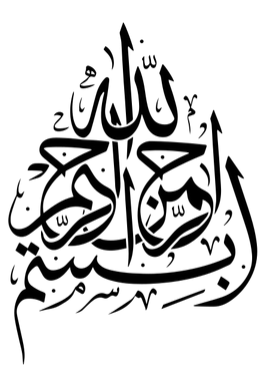
“My favourite resident of the block, and one of my favourite characters in all of Unicode, is U+FDFD, ﷽ : four-word invocation, bismillāh ar-raḥmān ar-raḥīm, as a single codepoint. A monument from the era when rendering was baked into the encoding because nobody trusted the renderer to do anything, preserved forever, like a fly in amber that recites.”

https://lr0.org/blog/p/arabic/

This character is amazing. Here's the glyph for it on my Android phone. I spent a fun fifteen or thirty minutes figuring out how it was composed. “Bismillah”, it transpires, is a contraction of “bismi Allah” (“in the name of God”), and in this one the "bismi" starts at farthest right and runs all the way through the tall part of the "ar-" in "ar-raḥman", with the ‘m’ part over on the left, and the mim's hanging final tail joining up with the ‘n’ of raḥman.

The "Allah" part is atop that, in the middle.

Now I have an exciting new evening activity: take something like this, which says “bismi Allah al-Raḥman al-Raḥim” and figure out _how_. There must be 19 letters, but where are they exactly?

The Wikipedia page has a dozen or two of these puzzles, and there must be thousands more.

https://en.wikipedia.org/wiki/Basmala#Gallery

Apparently the Bahá’í say something about how the year is not 360 + 5 days, it is 361 + 4 days, because 361 = 19² and there are 19 letters in the basmala, in words of 3+4+6+6 letters, so that the year should be understood as four sections of 3×19 + 4×19 + 6×19 + 6×19 days respectively.

I need to look into this more carefully.

@mjd the 19 thing is a whole other can of worms... (so much that it's almost a meme now) https://en.wikipedia.org/wiki/Quran_code
Quran code - Wikipedia

@mjd In Chinese culture the 19x19 grid points of a Go board have been said to represent the days of the year: https://link.springer.com/chapter/10.1007/978-981-97-4511-1_38
Weiqi: A Game of Wits

Weiqi (go) is an important board game with origins in China from more than 4,000 years ago. It was introduced to the Korean Peninsula and Japan over 1,000 years ago and has since become a favorite pastime of many people there. Today, weiqi still serves...

SpringerLink