 Jesse Spielman
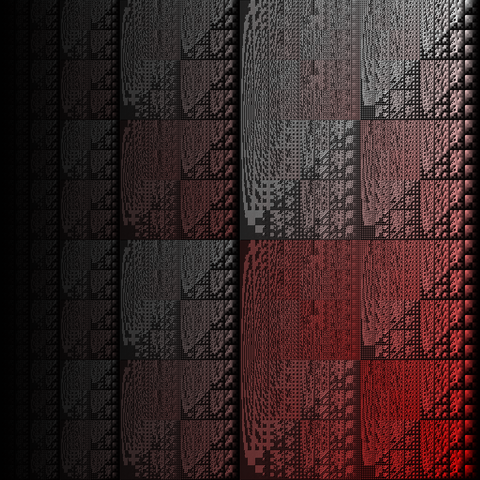
Some tinkering inspired by @bitartbot ; first art thing in a long while. Feels nice to be a bit creative again.
#generative #generativeart #proceduralart #noai #processing #ps5


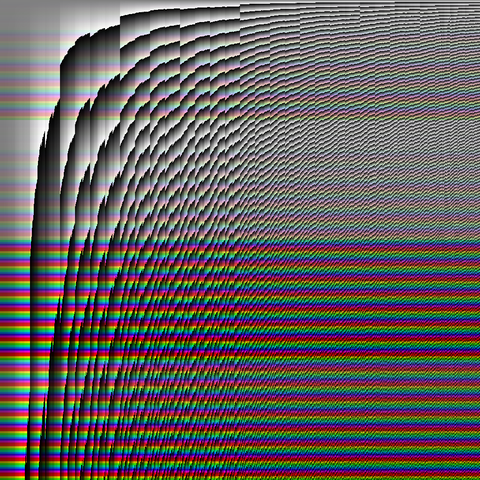
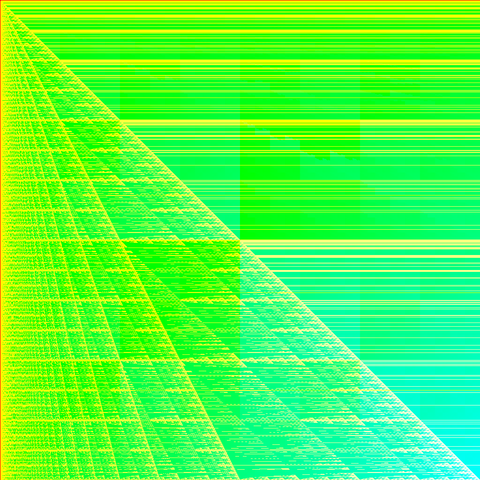
Some tinkering inspired by @bitartbot ; first art thing in a long while. Feels nice to be a bit creative again.
#generative #generativeart #proceduralart #noai #processing #ps5
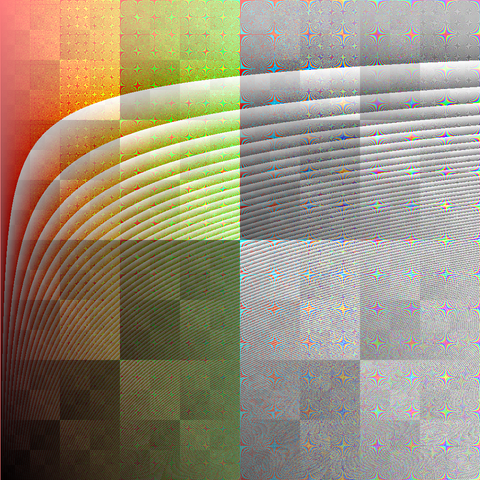
@bitartbot I'm going to bed now but one more cool one (zoom in!).
red: f(x, y) = (x & (x + (((((4 | 14) * (y | y)) * x) + (y & x)) + (x & (x | (x - x))))))
green: f(x, y) = ((x & (x % x)) | (y * ((y * y) * x)))
blue: f(x, y) = (((-11 | (y + ((x & (y & 1)) * x))) | (((-5 + -1) | ((y - ((x % y) % x)) | (x | x))) % x)) + (x - (y | x)))
@compfu Got a simple version of this working -- so satisfying:
f(x, y) = ((((floor(tan(tan(-1))) % sin(cos(2))) % tan((x ** ~(1)))) | (((y | sin(-2)) // (x + ((1 | y) / ((floor(floor(-1)) // floor(-1)) * floor(max(((min(-(x), 0) ** floor(1)) ** y), (y ** y))))))) ** ~(-1))) % -2) (length: 217!)
SIMPLIFIES to:
f(x, y) = (((-0.005818788 % tan((x ** -2.0))) | (((y | -0.034899496) // (x + ((1 | y) / (NaN * floor(max(((min(-(x), 0) ** 1.0) ** y), (y ** y))))))) ** 0.0)) % -2) (length: 164!)
 Stefan Ihringer