
'Love without trust is the definition of an abusive relationship.'

That resonat with me—and it might explain why I stopped using smartphones.

I couldn’t pinpoint exactly why they made me feel uneasy, but I think I understand now. Years ago, I carried a work phone in a corporate environment where it had to be always on. The constant external pressure was exhausting. When I finally abandoned mobile phones altogether, I felt relieved. But comparing smartphones to abusive relationships crystallized something I’d been struggling to articulate: the erosion of autonomy, the constant surveillance, the feeling of being controlled.

Phones are addictive, creepy, and surprisingly political. Thanks to @pluralistic, I came across a brilliant feminist analysis by @mariafarrell that connected surveillance capitalism to gendered power dynamics—showing how these systems target and manipulate users in ways similar to how patriarchy itself operates. It’s a reminder that feminism offers practical insight into broader societal problems, but it can be extremely illuminating when applied to technology—and one day, maybe even help us build tech we can actually trust.

https://conversationalist.org/2019/09/13/feminism-explains-our-toxic-relationships-with-our-smartphones/ It’s worth reading.

#TechAbuse #DigitalRights #FeministAnalysis #SurveillanceCapitalism #DigitalAutonomy #TechAndGend #FeministTech #DigitalWellbeing

@debby @pluralistic @mariafarrell you may mean...
" Love with fear based control means an abusive relationship "

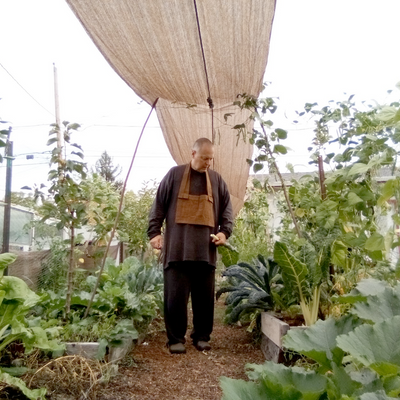
@debby @pluralistic @mariafarrell I choose to spend a lot of time on my laptop as I'm active in Zoom-based sangha leadership. But the garden and the daily walk beckon and I can tear myself away easily enough, because the session ends relatively cleanly. I say "relatively" because Zoom has become an invasive data-scraping AI-promoting monster over time. I'd switch to Jitsi Meet but it's owned and I suspect the owner of data scraping as well. "Sign in with Google." Nahh.

Meanwhile, on my walk I carry a phone for safety (heart trouble). It's a clamshell. I've made almost no calls on it (no heart attack yet), and no one calls me. The views of flower-laden yards I'm passing along my way, and chats with the numerous front-yard gardeners, are becoming my great and unencumbered pastime.

@shonin
This is a really interesting tension you're describing, and it sounds like you're finding a great balance between your online and offline activities. I love that you're enjoying your daily walks and chats with fellow gardeners!

I totally understand why you'd be hesitant about Jitsi Meet with the 'Sign in with Google' option—Jitsi uses Amplitude and Datadog analytics, which are invasive. There are several privacy-focused Jitsi instances that don't require Google sign-in: meet.greenhost.net, jitsi.hamburg.ccc.de, and visio.colibris-outilslibres.org are a few I like to use. There's a more comprehensive list here: https://framatalk.org/abc/en/info

Self-hosting is also worth considering. Jitsi is relatively straightforward to run on your own hardware or cloud, though I'll admit I haven't personally hosted it. I have had good experiences self-hosting other options:

- BigBlueButton: Reliable for larger groups (hundreds of participants), but requires stable symmetric internet.

- Nextcloud Talk: Simple for small groups (5–15 callers), though it can be buggy and larger calls can be problematic.

It's more friction than Zoom, sure, but sometimes friction is worth it.

I'm also genuinely curious about the sangha itself—is that a Buddhist practice? I find Buddhism attractive in general, but I'm terribly lacking in knowledge about it. If you'd be open to sharing insights or pointing me toward good sources to go deeper, I'd be very grateful (if that's not too intrusive!). I'm interested in how your community navigates technology questions. Does your sangha have conversations about these platform issues? It seems like the kind of community that might care, given the intentionality you're already showing.

Does the sangha shape how you think about technology generally?

Framatalk - Videoconferencing

Videoconferencing

@debby @pluralistic @mariafarrell Very interesting take. I was on board until it suggested using machine learning models to automate sharing of data...but that lost me a bit. How much do you really need to share? Feels like anything that's shipping out so much of your data that you can't even keep track of it all is still pretty abusive!

Hi @admin,

I didn't understand the article that way at all, and I think there might be a misreading of what @mariafarrell's actually proposing here.

Her entire piece argues that smartphones should minimize data sharing with third parties. She's explicit: a trustworthy phone "wouldn't share our data with random companies." That's the core of her vision. So the concern about "shipping out so much of your data that you can't even keep track of it" seems to contradict her stated argument, not align with it.

I suspect the confusion comes from this phrase: "it would use machine-learning to understand and enact what we want, **instead of to manipulate us into serving others first.**" The key word here is "instead"—Farrell's contrasting two different uses of machine learning.

When she talks about automating data access, she's not talking about automatically sharing more data. She means the phone learning your preferences and respecting them without constantly interrupting you—much like how voice-to-text software learns to transcribe your voice more accurately over time, or how a personal assistant gradually figures out what you like without needing constant instructions.

And right after that, she addresses the friction concern directly: the phone "would give access to our data as and when we wanted, but also not bug us too much with opt-ins." I get why that matters—GDPR cookie popups are exhausting, and most people just click "yes" rather than make informed choices. But that's different from untrackable sharing. She's describing a system that *reduces friction* while *preserving control*, not one that hides what it's doing.

So I'd gently push back: I think "using machine learning models to automate sharing of data" is a bit of an overreading. Farrell's proposing using machine learning to *protect* user interests, not to enable indiscriminate data leakage. That distinction matters—and it seems pretty aligned with what you're describing too, at least as long as there's a clear opt-out option.

Does that land differently?
@pluralistic

@debby @mariafarrell @pluralistic That is absolutely how I understood the article. But things like those GDPR cookies banners are only necessary because these websites choose to consume as much data as possible for the purpose of selling that data. If we had tech designed to serve us rather than the capitalists, you wouldn't need machine learning models to handle those cookies because they would not exist. Those data harvesting ad networks are only profitable and only worth creating because so many peoples' devices are explicitly designed to enable them.

I don't want some automated system guessing what information I want to share. I want a default deny until I give explicit consent. I'd only be giving that consent one or two times a week, so that wouldn't be a heavy burden even if it takes a few extra taps to do it. You don't need machine learning models to just say no, which is the correct response 99% of the time. There should absolutely never be such a torrent of personal data flooding out of my device that I need automated systems to help manage it all.