RE: https://bsky.app/profile/did:plc:o6lyhdte6gtwvkcdnrhm5doj/post/3mmtjdjsfoc2j
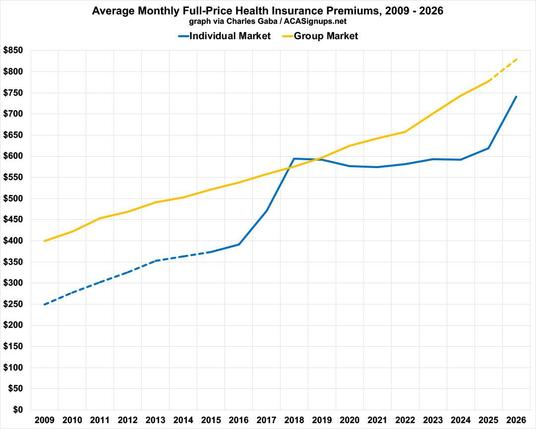
Which costs more: Employer-Bas...

Some Guy, January 2026: So, what does this mean for monthly effectuated enrollment this year? Well, it's pretty safe to say that it's not going to look anything like the ePTC years [ie, 2021 - 2025]; in fact, at least a half-dozen state-based ACA exchanges have posted press releases warning that they're already seeing record levels of plan cancellations. Instead, it seems pretty clear that the pattern is much more likely to resemble one of the NON-ePTC years. Here's what it would look like if effectuations in 2026 follow the exact path of those years... ...Depending on which year it mimics, average 2026 effectuations will range somewhere between 18.2 million - 20.9 million per month. If so, this would mean anywhere from 1.4 - 4.1 million fewer exchange enrollees than 2025. ...Of course it's also conceivable that the actual 2026 pattern won't resemble any of these; it could be higher or lower. Personally, I suspect it will be lower, with a steeper drop-off in the first quarter of the year, followed by more gradual attrition as the rest of 2026 passes by.

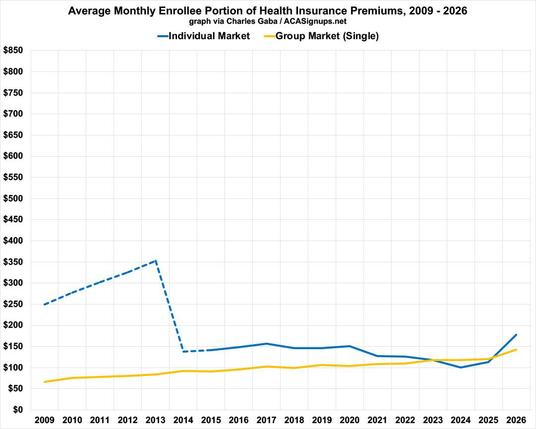
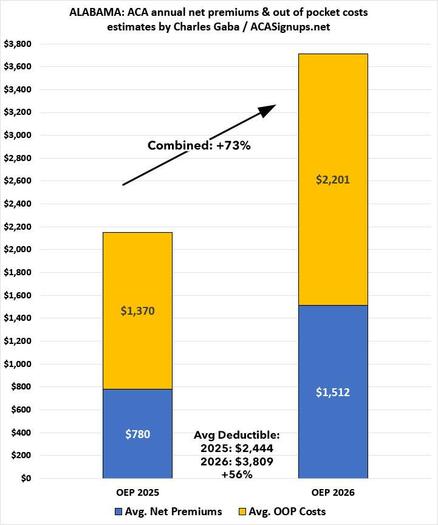
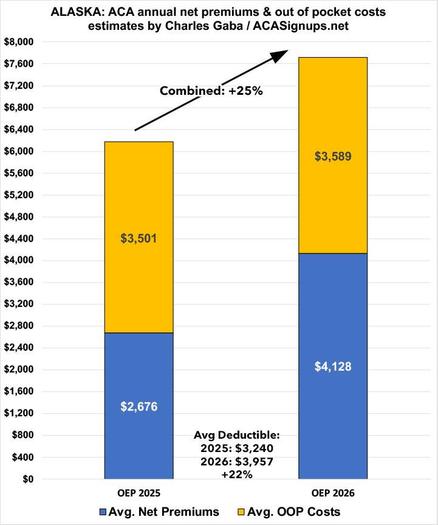
Regular readers know that I've been obsessing over the massive increases in both gross as well as net premiums for ACA health insurance policy enrollees being caused by the combination of Congressional Republicans allowing the enhanced federal tax credits to expire as well as other Trump Regime policy changes for well over a year and a half now. I've written countless analyses of how much both gross and net premiums skyrocketed from 2025 to 2026 across different states, different income levels and various other demographics...and last week it was revealed that over 3 million ACA exchange enrollees had already been priced out of the market as of April, with the number almost certain to climb further throughout the rest of 2026. As I've repeatedly warned, however, the increases in premium costs (whether gross or net) are only half the story. The other big shoe which is dropping this year is increased out of pocket costs as millions of the ~19.2 million or so remaining enrollees as of April have been forced to downgrade their coverage to avoid (or at least minimize) those massive premium spikes. In most cases this means moving to plans with higher deductibles, higher co-pays & higher coinsurance costs.