Thanks to @[email protected] for properly quoting and citing me in his new story. FWIW, our conversation was the inspiration for this post of mine which compares increases in individual market premiums vs. employer-sponsored insurance: charlesgaba.substack.com/p/which-cost...

RE: https://bsky.app/profile/did:plc:o6lyhdte6gtwvkcdnrhm5doj/post/3mmtjdjsfoc2j


Which costs more: Employer-Bas...
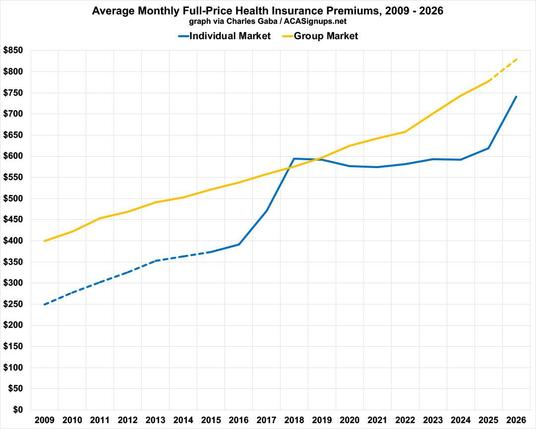
Short version: Prior to the #ACA, individual market health insurance premiums were indeed far lower on average than *unsubsidized* employer sponsored insurance. HOWEVER, most of that was because pre-ACA, indy insurance generally *didn't include any protections or coverage requirements.*
Before the ACA, indy market carriers could cherrypick enrollees & deny coverage to anyone they deemed too expensive to treat (ie, those w/"pre-existing conditions") which could include anything from cancer down to acne (yes, acne). Once they actually had to start *covering sick people*....
...premiums understandably started to rise quickly...but STILL cost LESS than average employer-sponsored insurance (ESI) premiums up until 2018. Even then, the *reason* ACA premiums pushed higher than ESI was due to a specific action taken by the Trump 1.0 admin to stop reimbursing CSR expenses.
After 2018, however, avg unsubsidized ACA premiums actually *dropped* or remained even for the next 6 years...and they only shot up dramatically *this* year...due almost entirely to Trump 2.0/GOP actions/lack of action, including...
--Letting the enhanced subsidies expire --Redefining the formula for the non-enhanced subsidies to make them even less generous still --Denying eligibility to most *documented* immigrants (ie, those who've done everything the proper, legal "right" way)
All of this is about *unsubsidized* premiums in both the individual (ACA) and ESI market, however. What about *subsidized* premiums--that is, what you, the enrollee, actually has to pay? Well, as much as Republicans try to deny it, the truth is that ESI insurance is ALSO heavily subsidized.
Employer-paid insurance is exempt from both federal income and payroll taxes, as is the portion of the premiums paid by the employee. The ESI tax exclusion is the single largest subsidy in the U.S., costing over $300 BILLION per year in federal revenue. taxpolicycenter.org/briefing-boo...

How does the tax exclusion for...
How does the tax exclusion for employer-sponsored health insurance work?

Tax Policy Center
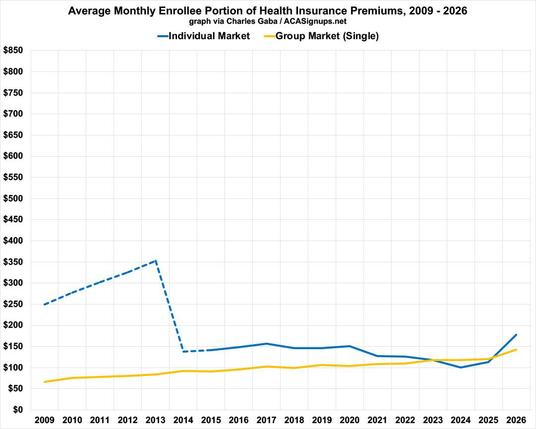
Here's avg *NET* premiums actually paid by the enrollees ("Group Market" = ESI). Pre-ACA, indy mkt enrollees actually paid far MORE on average for far worse insurance, because it was completely unsubsidized. From 2014 - 2020, ACA subsidies dramatically reduced the gap...but they still paid more.
In 2021, Pres. Biden & Congressional Dems beefed up the ACA subsidies, bringing them up to the level they should have been in the first place...and lo & behold, avg. subsidized net premiums reached parity with net ESI premiums! ...until this year, of course, when those enhanced subsidies expired.
Result: AT LEAST 3 million Americans have already been priced out of the ACA market entirely (likely far more by the end of the year). acasignups.net/26/05/12/bre...

Breaking: CMS admits over 3.0 ...
Breaking: CMS admits over 3.0 MILLION have already lost ACA coverage so far this year

Some Guy, January 2026: So, what does this mean for monthly effectuated enrollment this year? Well, it's pretty safe to say that it's not going to look anything like the ePTC years [ie, 2021 - 2025]; in fact, at least a half-dozen state-based ACA exchanges have posted press releases warning that they're already seeing record levels of plan cancellations. Instead, it seems pretty clear that the pattern is much more likely to resemble one of the NON-ePTC years. Here's what it would look like if effectuations in 2026 follow the exact path of those years... ...Depending on which year it mimics, average 2026 effectuations will range somewhere between 18.2 million - 20.9 million per month. If so, this would mean anywhere from 1.4 - 4.1 million fewer exchange enrollees than 2025. ...Of course it's also conceivable that the actual 2026 pattern won't resemble any of these; it could be higher or lower. Personally, I suspect it will be lower, with a steeper drop-off in the first quarter of the year, followed by more gradual attrition as the rest of 2026 passes by.

ACA Signups
Result #2: Most of the 19 million Americans who *haven't* lost ACA coverage are paying through the nose to keep it in both much higher net premiums *and* much higher out of pocket expenses. acasignups.net/26/05/19/new...

NEW SERIES: How much more are ...
NEW SERIES: How much more are ACA enrollees *really* paying due to Trump/GOP policies this year? (first up: Alabama)

Regular readers know that I've been obsessing over the massive increases in both gross as well as net premiums for ACA health insurance policy enrollees being caused by the combination of Congressional Republicans allowing the enhanced federal tax credits to expire as well as other Trump Regime policy changes for well over a year and a half now. I've written countless analyses of how much both gross and net premiums skyrocketed from 2025 to 2026 across different states, different income levels and various other demographics...and last week it was revealed that over 3 million ACA exchange enrollees had already been priced out of the market as of April, with the number almost certain to climb further throughout the rest of 2026. As I've repeatedly warned, however, the increases in premium costs (whether gross or net) are only half the story. The other big shoe which is dropping this year is increased out of pocket costs as millions of the ~19.2 million or so remaining enrollees as of April have been forced to downgrade their coverage to avoid (or at least minimize) those massive premium spikes. In most cases this means moving to plans with higher deductibles, higher co-pays & higher coinsurance costs.

ACA Signups
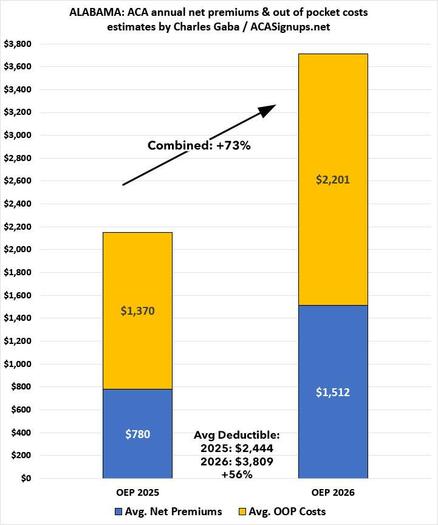
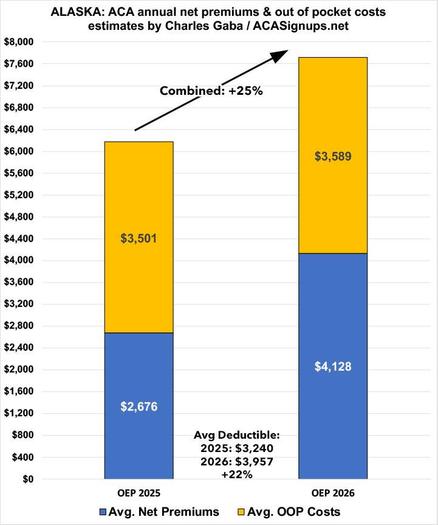
In ALABAMA, avg net premiums have nearly DOUBLED & avg out of pocket (OOP) costs have shot up 60%. In ALASKA, avg net premiums are now over $4,100/yr. charlesgaba.substack.com/p/how-much-m...
In ARIZONA, combined net premiums & OOP costs are up 87% vs. last year. In ARKANSAS they're up 51%...and would be up much more if state officials hadn't instituted robust #PremiumAlignment pricing. charlesgaba.substack.com/p/how-much-m... charlesgaba.substack.com/p/how-much-m...

🚨 How much more are ARIZONA AC...
🚨 How much more are ARIZONA ACA enrollees *really* paying this year due to Trump/GOP policies?

tl;dr: A lot more than you probably already thought. 3rd in state-by-state series.

Charles Gaba
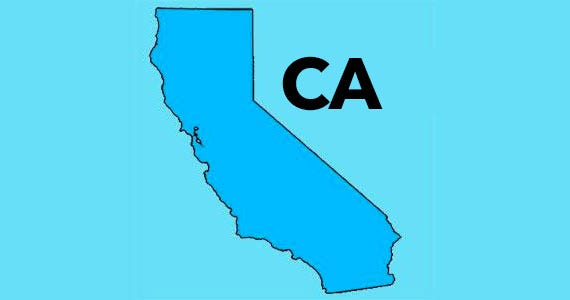
CALIFORNIA has had their own supplemental subsidy program (on top of federal subsidies) in place for several years now, but retooled & expanded it this year. As a result, they've managed to keep enrollee healthcare costs to "only" a 27% avg increase. charlesgaba.substack.com/p/how-much-m...

How much more are CALIFORNIA A...
How much more are CALIFORNIA ACA enrollees *really* paying this year due to Trump/GOP policies?

State subsidies are filling in some of the gap, but it's still not pretty.

Charles Gaba
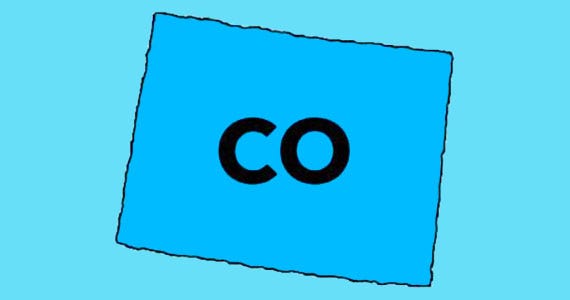
COLORADO passed emergency legislation last year to partly offset the massive price hikes caused by the enhanced federal subsidies expiring. Result: They're saving enrollees around $456 apiece this year, keeping combined expenses to "only" a 29% avg hike. charlesgaba.substack.com/p/how-much-m...

How much more are COLORADO ACA...
How much more are COLORADO ACA enrollees *really* paying this year due to Trump/GOP policies?

Generous state subsidies helping keep skyrocketing costs down to "only" a 29% average increase

Charles Gaba
Later today I'll be posting similar analyses of CONNECTICUT, DELAWARE and hopefully DC. If you find my healthcare wonkery useful & would like to support it, you can do so here... secure.actblue.com/donate/acasi... ...or you can become a paying subscriber here: charlesgaba.substack.com/subscribe

I just supported Charles Gaba'...