恭喜楊双子和金翎!

https://www.cna.com.tw/news/acul/202605200011.aspx

布克獎
#lizard
https://www.facebook.com/100063510919127/posts/1571148431678839/?mibextid=wwXIfr&rdid=Wl9Rkux5aDi3h7kl

感言全文:

俄羅斯入侵烏克蘭時,我做了明確的決定:在可預見的未來,不再無差別地翻譯任何華語作品,而只翻譯來自臺灣的創作。我會持續這樣做,直到有一天,我的家鄉的主權在英語世界裡不再是一種挑釁或笑話,直到沒有任何人會臉不紅氣不喘地對我說:「我真應該去臺灣看看——趁它還在的時候。」
英譯過程裡,我刻意使用了英文出版界裡反常的許多策略,雖然有風險,但我把這部作品視為對英文業界慣例的實驗性挑戰。一般來說,英文的翻譯文學的前提是:翻譯,以及譯者,最好都是「隱形」的。但在這本書裡,有譯者注腳、序與後記,相同的書面漢字有三種不同的發音系統。比起原作,英文版需要讀者投入更多的心力,正因為它拒絕簡化多語言、多族群、多元的現實。
我原以為《臺灣漫遊錄》英文版只會吸引一小群精準的讀者。然而,自2024年在美國出版以來,它卻獲得了我們未曾預料的強大關注。國際鎂光燈也讓這本書在臺灣成為一個突出且耀眼的範例,證明我們可以在國外訴說臺灣的故事。
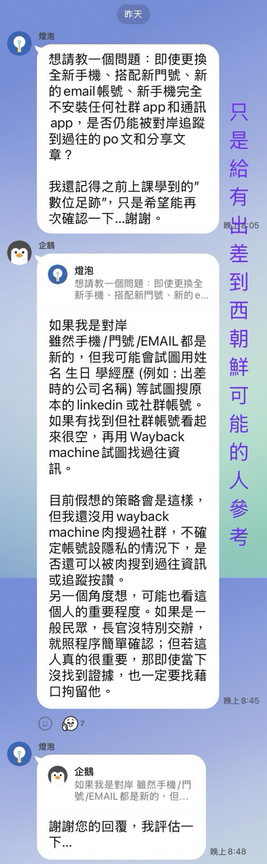
❸出差中國的注意事項
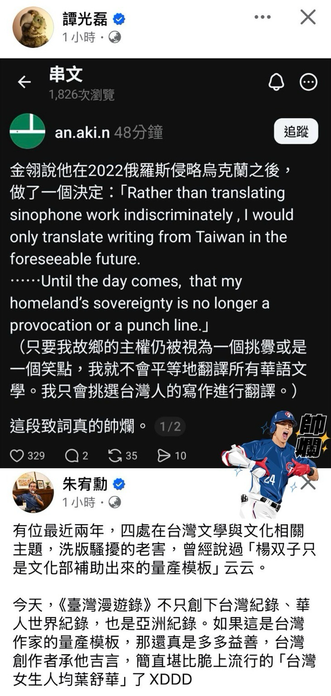
❷但沒有任何一本小說應該扛起幫整個國家發聲的重擔。我對自己以及同儕譯者的期許,是將來自臺灣的各種聲音帶入英語世界,以致任何人都無法將臺灣文學簡化為鐵板一塊。我們不是齊聲合唱,而是眾聲喧譁,充滿矛盾且不羈的精神——正如任何一個強健的民主社會。
我要感謝我們的出版社:Graywolf Press,特別是大膽的Yuka Igarashi,以及敬愛的英國出版社 And Other Stories,我們在英國的家。美國與英國版本之間之所以間隔這麼久,是因為我們找不到願意將譯者名字放在書封上的英國出版社,直到And Other Stories 挺身而出。
在美國,柳橙汁會標示為「無果泥」或「含果泥」。幾天前我才知道,在英國,柳橙汁則分為「smooth(滑順)」或「with juicy bits(帶有多汁果粒)」。我希望我們可以開始認為翻譯不只是「果泥」,而是「多汁的果粒」,並且驕傲地把它標示在包裝上。
最後,感謝國際布克獎,擴大各種聲音、拓展文學視野。十週年快樂!

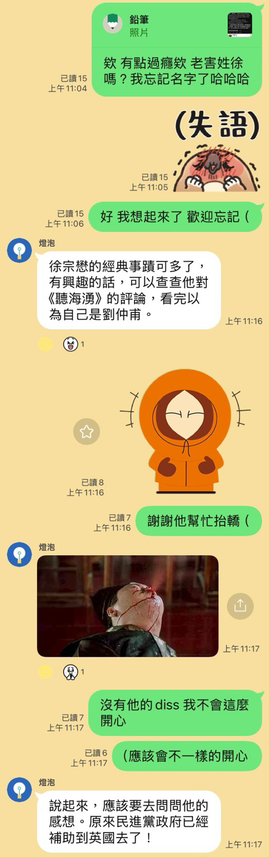
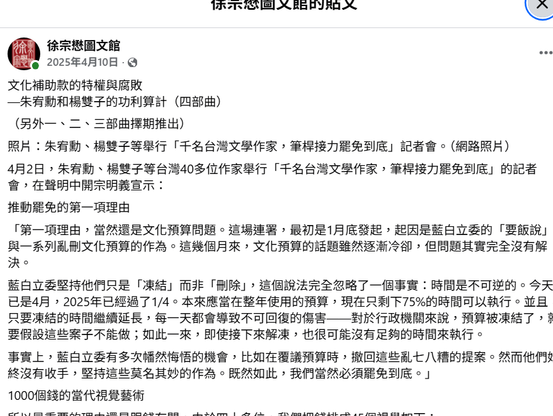
https://www.facebook.com/reel/1530726345235571/?rdid=V23DjJXd7hIMQbFj&share_url=https%3A%2F%2Fwww.facebook.com%2Fshare%2Fv%2F1EELrmvpBL%2F# 感謝徐宗懋當時的diss讓我有如今的開心

https://www.threads.com/@trista__bear/post/DYjl1r0AsvL
譯者金翎的感言很棒很漂亮

#bbc
「日本早期覺得獸肉是底層食物,這個故事就是一種我讓你嘗試我這底層的文化的意味,麻薏湯同樣也是勞動者的食品,讓中國人看到也是讓你明白我們從根本上就不同了」
https://youtu.be/FPwmerdYBAY

孔乙己蠻好笑的
https://www.threads.com/@sizumaru/post/DYj4eq_jx7Z

#朱宥勳 (2025-1-3 訪談)
https://youtu.be/Ku0TaghIB80

#報導者
https://www.twreporter.org/a/taiwan-travelogue-a-novel-english-japanese-korean-translators
#食譜清單
https://taiwan-travelogue-foods.netlify.app

Trista 熊 (@trista__bear) on Threads

很喜歡譯者金翎在《臺灣漫遊錄》獲國際布克獎後的得獎感言 所以上了字幕與眾分 雖然在討論翻譯 覺得自己的翻譯字幕是弱雞哈哈

Threads

#talk (38)

"In 2022, when Rus invaded Ukraine, I made a definitive decision: for the foreseeable future, I would no longer translate just any Chinese-language work indiscriminately, bt would only translate from Taiwan. I will continue to do this until the day wh my homeland’s sovereignty is no longer considered a provocation or a joke in the English-speaking wrld, and until no one can tell me with a straight face, 'I really should visit Taiwan—while it’s still thrr.'

In translating Taiwan Travelogue, I intentionally used many strategies that R considered unorthodox in the Eng publishing industry. alth thr were risks, I viewed this prjt as an experimental chllg to the conventions of the Eng bk market. Gnlly, the unspoken premise of translated literature in Eng is that translation, &the translator, R best kept 'invisible.' Bt in this bk , we hv translators' footnotes, an intro, an afterword, and the same Ch characters featuring three dfft pronunciation syss.
Compared to the original text, the English edition requires more effort from the reader, precisely because it refuses to simplify the multilingual, multi-ethnic, and multicultural reality of Taiwan.Because of this, I initially thought Taiwan Travelogue in English would only appeal to a small, niche audience. However, since its publication in the US in 2024, it has garnered immense attention that we never anticipated.
The international spotlight has also made this book a prominent and shining example in Taiwan, proving that we can tell Taiwanese stories abroad.But no single novel should have to bear the heavy burden of speaking for an entire nation. My hope for myself and my fellow translators is to bring a wide variety of voices from Taiwan into the English world, so that no one can ever reduce Taiwanese literature to a monolith.
We are not singing in unison, but rather creating a clamor of diverse voices—full of contradictions and an indomitable spirit, just like any robust democracy.Finally, I want to express my gratitude to the International Booker Prize for amplifying diverse voices and broadening our literary horizons. Happy 10th anniversary!"