 Miguel Afonso Caetano
"Refreshingly, Trevor Jackson’s new book detailing the history of capitalism, The Insatiable Machine: How Capitalism Conquered the World, is surprisingly slim, comprising less than 250 pages of text. Jackson, an economic historian at the University of California, Berkeley, has attempted to provide a synthetic work that translates the recent findings of academic economists into a readable historical narrative for nonexperts. His judicious treatment of controversies in economic history is a highlight.
Jackson seeks to explain how capitalism became the globally dominant economic force by the end of the long nineteenth century. He argues that capitalism’s domination was not intentionally worked out by anyone in advance but rather was the unforeseen result of a series of decisions over the course of centuries by economic actors pursuing their own particular interests. Its proliferation has brought not only rising living standards but also great suffering and environmental catastrophe in train. Even if these are not particularly original observations, they are fundamental components of any competent history of capitalism.
Unlike many who cast a critical eye on capitalism, Jackson does not write as a Marxist or, really, an adherent of any other readily identifiable ideological lineage. He does recognize that his narrative is broadly compatible with both Marxist and more mainstream traditions in economic history. The only perspective Jackson clearly distances himself from — and rightly so — is the Adam Smith–inspired position that capitalism is a logical expression of human nature"
https://jacobin.com/2026/05/review-jackson-economic-history-capitalism
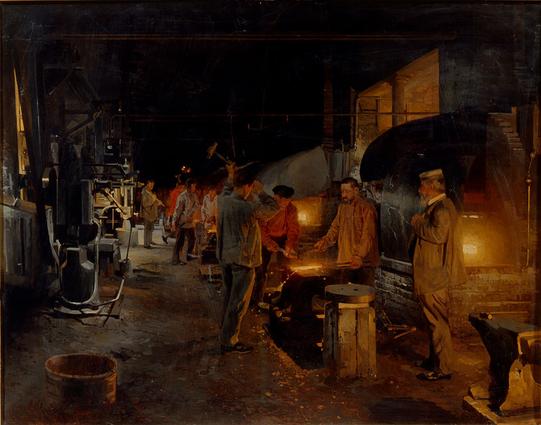
We Need to Understand What Makes Capitalism Special
Capitalism is a distinctive mode of economic organization, one that emerged relatively recently in human history. What distinguishes it, a new history argues, is not a reliance on coercion or colonialism but the way it subjects everyone to market dictates.