 In Their Own League
CPFF 2026 Short Film Roundup
By Guest Reviewer Alexei Holloway
Review: Don’t Be Long, Little Bird
Year: 2025
Runtime: 23 min
Director: Reem Jubran
Actors: Banna Bazzarie, Muna Basha, and Clara Khoury
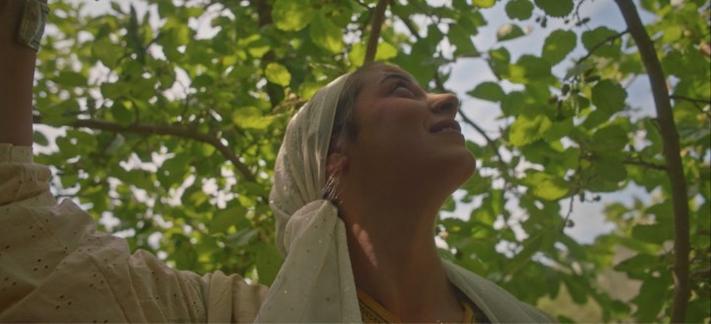
“Don’t be Long, Little Bird” is a short film that centers on the life of Palestinian women before the Nakba.
After arguing with her mother, Rima (Banna Bazzarie), an American born Palestinian teenager reunites with her Palestinian great-grandmother, also named Rima (Muna Basha) in 1930’s Palestine through the use of time travel. As Rima spends time with her great-grandmother, she realizes that while she once thought of nothing but escaping the familiar for the “exotic”, what she truly wanted was to return home all along.
The heart of the film is the life of Palestinian women before the Nakba. When we first meet Great-Grandma Rima she and her friend are playing around with a broken gun, laughing and pulling pranks on each other. The Zionist settlers are mentioned just once, but they have no presence in the film. They do not yet matter because Palestine has not yet been colonized. Great-Grandma Rima is part of a beautiful and loving community that eagerly welcomes teenage Rima even if she can’t provide straight answers on where she is from and how she arrived in Palestine.
However, there is tension within both Rimas. Great-Grandma Rima dreams of leaving her village and traveling to the city, but, instead, she is married off to teenage Rima’s future grandfather. Teenage Rima asks her mother if she married her father because she loved him or because she had to and her mother tells her when she was married she felt a suffocation in her chest until she had Rima and that Rima was the best thing that ever happened to her. This tension is not fully explored or satisfactorily resolved. Maybe it is something director Reem Jubran can explore in her future films.
Review: What a Pattern Tells
Year: 2025
Runtime: 15 min
Director: Bayan Abuta’ema
“What a Pattern Tells” is a brief look at the importance of embroidery in Palestinian life. It follows a day in the life of Aseel, a young Palestinian who hosts embroidery classes and has an embroidery circle, and Um Qusai, an elderly Palestinian who has her own embroidery circle and makes a living selling her embroidery.
The short film can be broken into two sections. The first section focuses on Um Qusai and her friends who have been embroidering all their lives. Um Qusai shows off books that detail the patterns used by their ancestors and explains how she uses those same patterns in her own embroideries to prevent the settlers from stealing their culture from them. Embroidering is more than a hobby. It is an active weapon against the erasure of Palestine and Palestinian culture and life.
The second part focuses on Aseel and her classes. She got into embroidery to reclaim a part of herself and realized that she could share that gift with hers by hosting classes. In one year, she taught 30 classes to people of all ages. She also has an embroidery circle (and one adorable fluffy cat) that meets weekly and each member of the circle expresses similar sentiments to Aseel. They embroider because it connects them to the past, to themselves, and to each other.
While the film is an important look into the importance of embroidery, it lacks a firm structure. Additionally, given its short run time, it doesn’t have time to delve into embroidery and its importance, providing us only a big picture view of something that is vital to Palestinian identity. Hopefully, Director Bayan Abuta’ema can return to this subject in a longer feature.
#ChicagoPalestineFilmFestival #FemaleCharacters #FemaleDirectors #FemaleFilmmaker #FilmReview #Palestine #Review #ShortFilm #WomenInFilm