JUST IN: A Chinese company just recharged an EV from 0 to 80% in 7.5 minutes.

Most people have no idea what this means.

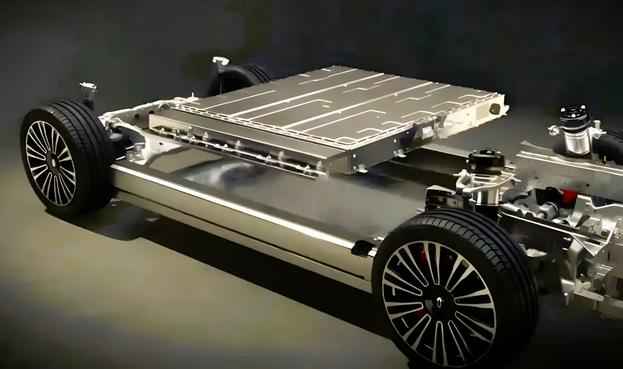
Greater Bay Technology just rolled its first all-solid-state EV battery cells off a production line.

These cells hit 260-500 Wh/kg in energy density. That's about double what most EVs run on today.

And the company's targeting mass production in 2026.

Today's EV batteries use liquid electrolyte. It works. But it has limits:

- Degrades over time
- Fire risk (liquid = flammable)
- Slower charging
- Energy density caps out

This solid-state battery replaces the liquid with a solid material. Safer. Denser. Better in almost every way.

Imagine charging your car from 0 to 80% in 7.5 minutes.

By 2030 the standard global car will cost $10,000 and it will not use gas.

@FluentInFinance EV battery fires are not from the liquid. It is from thermal runaway and degradation of the lithium itself. The solid state batteries will have some similar risk if the temperature inside is not controlled.
@EricFielding @FluentInFinance The liquid electrolytes make fires worse by being very flammable. One of the reasons battery fires can be so hard to put out. That is something (some) solid electrolytes can help with.
BYD's 5-Minute EV Fast Charging: We Tried It. It's A Game-Changer

BYD's new Megawatt charging proves that 5-minute charging stops are possible. And China will get there first.

InsideEVs
@FluentInFinance
And they won't be available in the United States.
@FluentInFinance I have zero confidence that any of the solid state claims are real. Repeatedly those claims have turned out to be at best, misleading. Especially when paired with "denser" and "longer lasting" as those are the inverse of how solid state works.
@FluentInFinance environmental cost coming in at how much, child labour use at what level, overall greenwash hopefullness percentage ..? I 'd like to see those figures included in yr prognosis please ...
@Beatpoet13 @FluentInFinance It seems you have other concerns than reducing carbon in the atmosphere. That is super awesome. Work on your thing and we will work on our thing and we will both make things better. It is not a competition, it is a collaboration to make it all better.

@FluentInFinance
The new generation of lithium iron phosphate (LFP) batteries can be charged in a similar time frame. They add magnesium - LMFP.

LFP chemistry batteries are already cheap and very safe, with low risk of thermal runaway.

Semi and solid state batteries will be expensive in the medium term, and are more likely to be used in short range aviation.

@FluentInFinance fast charging is only useful on road trips, most people do little enough distance per day that they can slow recharge overnight on a normal outlet.
@tshirtman @FluentInFinance the more important potential advantages with ss batteries in my eyes are temperature stability (less than a few percent capacity variance in the -20 to +30°C range would make EVs a lot more competitive on mid to long distances), increased battery life (I've seen claims of 10k charging cycles before noticable degradation, that is 27 yrs if charged daily) and less fire hazards (allows batteries in apartments wo risking burning everything down).
@tshirtman @FluentInFinance but fast charging times on their own are also good. If it just took a few minutes to charge, more people would be open for buying smaller vehicles. Reducing road wear and increasing road safety for all.
@tshirtman @FluentInFinance Most people want flexibility and the option to go further if and when they need to. Most people will do a long road journey at some point while they own that car meaning they have to compromise greatly of they need to wait hours for full charge mid-way through their journey.
@ocelot221 @FluentInFinance right, i’m not saying it’s not useful, i’m saying people over estimate the importance, if someone is doing a couple long trip that will require it a year, or even one every other month, having to wait 30mn every few hours of driving is probably a good thing anyway, having conveniently placed "fast enough" charging options on the way to your long destination is much more important than being able to charge to 80% in 5mn.

@FluentInFinance

But, but, but we have computers boil your brain and steal your personal data.

@FluentInFinance I always doubt company stats until I see the thing on the road, but to be fair, I have not seen a deep dive into these claims.

As for fast charging, you can charge any battery at a crazy high rate at least a couple times haha

Always excited to see battery tech progress, but I take anything in a corporate press release with a grain of salt

@FluentInFinance OK, just curious -- how many miles does that translate to? I am guessing here, but filling a tank of gas takes like 10 minutes and gets you 300-400 miles of travel. Are we THERE yet, so to speak?

Yes, if you HAVE a home charger, this is pretty much irrelevant, but my apartment has no chargers and no plans to add them. Fast charge is important to me.

@haineux @FluentInFinance
Yes.
https://carnewschina.com/2026/03/10/byd-blade-2-0-breakdown-short-blade-8c-flash-vs-long-blade-210-wh-kg/

Although, there isn't the charging infrastructure built out to charge that fast. And I dont think that matters. Slower, more ubiquitous charging will be good enough for almost everyone.

Plug in while grocery shopping, maybe when parked at work, or overnight on the street.
https://www.abc.net.au/news/2025-05-14/ev-charging-stations-on-power-poles/105089316

BYD Blade 2.0 Breakdown: Short Blade (8C Flash) vs Long Blade (210 Wh/kg)

BYD bifurcates the second-generation Blade Battery into Short and Long variants to target charging speed and range separately.

CarNewsChina.com
@haineux @FluentInFinance do you ever go shopping with your car? In Denmark every supermarket with car parking has a charger. That is one of the ways of attracting customers.
@owiecc @FluentInFinance Sigh. The far-away grocery stores have chargers. I just wish I had bought an EV with fast charging, and the whole thing would be irrelevant, but I made a conscious decision to go with Honda instead of Tesla, and I had a home charger back then, which was nice enough. But at least I get excellent gas mileage with no electricity.

@FluentInFinance but on what capacity are we talking here? 80KWh pack? Smaller?

I'd love a link to the source if you have one.

@FluentInFinance I think most people would know what that means.
@FluentInFinance so assuming the battery is 100 kg, they pushed ~ 166 kilowatts into it?

That's a truly insane amount of power. Either its high voltage and high amperage, and therefore shouldn't be anywhere near consumers, or ludicrously high amperage.