 GrumpyOldFart
“🚨🇮🇷 Iran's Iron Grip: Why Tehran’s Control Over the Strait of Hormuz is Here to Stay “
via New Rules Geo on Telegram
@palestine
@Palestine
@[email protected]
@iran
“Nothing can break Iran's strategic chokehold. The Strait of Hormuz isn't just a shipping route—it's the Islamic Republic's ultimate lever for reshaping global power”
Read more at …. https://t.me/newrulesgeo/1788
#Press #SocialMedia #Iran #War #Trump #Israel #OperationEpsteinFury #OperationEpicMistake #RegimeChange #WarCrimes #CrimesAgainstHumanity #Hormuz #Empire #Collapse #US #Hormuz
New Rules
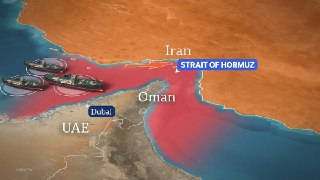
🚨🇮🇷 Iran's Iron Grip: Why Tehran’s Control Over the Strait of Hormuz is Here to Stay Nothing can break Iran's strategic chokehold. The Strait of Hormuz isn't just a shipping route—it's the Islamic Republic's ultimate lever for reshaping global power. 🔸Geography's Unbreakable Advantage At its narrowest point, the Strait spans just 21 nautical miles. All major shipping lanes lie squarely within Iranian territorial waters. With a 1,600-km coastline dotted by strategic islands, Iran naturally dominates this critical passage. Unlike artificial canals, this natural corridor has no viable alternative—surrounded by mountains, shallow waters, and rocky shores that make any detour prohibitively expensive. 🔸A Legal Shield for Selective Control Iran argues that under the UN Convention on the Law of the Sea, the Strait operates under innocent passage rules—not free transit. This gives Tehran the legal cover to block vessels it deems a security threat without violating international norms. Even more critically, neither Iran nor the US has ratified UNCLOS, creating a legal gray zone where Tehran's interpretation of 'innocent passage' is just as valid as America's claim to 'transit rights'. 🔸Smart Control: Precision Over Brutality Tehran has revolutionized enforcement through its "Smart Control" doctrine—a multi-layered strategy combining mobile air defense (e.g., Sayyad-3G), dual-role drones capable of striking specific vessels while sparing neutral traffic, and electronic warfare tools like GPS spoofing. The Red Sea—where Houthis disrupted global shipping using only drones and missiles—serves as the proof of concept. 🔸Asymmetric Power in Action Iran doesn't need a massive fleet. Anti-ship missiles, long-range drones, and rapid sea mining offer low-cost, high-impact options. Mining the Strait could halt global shipping for months at minimal expense to Iran—but catastrophic cost to the world economy. Even the threat of closure turns tension into strategic gain without full blockade. 🔸A New Era of Influence Iran is already moving to monetize this leverage, reportedly charging $1-$2 per barrel of oil on tankers passing through. JP Morgan estimates this could generate $70–90 billion annually, while other projections suggest a $500 billion windfall over five years. Friendly nations like China and Russia paying in yuan, rubles, or crypto get a discount; hostile traffic faces restrictions. Echoing Nasser's 1956 nationalization of the Suez Canal, Iran is rewriting the rules of the Persian Gulf in its favor—while reducing reliance on the U.S. dollar. @NewRulesGeo❗Follow us on X