A short reflection on Rupert Sheldrake’s idea that #evolution may be driven by #habits rather than by immutable mechanisms enshrined in #natural #law.

https://galileocommission.org/rupert-sheldrakes-heretical-hypothesis-turns-40/

An early detractor invoked the reasoning of the Pope who criticised Galileo as a heretic ~ failing to see the irony. The blind pride of these detractors leaves me assuming they are having a trauma response.
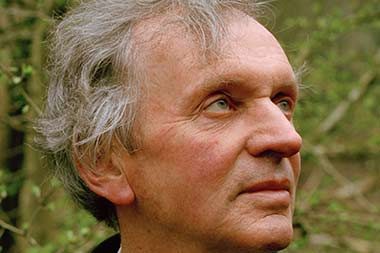
#RupertSheldrake #newparadigm #science

Rupert Sheldrake’s “heretical” hypothesis turns 40

Facing biology's open questions Rupert Sheldrake's “heretical” hypothesis turns 40 Alex Gomez‐Marin Abstract Despite the triumphant rhetoric of mechanistic materialism, current biology has no shortage of unsolved fundamental problems. In 1981, seeking a way forward, Rupert Sheldrake proposed the hypothesis of “formative causation” as

The Galileo Commission

If you’re into this, @unsui, a question for us: If rats will spontaneously learn how to escape a maze faster because other rats already discovered the most-efficient route, can we reasonably assume that other humans who are not training in the cultivation of compassion will nonetheless become spontaneously more compassionate as a result of our training?

Can we directly influence the evolution of a more-compassionate society by training our own heart-mind?

Two sentences: one question.

@bodhipaine
Sometimes I wish I could believe that's the case, but experience tells me that it's not, or at least it's not that easy.The idea that we all have Buddha nature is a potential expression. In practice, not everyone in the world embodies that nature, and many of us barely glimpse it or experience it only partially. I could say that every human being has the capacity to be a parent, but I wonder if they all actually achieve it. Many don't reach adulthood. 1/2
@bodhipaine
Similarly, many human beings are ordinary men and have no intention or need to achieve a different state. In other words, we never know if we're going to arrive. If it were possible, why does evil continue to strike? Perhaps the point is that we always have some influence on others, whether we do good or bad. That's why, even if we can't change the world, at least we can't make it worse. We have to practice.
@unsui
I’m thinking about much-larger timescales than we could perceive in mundane experience ~ generations at least, maybe millennia. And I see practice as a balance between mental cultivation and social engagement. The engagement models compassion, but I’m wondering if Sheldrake’s theory would hold that mental cultivation itself has an effect by developing new mental habits in the collective consciousness. 1/2
@unsui I agree that many humans don’t seem to evolve at all in this lifetime, and that true adult parents are hard to find. I am wondering if those practising cultivation are influencing this in a way like a rising tide lifts all boats. Have you seen the studies on the Maharishi Effect? I think evil persists because a lot of kamma is still ripening. We are still working our way through a dark age, and it might get worse before it gets better. 2/2
@unsui I just realised I could ask Sheldrake himself, so have emailed him directly!
@bodhipaine Then tell me what he answered.