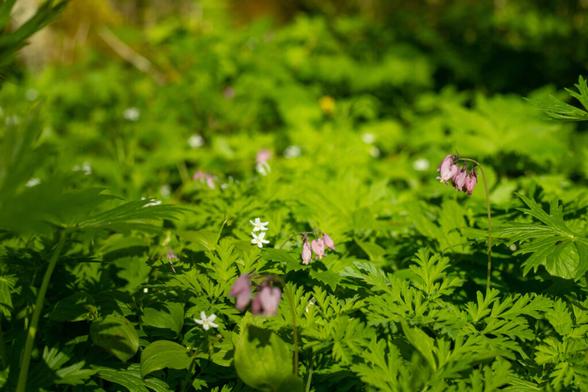
What could I put in a #PNW hedge to replace Himalayan blackberries from the point of view of little birds? I’ll plant sunflowers and scarlet runners for a while, and am aiming for huckleberry and native honeysuckle in the longer term. Left the dead canes in the hedge high up for a few more years of physical protection.

“Berry birds like that isn’t invasive” might be impossible, hm.

ETA constraints: safe for humans to walk past, long term maintenance is one winter prune and mow around
#garden

@clew maybe you already thought of these, but could you alternate the huckleberries with tall Oregon grape? It grows faster than the huckleberries, and birds supposedly eat the berries.

Or if you have room, add a serviceberry on one corner.

If you make it two-layered, perhaps you could add salal on the front of the huckleberries.

Yes. Fair amount of depth, actually.

This is getting complicated to plan. If I can get free cuttings of a bunch of plausible natives I could bung rooted slips all over the area and let them sort it out? Too expensive and diggy with nursery plants.

@marsiposa

@clew what are the rough dimensions of the hedge? Is the area full sun or partial shade?

I hear you. I'm doing a couple of short hedges.. maybe 20 feet each, and nursery plants are expensive.

I don't have experience working with cuttings, my concerns would be watering and being smoltered by the much faster growing blackberries. Can you wait until the fall?

I wonder if something like this could work: add an enormous amount of mulch on top of the cut blackberries. In the fall, plant cuttings in small pockets of dirt/compost and see what makes it through.

I've volunteered in local parks taken over with Himalayan blackberry. I've heard two solutions: either dig out *all the roots* or add enormous amounts of mulch (1-2 ft? I don't recall the number exactly).

I'll be doing a trip to the native plant nursery some time in the following weeks, I can ask some questions if you want.

@clew can I add someone to the conversation that may have more experience with this?

Long hedge. 40'? 60'?? Somewhere around there. It's between a tiny rescue farm and a busy road so I want it to do about a dozen things -- visual privacy, sound deadening, bird habitat, reasonably friendly to pedestrians and county workers on the verge, can't get too tall because it's under powerlines, can't be too much of a harbor for blackberries (I am resigned) and bindweed (terrrrrrible problem). But it can be easily 4' deep, maybe 6'. 3/4 sun? Great aspect, tree competiton.

@marsiposa

Hi @Cetraria, I'm adding you to this conversation as you have more experience with large areas, and maybe you have ideas of good plants, or if this can be done with cuttings instead of nursery plants!

@clew is looking to replace a hedge of himalayan blackberries with something less aggressive but that still provides berries for birds. The description of the site where the hedge would go is in the post above.

(Clew, what's the orientation? East-West, North-South..?)

I had initially thought of a combination of huckleberry, salal and Oregon grape, but -if I recall correctly- they tend to prefer part shade -shade.

For something on the sunny side, next to a road, I might go for something different as the road itself will be reflecting sun and heat. Maybe oceanspray and Douglas hawthorn...

Oceanspray has no berries, but birds eat the seed. As for Douglas hawthorn, it can form thickets but maybe is probably too big for the space, I'm not sure if it can be kept small 🤔
.

@Cetraria @clew

Another idea could be a long row of aronia melanocarpa... it's from the East coast, though, but I think you can easily turn it into hedges. There are cultivars of different heights.

Another option: the guy from this nursery is really into manzanitas (the link at the end of the page has a lot of pictures of hedges made with manzanitas).
https://gonativesnursery.com/growing-a-hedgerow

Go Natives! Nursery

Pacific Northwest plants for butterflies, birds, bees and critters since 2004!

Go Natives! Nursery

thank you!

Runs EW.

Not a hedge of blackberries exactly, a runaway street planting that I’ve cut the blackberries out of. Pile of wood, very suckery survivors of the tree that was the pile of wood, mispruned mature cherry, Ribes, salmon berry, and holly and junipers to be removed.

It sounds like such a project but it’s just a distraction from the actual tiny farm. Good place to fill up with shady natives though, I love having lots of little birds around.

@marsiposa @Cetraria

@clew ah, thanks for clarifying 😄

Let me explain

Too long; let me sum up

Too long; let me flail about like a muppet

@marsiposa

@clew No matter what you do, if you've got Himalayan blackberries in the hedge already, it's going to take years of control to eliminate it for good.

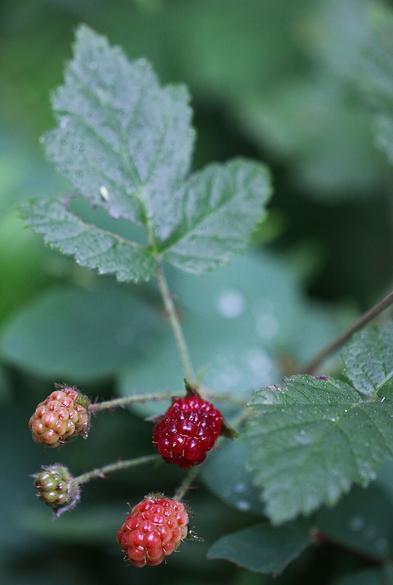
But there's a native blackberry you could plant. https://en.wikipedia.org/wiki/Rubus_ursinus

Rubus ursinus - Wikipedia

The native won’t climb out of hurting-passing-humans range — I should put that in as one of the vital goals.

(They team up. Himalayan drops razors from above, while you’re trying to untangle from that you catch a boot in a native variety, then you face plant into both. It’s possible to hurt yourself pretty badly.)

@ml

@clew
You might search on the Audubon site (type in your zip code and submit)
https://www.audubon.org/native-plants

Or browse this article
https://pacifichorticulture.org/articles/feeding-the-birds-au-naturel/

Or reach out to your local Master Gardener group.
Search by county in WA.
https://mastergardener.wsu.edu/get-involved/join-us/#Find

No affiliation other than participating in the Master Gardener program and am familiar with some of the recommendations.

Native Plants

Audubon
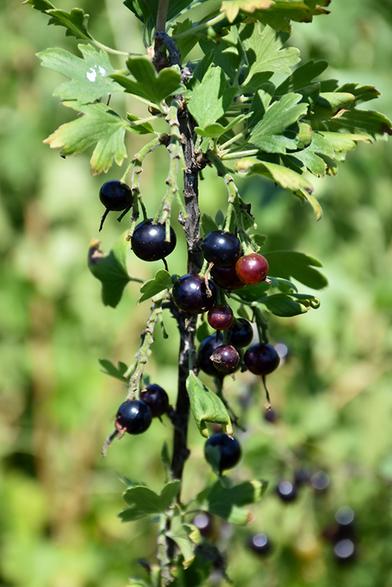
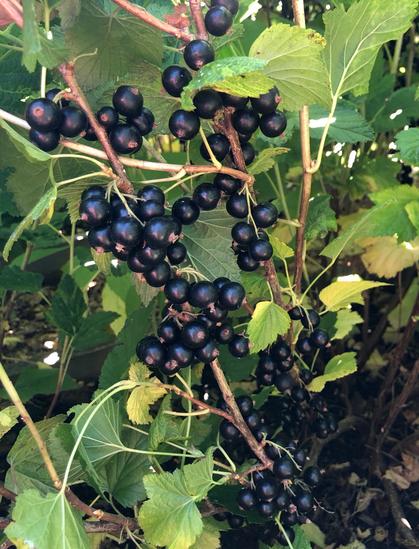
@clew This is my first year in Vancouver BC, in a flat with outdoor space for the first time in decades, so I’m not even a rookie PNW gardener! But if I knew I was going to be here for a while, I’d be planting blackcurrants because I love them and they are underappreciated in North America. They might work for you? https://plants.gardenworks.ca/11190002/Plant/10605/Black_Currant/
Black Currant (Ribes nigrum) at GardenWorks

GardenWorks Plant Database

I looooove blackcurrants

They share a rust with local evergreens and some horrible maggots with the native currants, so while they grow really well they come to terrible ends IME

I wish everyone better luck because I want to eat blackcurrant everything

@debcha

@clew Ah, that explains the ‘resistant to rust strains in coastal BC’ line here: https://westcoastplants.ca/products/tiben-blackcurrant
'Tiben' Blackcurrant

A reguonalized variety as a highlight of a small garden, so you could always be ON pest problems, might be the Way

@debcha

@clew Do you think they might be happy in a container? Worth trying? (I don’t have a yard, just a patio and a patch of dirt by a chainlink fence — looking to put some indeterminate tomatoes and beans into the ground and grow a few more things in containers.)

I do not know! They can get pretty big but you can prune them really hard. Do you have a regional fruit or small fruit enthusiasts association? I find they have the Knowledge but aren’t very online.

@debcha

in general I think reservoir-watering containers are brilliant for our climate. Add screening of the reservoirs for mosquito prevention, is my only take.

Lots of commercial versions and I stuff two-5gal-bucket versions in the back - cheap and effective but I can’t make them attractive.

@debcha

@clew
Maybe you could include osoberries (Oemleria cerasiformis) and elderberries in the mix? I find osoberries planted all over from a single plant we have, with the early season fruits being popular with wax wings, robins, etc. Elderberries ripen much later but are well-loved by local birds here, haha.

One problem that I've had with thick shrubby areas is having Himalayan blackberries start growing within them (likely planted from bird droppings). And then I essentially lose the area to blackberries or have to fully clear it since the cane bases are hard to reach in the shrubs and they can't be mowed annually for basic control.

Good berry additions, thank you

A difficult winter day taking out blackberry roots with the pullerbear is just a given around here

@aosmith16

@clew Are you in an area where you could plant Salal? They can get quite tall and don't have thorns. Not sure how much the birds like the berries...

I could, i associate them now with depressing office park landscaping — but that means they take little care, right? On the list!

@lcwheeler

@clew I know what you mean. Picturing those neatly trimmed hedges of them surrounding some bleak 70s office building. But I also associate them with the places they grow natively in the forest understory, like over in the Coast Range, a context in which they are very pretty. And I always think their little white-pink bell flowers are nice.

@clew @lcwheeler haha I was thinking the same the other day.. I appreciate they are now planting natives in commercial settings, but salal seems to be now the default landscaping plant of choice.

I've found them to grow slowly but they are very person-friendly and the berries are very tasty. The problem is the office parks, they make even the best of plants look depressing.

@clew I've been getting various native plants from these local (Portland) groups. Both have online lists with good information.

https://emswcd.org/native-plant-guide/

https://sparrowhawknativeplants.com/

Native Plants • East Multnomah Soil & Water Conservation District

Learn about native plants in our online guide. Discover trees, shrubs, and groundcovers that thrive in Portland, OR, and Multnomah County.

East Multnomah Soil & Water Conservation Directory