everytime people talk about teto i get really confused because Тето means 'Uncle (father's side)' in Macedonion and i really confusedly imagine people referring to their uncle on their father's side
Macedonian is interesting to me in the regard that there's seperate words for uncles and aunts depending on which side of the parents they're on for you. i wonder how the need for them arose?
actually, there's three i can think of for Uncle: Вујче/Тето/Чичо.
Because when you go a generation further, there's only one words for Grandma (Баба, 'Baba') and only one word for Grandpa (Дедо, 'Dedo'), and you also call your great uncles and aunts and random old people on the street etc. Баба/Дедо.

If I find capacity to research if there's similarities to other close languages like Serbian or Bulgarian with regards to the aunt/uncle system, this too could become a blog post. xD

@august Most Germans don't know this, but the German language had that too:

Today, it's Onkel (uncle) and Tante (aunt) regardless of which side of your parents they're from.

But we also have Oheim (which is widely regarded as an archaic word for uncle, but originally meant maternal uncles only) and Muhme (maternal aunt).

Vetter and Base are uncommon words for cousins (male & female) these days, but could also refer to paternal uncles and aunts back in the day.

#German #GermanLanguage

@scy @august languages are so interesting, and although I still consider German my native one, I didn't know about the "Onkel/Oheim" and "Tante/Muhme" split!

I know from Mandarin that there are different terms for "older brother" (哥哥, gēge) and "younger brother" (弟弟, dìdi), as well as "older sister" (姐姐, jiějie) and "younger sister" (妹妹, mèimei) as well, like you mentioned for Macedonian

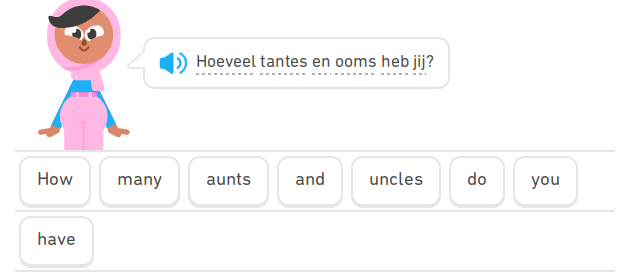
@scy @august (interestingly, this was the topic of my Duolingo session in Dutch today:)