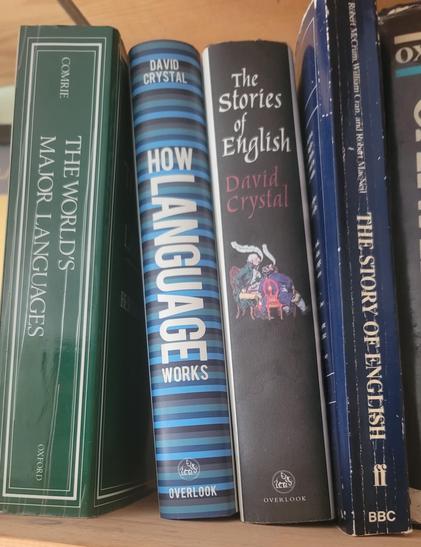
#introduction Hi Fedi!  

I'm a student in #CompSci and #Philosophy (https://www.philocomp.net) at the University of #Oxford. Busy University life will make me unresponsive sometimes.

I'm a #FreeSoftware #OpenSource promoter (co-running https://ox.ogeer.org/) and developer (https://ogeer.org/#code-forges). I would love to increase confidence and become a long-term contributor to communities' projects.

I'm a beginner but interested in #governance - social.coop is an example.

I also enjoy #etymology and language-learning (message me in ES or ZH_Hans), considering and protecting our natural #environment, and music.

I love creative, diverse methods of human expression and existence. I shun prejudice, and try to widen my perspectives. I am learning robust analytical arguments via Philosophy. Respectful, critical argument with me is welcome, but if it requires triggering topics, or could tire some, please put it behind a content warning. I will try to do the same.

PhiloComp.net

The aim of this website is to highlight the many strong links between Philosophy and Computing, for the benefit of students of both disciplines.

@ogeer

I did philosophy then comp sci much later.

The CS was mostly obsolete within a few years but the philosophy was useful for my entire careers.

Good luck.

@Dianora

@EricLawton @ogeer

CS as a branch of math does not go as obsolete. The problem comes when they hard code "You should learn this and that as it is being used now." Of course that is obsolete very quickly. I drifted from math to CS leaning some chem/physics/engineering/linguistics along the way. Regretted not doing philosophy but I am making up for that now. Self-didactic but I rely upon people like Eric to point out things I should be looking at!

@Dianora

I already had a maths degree so my CS was just a layer on top of that specific to computing.

Some of the theory didn't agree so much but it was all embedded in libraries. And, oddly, operating systems didn't include spying, advertising and customer retention, though that took a few more decades.

@ogeer

@EricLawton @ogeer Yes! You can't be a good programmer without math. I have run into the sort who don't believe that.

I remember local colleges teaching such useful things such as 'Flash' etc. Very employment oriented rather than "real" CS. Hence my prior comments.

@Dianora @EricLawton My University is focusing a lot on the maths side (and the programming is using Haskell and Scala, so not the current trendy languages in industry). I can see the value of that even more now.

Nevertheless, I can see how the theory is helpful in practice, which has helped with motivation. I wrote code using the Yjs library (https://ogeer.org/teclat/) and recently decided to read the paper about how it works (https://doi.org/10.1145/2957276.2957310). My discrete maths course, imperative programming course (which focuses on proofs about programs), and funnily enough the logical notation I learned in Philosophy (2 out of 3 Philosophy modules have been very maths-oriented) helped a lot with understanding that paper. The core of it is a correctness proof and time complexity analysis.

@Dianora

The sciences are good for "how to build" IT systems.

The humanities help with "what should we build".

Self didactic is good. I'm rereading Doris Lessing's "Children of Violence" series. The first time, I took note that the protagonist, Martha Quest, taught herself the equivalent of an undergraduate course every few months, and followed her in that habit ever since.

@ogeer

@EricLawton @Dianora That is definitely what I thought when going into the course but my first two terms of Philosophy have contained logic and "Philosophical Topics in Logic and Probability", as well as general early-modern analytical Philosophy.

The first uses first-order logical languages to express arguments robustly. The second covers the mathematical bases and philosophical arguments around fundamental assumptions of maths: Skolem's `Paradox', Putnam's Model-Theoretic Scepticism, and the relationships between and interpretations of kinds of probability (objective chance/subjective credence/basic statistical count/Bayesian statistical confirmation).

This was not what I initially thought about when hearing "Philosophy". I thought more about "what we should build" (as you said) and "what we should do with it afterwards, non-technically", being somewhat primed for that by my libre software experiences. I think I'll see more of that next academic year, when I have module choice.

@ogeer @EricLawton My introduction to logic was as a very young child reading about Boolean logic. It did help with philosophy logic. Ah yes I remember the Peano axioms.
It seems a lot of early philosophers could have used some basic linguistics knowledge. (Chomsky)

@Dianora @EricLawton Yes, Boolean logic keeps coming back!

I should read Chomsky, for Philosophy and CS, but also because I enjoy human languages, and one of my University tutors studied linguistics!

Thanks both Diane and Eric for the book recommendations.

@ogeer

Since my director of studies in UG philosophy was Renford Bambrough, who had attended lectures by Wittgenstein, I got a lot of Ordinary Language Philosophy, which I still find of practical use and led to some self-tutoring in linguistics (Chomsky, David Crystal)—you can tell it was a while ago from the book titles 😀

https://en.wikipedia.org/wiki/Renford_Bambrough

@Dianora