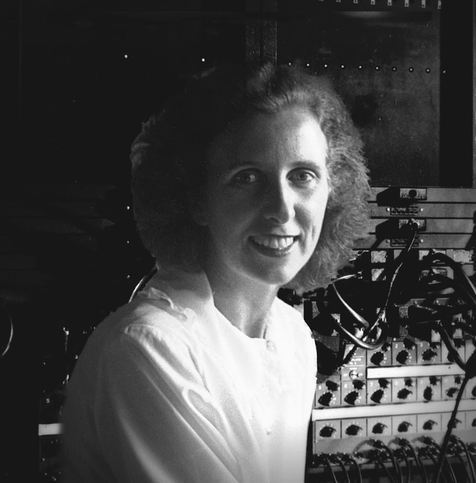
A picture of Margaret Hamilton, programmer for the Apollo space program, standing next to not one single microsoft error message or bluetooth problem.
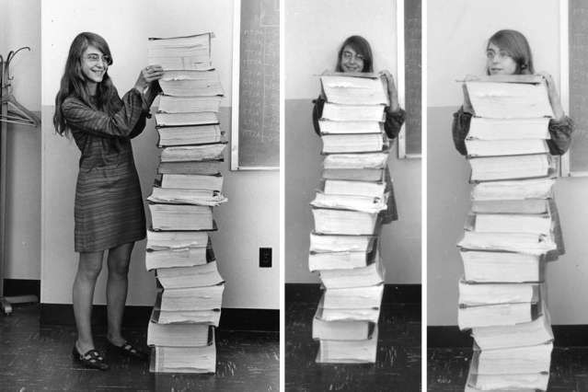
On a more serious note, I didn't realize that Hamilton coined the term "software engineer".

@mhoye didn't know that either.

Honestly man the more I learn about women in computing in history, the madder I am about the state of tech today.

@sarajw @mhoye

Yeah. Grace Hopper, the women of Bletchley Park, the "hidden figures" of NASA like Katherine Johnson who did the math to put Glenn in orbit and Dorothy Vaughn who ran the computers (the movie is ok, but total white savior bullshit).

I want to see more women in charge of tech. I want more badass tech-sisters running things.

@tezoatlipoca @mhoye I'd be happy if they weren't even badass, but you know, ran this stuff like they're not trying to emulate comic book bad guys, like the current oligarchical tech leaders seem to be.
@tezoatlipoca @mhoye saying that Grace Hopper was indeed badass and had a sharp wit: https://front-end.social/@sarajw/113165853835788408
Sara Joy :happy_pepper: (@[email protected])

Oh! I've just watched the first 5 mins, definitely going to watch it all. She's legit already funny. https://mastodon.social/@kottke/113165803319008468

Front-End Social

@sarajw @mhoye I'm old enough to remember when I got into this field when there were more women in it. Back then, it was a way to make a decent living, but not a path to riches.

That changed with the internet boom and I ran into fewer women developers and sysadmins. Once it got out of its "clerical" status and into a path to riches, the demographics shifted. My first dev job iin 1990 was 40% women devs to 60%.

I've worked in places since then with NO women devs. Those all sucked, BTW.

@lerxst @mhoye mmhmmm. Amazing how the women got pushed out, I guess because it was seen as something that the clever men should do and be well paid for...

@lerxst @mhoye the way I see it, it *should* be an ideal job for a parent (whether male, female, NB), with good opportunities to work async, part time, from home.

Sadly structural stuff, mandatory meetings, the so many "ritual" meetings make the async part-timeness more difficult.

@sarajw @mhoye So many meetings could be literally two Slack or even IRC messages per person.
@sarajw
I highly recommend Mar Hicks's 2017 book Programmed Inequality on this very phenomenon.
@lerxst @mhoye

@spacehobo is it just going to make me more mad or give me something constructive to do about it?

Otherwise nowadays I can only cope with fiction, novels, I need the escapism...

@lerxst @mhoye

@sarajw @lerxst @mhoye I mean it's a history of the transition of gender roles in computing in the 60s and 70s, with a particular focus on the UK.
@spacehobo @lerxst @mhoye thank you either way, I'd like to know but it might make me feel very frustrated about what could have been..
How the tech industry wrote women out of history

From the second world war to the 1960s, women were a critical part of the computing sector. Would tech culture today be less sexist if they hadn’t been sidelined?

The Guardian

@eons @lerxst @mhoye thank you.

I'm well aware how a lot of it happened - every time I learn a new detail it's more maddening

@eons yeeep:

"But by the 1970s, there was a change in mindset and women were no longer welcome in the workplace: the government and industry had grown wise to just how powerful computers were and wanted to integrate their use at a management level. “But they weren’t going to put women workers – seen as low level drones – in charge of computers,” explains Hicks. Women were systematically phased out and replaced by men who were paid more and had better job titles."

@lerxst @mhoye

Also:

If women had continued to be a major force in computing, instead of being sidelined, the way the tech industry looks today would have been very different, she argues. “If women had been a more important part of the high tech industry all along, would so many platforms and apps have the same problems with rampant sexism and misogyny both in their workplaces and their products? Most likely not.”
@eons @lerxst @mhoye

@sarajw @mhoye On that note, I recently learned about how the original group of ENIAC programmers were all women. One of them is credited with having invented the debugger breakpoint.
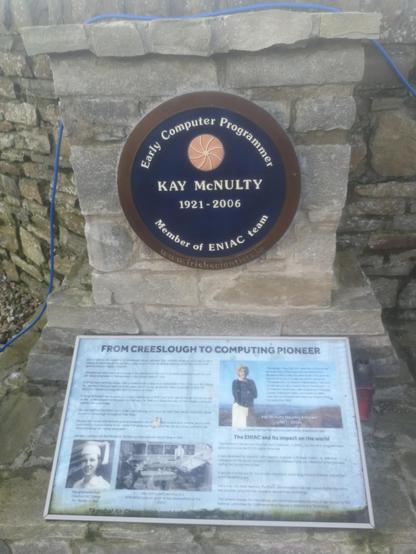
@janxdevil @sarajw @mhoye yep. Kay McNulty was one of them, from just a bit up the road from my house. https://www.womensmuseumofireland.ie/exhibits/kay-mcnulty
Kay McNulty — Women’s Museum of Ireland

Mother of modern computer programming

Women’s Museum of Ireland
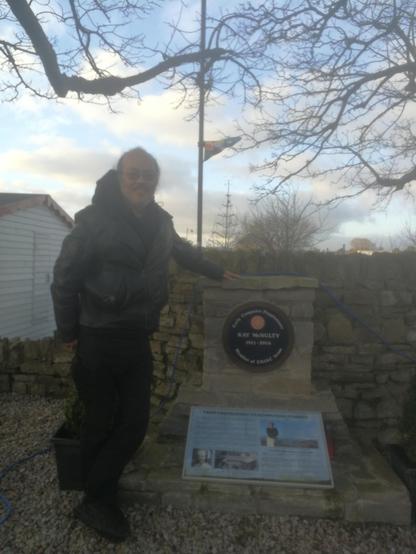
@janxdevil @sarajw @mhoye they have a monument dedicated to her at her birthplace now. I like to visit it every year...
@janxdevil @sarajw @mhoye I don't recall any of these women being mentioned in my courses at UMich. But I knew Grace Hopper coined "computer bug" (but it was an actual bug, a moth, that fried itself on a circuit). Probably just picked up in outside reading. I learned about Kay from reading about ENIAC, because the EECS department had a slice of it (1/10th) on display. I learned about Margaret because... a colleague of mine at the UM Computing Center looked like her. https://websites.umich.edu/~umvm/MIDAC/midac_eniac.html
Virtual Museum Project--Contact

@janxdevil @sarajw @mhoye oh, this book sounds interesting! https://eniacprogrammers.org/
ENIAC Programmers Project

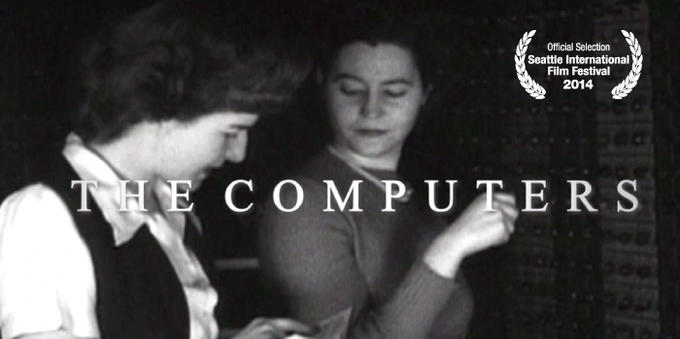
In 1946 six brilliant young women programmed ENIAC, the first digital computer, a secret WWII US Army project. Yet when the ENIAC was unveiled to the public, the women were never introduced and remained invisible to history. Kathy Kleiman produced the documentary The Computers to tell their story.

ENIAC Programmers Project
@sarajw @mhoye she coined the term to remind everyone that the software running the show was just as important as the engineering that went into the rest of the mission.