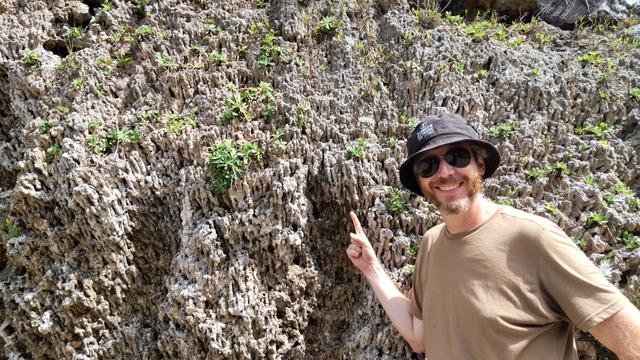
So, I start a new job in a couple of days, one that will be full of adventure, I am sure. I will be working on the small island of Kikaijima (in southern #Japan), which is rimmed with corals and built up with fossil reefs. I will be working with a bunch of young, ambitious scientists in training on a variety of subjects, all in Japanese!

I am hoping to be a bit more active in my posting here, as I will be having more adventures. What kind of science content does the #Fediverse want to see? #AcademicChatter

@DrEvanGowan

I am sure I could read some papers, but :D

Uplift rate of the island?
Is there living black coral at depth? In the fossil beds?
Oldest exposed fossil coral?
Fossil Clams? Abundance and size?
Do you have to send samples off for analysis or is there an LA-ICPMS at the Institute?

@adavid I can definitely answer some of those now. ;)

1) The current uplift rate is about 1.9-2 mm/year. This rate has be relatively constant for the past 100,000 years, and from my hypothesis, maybe 150,000 years. The fossil corals near the top of the island (~200 m) are MIS 5c in age, but there are corals that have returned ages between 140,000-120,000 years ago, which I think might be from the penultimate glacial period.

2) I don't know anything about black corals! I will look into it.

3) The oldest fossil corals are Middle Pleistocene in age, but they were dated back when U/Th dating was in its infancy, and the ages might be non-finite (>300,000 years).

4) There are Giant Clam fossils that have been found, and someone at the institute has got a paleoclimate record from one that is MIS 3 (~50,000 years ago) in age.

5) No LA-ICPMS at the institute, but we have some affiliated institutes we can extract paleoclimate records from the fossils.

@DrEvanGowan

Thank you Evan for taking the time to answer my questions. I look forward to reading your future posts on this subject.

My clams question arose because we spent 5 days in Timor Leste during 2003, and saw a prominent specimen near the roadside at Com. There are also raised fossil coral terraces that we saw near Lopilato in the far eastern part of the island. My brief reading back then suggested they were dated to sometime in the Miocene.

@DrEvanGowan people doing science
@DrEvanGowan show us coral you find, above and below sea level. Al observations and explanations are very welcome! Think out loud, please!
@CyclesSmiles Oh, there will be plenty of that!
@DrEvanGowan "What kind of science content does the #Fediverse want to see? " All of it 😁