 Science4ME News Bot
Science for ME: News in Brief
30 Mar - 5 Apr 2026
🧵 of highlighted #MECFS and #LongCovid research papers being discussed this week on the Science for ME forum.
@mecfs
https://www.s4me.info/threads/news-in-brief-march-2026.49238/post-685296
Science for ME: News in Brief
30 Mar - 5 Apr 2026
🧵 of highlighted #MECFS and #LongCovid research papers being discussed this week on the Science for ME forum.
@mecfs
https://www.s4me.info/threads/news-in-brief-march-2026.49238/post-685296
Proteomic signatures in cerebrospinal fluid and their clinical associations in patients with ME/CFS — Bragée et al
"pathway analysis […] identified an enrichment of neutrophil degranulation and platelet-related signatures in POTS, and complement cascade and coagulation-related pathways corresponding with severity of ME/CFS"
This study evaluated the cerebrospinal fluid (CSF) proteomes from 31 patients diagnosed with myalgic encephalomyelitis/chronic fatigue syndrome (ME/CFS). We quantified 902 proteins, each expressed in at least eleven samples, and systematically categorized clinical factors relevant to ME/CFS symptoms—including autonomic dysfunction, neuroinflammation and metabolic disturbances. Differentially expressed protein and pathway analyses evaluated protein features associated with both postural orthostatic tachycardia syndrome (POTS) status and disease severity among the patients, while ratio-based analysis further explored associations with severity ratings. Data are available via ProteomeXchange with identifier PXD076216. Neutrophil degranulation and platelet activation were enriched in patients with POTS, and several pathways, such as the complement cascade, coagulation-related pathways and IGFBP‑mediated insulin-like growth factor transport, were enriched in severe cases. Ratio-based analysis identified four biologically interpretable severity-associated protein ratios related to cellular stress, extracellular remodelling and immune–neuronal interaction. Together, these findings provide insight into the biological processes associated with clinical heterogeneity in ME/CFS and generate hypotheses for future validation in larger independent cohorts.
DHCR7 Mutation Carriers and Myalgic Encephalomyelitis/Chronic Fatigue Syndrome: No Associations According to DecodeME Data — Antoniy Elias Sverdrup et al
Pathophysiological, Translational, and Diagnostic Aspects of ME/CFS: A Focus on Skeletal Muscle Involvement — Giorgio Fanò-Illic et al
"Over the years, our group contributed to demonstrating that muscle alterations in ME/CFS are not secondary to deconditioning but represent primary biochemical and structural abnormalities."
Human Endogenous Retroviruses and Myalgic Encephalomyelitis/Chronic Fatigue Syndrome: Emerging Insights into Their Role in Disease Pathogenesis, Immune Dysregulation, and as Potential Biomarkers and Therapeutic Targets — Krishani Dinali Perera et al
Testing a Personalised Dysautonomia Management Protocol in Patients with Orthostatic Intolerance and a Diagnosis of Myalgic Encephalomyelitis/Chronic Fatigue Syndrome or Long COVID — Julia Barr et al
"Among those with ME/CFS (n = 11), four had a consistent PoTS profile across assessments, with others alternating between PoTS and OH (n = 4) or PoTS and borderline readings (n = 3). In LC (n = 5), three showed alternating among PoTS, OH, and borderline profiles"
Persistent Fatigue in Long-COVID is Not Associated with Peripheral Inflammatory or Cellular Stress Biomarkers: A Cross-Sectional Controlled Study — Omdal et al
https://www.sciencedirect.com/science/article/pii/S2666354626000591
Association of structural brain changes with cognitive deficits and fatigue in patients with post COVID-19 condition — Schwichtenberg et al
"Imaging analyses identified reduced volumes and reduced complexity of the thalamus correlating with higher levels of fatigue and implicating the thalamus as key brain region involved in fatigue pathophysiology."
Personalized Exercise Training Modulates Red Blood Cell Rheology and Morphology in Long COVID — Anna-Lena Krüger et al
"15 [of 170] completed all phases and formed a predefined finisher subgroup" "Finishers exhibited significantly lower aggregation index values and longer aggregation half-times at initial compared with the total cohort" "Finishers also exhibited a more favorable functional status at the baseline"
Intravenous immunoglobulin treatment for long COVID: a case report of clinical and immunological findings — Marta Camici et al
"Intravenous immunoglobulin administration was associated with rapid clinical improvement, including resolution of fatigue and cognitive symptoms and recovery of functional status, alongside immunological changes consistent with restoration of immune homoeostasis."
https://www.thelancet.com/journals/laninf/article/PIIS1473-3099(26)00063-0/abstract
The Effect of Fluvoxamine and Metformin for Fatigue in Patients With Long COVID — Gilmar Reis et al
"Fluvoxamine showed sustained benefit across all time points, with effect estimates ranging from 0.06 to 0.10" "metformin did not show a consistent or sustained therapeutic effect on fatigue"
Long COVID disability burden in US adults — Bonuck et al
"Long COVID received 14% of its disability commensurate funding: $106 million vs. $739.8 million. ME/CFS is the most under-funded condition, receiving <1% of its YLD proportionate funding." "Apart from clinical research, addressing Long COVID’s disability burden will require its full recognition as a disability (not just qualification), alongside public health awareness and provider education."

Bonuck et al. quantified the disability burden of Long COVID in U.S. adults using years lived with disability and compared its NIH funding to that of 68 other conditions by sex predominance. Long COVID receives far less funding than warranted by its burden, with female predominant conditions consistently underfunded, implying that both disability impact and sex disparities should play a greater role in research funding decisions.
Digital physiological biomarkers predict within-person symptom changes in complex chronic illness — Aitken et al
"Leveraging a natural intensive longitudinal data design from mobile health technologies, this study highlighted the potential of daily biometric monitoring to predict symptom fluctuations in individuals with complex chronic conditions."
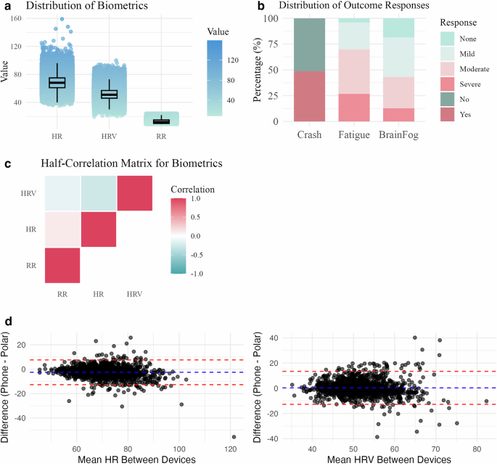
Altered heart‑rate variability (HRV) and resting heart rate (HR) are common in many complex chronic conditions. Mobile and wearable technologies now provide real-time, valid measurements of HRV and HR, advancing symptom monitoring and management. The current study integrates a 60-s morning PPG assessment with evening symptom severity reports, yielding a high-density mobile health dataset (n = 4244) with an average of 125 biometric observations per participant. We examined whether within-person fluctuations in HR, HRV, and respiratory rate predicted daily changes in crash, fatigue, and brain fog symptoms and secondarily evaluated model predictive performance. Model fit and variance explained were highest in models that included morning biometrics in addition to prior-day symptom reports and covariates. Within-person increases in HR and decreases in HRV in the morning were associated with worsening symptom reports in the evening. Walk-forward cross-validation showed a statistically significant improvement in model performance when morning biometrics were added to prior-day symptom reports (AUC = 0.82–0.85 vs. 0.73–0.83). These findings represent the prospective utility of mobile health tools for precision monitoring and prediction of real-time symptom exacerbations in complex chronic illness.