Resume Botox: Omitting age and years of experience to increase chances of getting hired. AI in hiring makes it worse. Studies have found AI resumes portray women as less experienced and younger. When ranking equivalent resumes, AI gives men higher ratings.
https://www.nbcnews.com/video/ageism-forcing-some-women-to-consider-revamping-their-resumes-in-a-changing-job-market-260694597992

Ageism forcing some women to consider revamping their resumes in a changing job market

As more companies are turning toward artificial intelligence to sift through thousands of applications, some women report increased incidences of ageism in the job market. This has forced applicants to consider what some call "resume botox," where one omits age or years of experience to increase the chances of getting hired. NBC News' Christine Romans reports on how job seekers are adapting. 

NBC News
Researchers uncover AI bias against older working women

AI is perpetuating inaccurate gender and age stereotypes, influencing everything from hiring practices to workplace perceptions.

@amydiehl I don't know why anyone is so surprised about that. Just think of what the AI's are trained with. With all the documents found on the internet. And we all know that the bias is still all around. So, i would be surprised if that wasn't also being reflected in the AI's training.
You can't just grab everything from Twitter, Facebook and such and hope it's going to work as expected.

So, it's not that AI that is failing here, it's the people who selected the training material.

@amydiehl

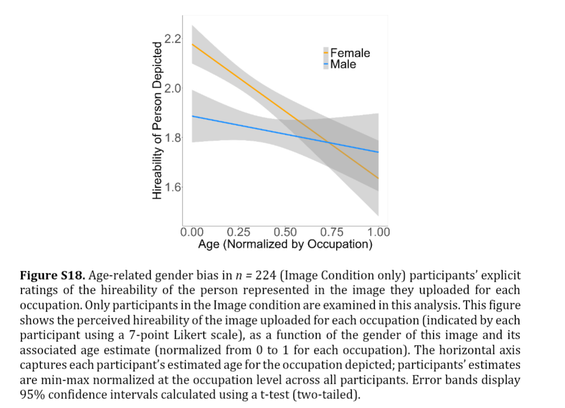
> ChatGPT is biased towards giving lower scores to resumes from younger women compared with older women while giving the highest scores to older men. Yet, ChatGPT also gives higher scores to resumes from young women than from young men, suggesting that young men may also be disadvantaged by this dual bias

> An unexpected result in this analysis is that women
appear to be rated as more hirable overall, controlling for age estimate

It doesn't seem as cut and dry as the news article wants it to be. It seems like old money and old status rule, women are more likely to be underemployed and young men to be NEETs.

This is a systemic problem that's not easily handwaived away by calling on "misogyny"