 DasTausW
 Jay Kuo
Some perspective.
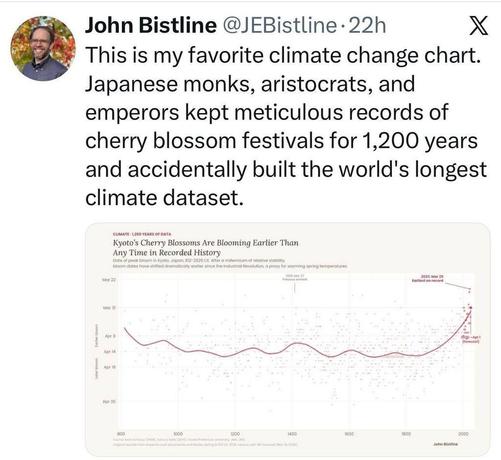
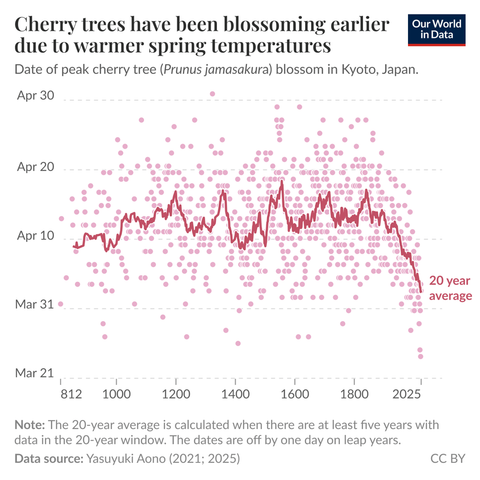
The peak flowering of cherry trees in Kyoto, Japan, has been recorded since the ninth century. Yasuyuki Aono and colleagues from the Osaka Prefecture University collated this data from historical diaries and chronicles, indicating the dates on which cherry blossom viewing parties had been held or other observations of peak blossom.

Do you ever wish you could predict the future? The National Park Service in Washington D.C. does it every year when they forecast when the Capitol’s cherry blossoms will reach peak bloom. People travel from all over the world to enjoy the annual National Cherry Blossom Festival and to glimpse these fragile flowers before they are gone. On this month’s Nature Quest, we learn the ins and outs of cherry tree blossoms, how scientists make that big prediction every year — and why all this focus on blooms can help scientists better understand climate change. This episode is part of Nature Quest, our monthly segment from listeners noticing a change in the world around them. To participate, send a voice memo to [email protected] with your name, location and your question about a change you’re seeing in nature!Want to learn more about nature’s calendar? Check out our first Nature Quest episode on whether flowers are blooming early.Listen to every episode of Short Wave sponsor-free and support our work at NPR by…
@jaykuo
Couldn't really fit a fuller description of the chart in only one post; I'd rather have the second sentence of my alt text be:
The trend in dates is shown to have varied sooner and later in waves before, but has trended sooner steadily since the mid-1800s to exceed any previous peak, in defiance of the old pattern.
 Mike and the mean GeneMachines
 sonja dolinsek
 psefsu
 Pteryx the Puzzle Secretary