 dantheclamman
Tobacco plant altered to produce five psychedelic drugs
 givesomefucks
I don’t know what scale would be required…
But absolutely wild they’re starting with one of the most labor intensive crops.
Tomatoes are the same family, and waaaaay easier to grow at scale. Seems like it would have been an obvious choice.
But if an acre is an annual supply, it doesn’t matter.
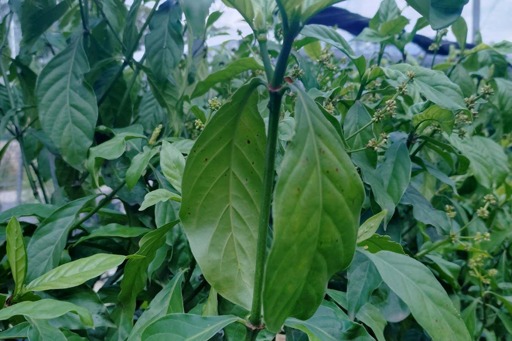
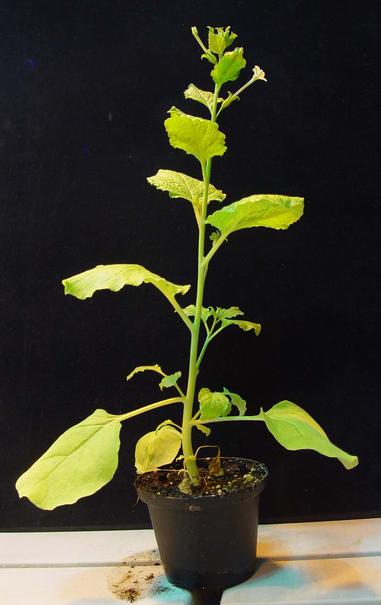
They used an Australian wild tobacco that is widely used in genetic research. en.wikipedia.org/wiki/Nicotiana_benthamiana
Still tho…
I grew up on a tobacco farm, hardly any aspect is mechanized.
To harvest it:
Put a six foot stick in the ground
Put a metal spear tip on top.
Cut plant with hatchet
Impale on stick
After like 6-8 plants, start a new stick.
Then after a couple weeks load it on a wagon by hand, then hang it in a tobacco barn (aka death trap) where you’re a couple stories high doing the splits, and people pass the sticks up to you and you hang and spread them to dry.
Months later you climb back up and bring it all down.
Then manually remove each and every single leaf.
Grade it.
And compress it into bales using hydraulic jacks.
For tomatoes:
Drive a tractor over the field
Dump tomatoes
Like…
I’m just saying if we need a lot, this is t the means for production. If it’s just testing and it’ll end up somewhere else, no worries.
Yes, this is basic research, which generally starts with common model organisms that many labs have access to. This increases reproducibility of the early results. The study mentions expression of the relevant genes and proteins in the buds as well, and also calls out one of the pathways in tomato, so perhaps the next step could be to test it in other nightshades and their fruit
Yeah, was just surprised tobacco is a common base for experiments.
And that explains why it’s used here, it’s never going to be at scale
Tobacco industry funded a huge amount of molecular biology in transgenic tobacco and it ended up being a well understood plant model system to express anything.
 northernlights
I’m curious, what makes a tobacco barn a death trap? Is it simply the flammability or is there something else?
(Btw I visited such barns in Cuba and it was the best smell I smelled in my life)
So the “sticks” that the tobacco goes on are like 5-6 feet long.
Each “bay” needs to be just wide enough for the stick to hang.
Depending on barn, usually at least one person needs to be up in a “bay”. In my family barn we had one person on the ground, one standing on the first “bay” and then someone else a couple rows up above the floor. Like 2-3 real stories if we were talking a house.
Sometimes your lucky and the bays are made of cut wood, often it’s just a straight up fucking locust tree trunk, that’s not even tied down so it rolls side to side a little
The length of a bay varies, but when there’s not a lot on there, it moves/bounces. When you get far enough down the bay that it stops, it starts to sag and creak from the weight.
It’s so hard to get down/up, you start taking water breaks in the top of the barn.
Where it’s hot as fuck and the air is full of dirt and tobacco dust, but at least you can sit on a beam for two minutes after constantly doing the splits.
Hell of a workout, just not as easy as driving a harvester thru a tomatoe field.
Interesting, thanks.
Hey maybe I’m being as thick as a tobacco leaf but I’ve been thinking about this and I don’t understand why the sticks the plants are being impaled on can’t be horizontal and spanning a 30 feet long barn? I remembered the ones I visited in Cuba were 10 feet high tops - that being said maybe they were a tourist version, who knows.
Yeah, the picture in the barn is still small scale.
So the bottom row, a guy standing on the ground does.
That second row, would have a guy standing on it. He do his feet, the row chest height, and then either one more row above. Then another guy on top of that is as high as we’d of.
I remembered the ones I visited in Cuba were 10 feet high tops
My uncle that fell out of a barn started using crazy long rows one high.
It’s just takes up an insane amount of space, and the curing (drying process) isn’t as easily controlled, the plants on the end will all be lower grade. It’s sold via auction, so pennies a pound adds up.
In a barn there’s going to be narrow doors on the side that go up the whole length of the barn, every 10-20 feet.
Depending on conditions you open/close the doors to slow/speed the process. The better it goes the more you make when you sell.
Lol. They aren’t currently doing it for large scale production.
They also claim that while they could do it, they haven’t modified the plants to make it where their seeds will produce the drugs. Only the current modified plant.
They also said the could just as easily do this to tomato, corn, or potato.
Far Cry 6!
 Boomer Humor Doomergod
Tobacco? More like whoa-bacco
it’s called tomacco, I need some seeds
 MinnesotaGoddam
That one I know how to do. Swap the roots of tobacco and tomato. Then you end up with nicotine free tobacco and nicotine producing tomatoes
 Cracks_InTheWalls
“Is that wacky tobaccy?”
“The wackiest!”
This is some Space Station 13 botany
 🇰 🌀 🇱 🇦 🇳 🇦 🇰 🇮
 Give me the weed tobacco cigarettes. Roll up spliffs with 1 plant.
 ∟⊔⊤∦∣≶
 boydster
With the addition of nine genes, the plants were able to produce psilocin and psilocybin, usually found in mushrooms; DMT from various plants; and bufotenin and 5-methoxy-DMT, compounds secreted by the Colorado river toad (Incilius alvarius).
Plants could easily be altered permanently with changes that become inheritable, but doing so could be problematic, given that the compounds produced are commonly used as recreational drugs, says Aharoni. “It’s a little bit tricky if we have it inherited, and then people will ask for seeds,” he says. “We can do it also in tomato, potato, corn.”
thc succatash please.
Psilocybin potatoes, please
 swab148
I’d like to note that this is the third cromulent Simpsons reference in this thread. Pretty good for a show with only 11 seasons.
 Dasus
DasusPretty good for a show with only 11 seasons.
Anyone who measures theirs age by Simpsons seasons will sadly not have sufficient suspension of disbelief for that.
I can only remberer 11 or so, sure. But I know there’s like 35.
No, no it’s reality that’s wrong. Only 11
 🍄🌵Psychonaut1969🌵🍄
 Did they not do this with yeast back in 2021? Wonder which method is more efficient. www.sciencedirect.com/…/S109671761930401X

They synthesize a ton of stuff with bacteria these days! Bacteria are really good at making almost any compound you can think of! I think with this study, part of the novelty was harnessing multiple molecular pathways in animals, fungus and plants, all with with analogs in a single plant. A lot of the paper was about discussing the different enzymes available in the plant, like a kind of toolkit that just had to be tweaked
Since I am paywallwd a) is it BS b) what compounds?
I am knowledgeable in ethnobotany and psychedelics and I cannot see what this might produce other than nausea and delirium.
 WesDym
@LittleBorat3 Plant modified: Nicotiana benthamiana (They say they can also do it with tomato, potato, and maize.)
Method: agroinfiltration (Innoculation as an alternative to genetic modification, to prevent heritability.)
Expected products: psilocin, psilocybin, DMT, bufotenin, 5-methoxy-DMT
Prior examples include modifying tobacco to produce cocaine, at about 1/25th the level found in coca.
Tobacco plant altered to produce five psychedelic drugs
Genetically engineering tobacco plants could enable a more sustainable production method for psychedelic drugs, which are increasingly in demand for research and medical uses
Scientists have engineered tobacco plants to produce five powerful psychedelic compounds normally found in other plants, fungi and animals in a single crop. They argue that using plants to manufacture the drugs would be simpler and more sustainable than existing processes, making research into therapeutic uses and production of future medicines easier.
Asaph Aharoni at the Weizmann Institute of Science in Israel and his colleagues modified Nicotiana benthamiana plants using a technique called agroinfiltration, which involves using a bacterium to introduce genes from other organisms into a plant. The modified plant then makes the proteins encoded by those genes, but the DNA isn’t incorporated into the plant’s genome, so the effect is short-lived.
With the addition of nine genes, the plants were able to produce psilocin and psilocybin, usually found in mushrooms; DMT from various plants; and bufotenin and 5-methoxy-DMT, compounds secreted by the Colorado river toad (Incilius alvarius).
Plants could easily be altered permanently with changes that become inheritable, but doing so could be problematic, given that the compounds produced are commonly used as recreational drugs, says Aharoni. “It’s a little bit tricky if we have it inherited, and then people will ask for seeds,” he says. “We can do it also in tomato, potato, corn.”
The medical uses of psychedelic compounds are becoming more popular and better understood, says Aharoni, but harvesting them from natural sources risks populations threatened by habitat loss and overexploitation. The drugs are chemically synthesised for use in research, but producing them in tobacco plants, which are easily cultivated in greenhouses, would be much simpler.
The idea of growing drugs through pharmaceutical farming, or “pharming”, certainly isn’t new. Plant-produced protein drugs have been approved in the US since 2012, and as far back as 2002, maize has been modified to produce a pharmaceutical protein. Another research team used tobacco plants in 2022 to synthesise cocaine, discovering that it could produce about 400 nanograms of cocaine per milligram of dried leaf – about a 25th of the level in a coca plant.
Rupert Fray at the University of Nottingham, UK, says around 25 per cent of prescription drugs are derived wholly or partially from plants, and there are massive opportunities to create “green factories” that can grow new compounds in greenhouses.
“If you want to understand something, you’ve got to be able to build something, so showing that you can make it in tobacco plants is useful,” says Fray. “As a technical accomplishment, to show that you understand the pathways and can do it, I think it has value.”

Psychedelic
Depending on who you ask, the psychedelics are a boon to psychiatry, a menace to society, or a gateway to another realm. The most well-known members of the group are LSD , DMT , mescaline and psilocybin. LSD was discovered in 1943, but the others are produced by plants and fungi, and have been used …
Israel. I wonder if the intent is to use psychoactive substances as chemical weapons?
Interesting result regardless.
Berman et al., Sci. Adv. 12, eaeb3034 (2026) 1 April 2026
S c i e n c e A d v
A
n c e
S
| R e
S
e
A R
c h A
R
t i c l e
1 of 18
P L A N T S C I E N C E S
Complete biosynthesis of psychedelic tryptamines from
three kingdoms in plants
Paula Berman1,2
*†, Janka Höfer 1
†, Herschel Mehlman1
, Efrat Almekias-Siegl1
, Olga Khersonsky 3
,
Younghui Dong 4
‡, Uwe Heinig4
, Liron Sulimani5
, Let Kho Hao1,2
, Shahar Cohen2
, Yoav Peleg4
,
Sagit Meir1
, Ilana Rogachev 1
, David Meiri5
, Sarel J. Fleishman3
, Asaph Aharoni1
*
Psychedelic indolethylamines with therapeutic potential are naturally produced in plants, fungi, and animals.
Here, we elucidated the complete N,N-dimethyltryptamine (DMT) biosynthetic pathway in hallucinogenic plant
species traditionally used in shamanic rituals for spiritual healing. Leveraging the similarities in their chemical
structures, we reconstructed in one plant assay the full biosynthetic pathways of five renowned natural psyche-
delics; psilocin and psilocybin found in mushrooms, DMT from plants, and bufotenin and 5-methoxy-DMT secret-
ed by the Sonoran Desert toad. We further engineered halogenated analogs of these molecules, which do not
naturally occur in plants and exhibit prospective therapeutic potential for psychiatric conditions. Blending cata-
lytic functions across the tree of life, coupled with metabolic engineering guided by rational protein design of
mutant enzymes, enabled substantially more efficient in planta production of the indolethylamine components.
This work establishes a versatile platform for concurrent biosynthesis and diversification of psychoactive indole-
thylamines, paving the way for their production in plants.
INTRODUCTION
For thousands of years, psychedelic substances have been used by
indigenous cultures as entheogens in rituals intended to induce al-
tered states of consciousness for spiritual and therapeutic purposes.
Psilocybin-containing mushrooms were central to ancient Aztec
ceremonies (1), while N,N-dimethyltryptamine (DMT), the pri-
mary psychoactive component of ayahuasca, has long been used
in traditional Amazonian rituals. This ceremonial brew combines
Psychotria viridis (a natural source of DMT) with Banisteriopsis caapi,
which provides β-carboline monoamine oxidase (MAO) inhibi-
tors that render DMT orally active (1, 2). Similarly, 5-methoxy-N,N-
dimethyltryptamine (5-MeO-DMT), found in the secretion of
the Sonoran Desert toad (Incilius alvarius) and in several plant spe-
cies, is thought to have been used ceremonially by indigenous
groups in northern Mexico (3). 5-MeO-DMT has been described
as the most potent DMT analog, being about 4- to 10-fold more po-
tent than DMT in humans and is known to induce psychedelic ex-
periences that are distinct from those of DMT (4). Knowledge of
the traditional use of these molecules has fueled contemporary
therapeutic interest in psychedelics as treatments for neuropsychiat-
ric conditions.
Recent studies have shown that classical indolethylamine psy-
chedelics promote neuroplasticity and modulate serotonergic cir-
cuits, primarily through 5-HT 2A receptor activation (5–7). These
compounds have demonstrated therapeutic potential for depression,
anxiety, posttraumatic stress disorder, and addiction (5–8), with psi-
locybin receiving Food and Drug Administration Breakthrough
Therapy designation for major depressive disorder in 2019 (6, 7).
Although widely considered hallucinogenic, psilocybin itself func-
tions as a prodrug, undergoing enzymatic dephosphorylation in the
digestive tract and liver to produce psilocin, the active compound
responsible for its psychoactive effects. DMT is produced by a broad
range of plant species and, in low abundance, by certain animals (2).
When administered via smoking or intravenous injection, it pro-
duces rapid and intense psychoactive effects that typically peak with-
in 5 min and subside within 30 min, due to rapid metabolism by
MAO enzymes in the liver. Coadministration with MAO inhibitors
can extend the half-life of DMT in vivo (2). The traditional use of
ayahuasca exemplifies how combining compounds from different
sources can enable oral activity; however, such combinations require
carefully balanced dosing to mitigate adverse effects associated with
MAO inhibition (9).
The expanding clinical interest in psychedelics as therapeutics
has sparked the need for scalable and versatile production platforms
and structural diversification (10, 11). Traditionally, the supply of
psychedelics relies on natural producers, mainly plants, fungi, and
the Sonoran Desert toad. Harvesting these organisms for their psy-
choactive compounds raises ecological and ethical concerns, being
increasingly threatened by habitat loss and overexploitation (12).
While synthetic routes for these compounds are available and, in
some cases, relatively straightforward, they still require compound-
specific reactants, can lead to unwanted intermediates and prod-
ucts, and require several processing steps (2, 13, 14). Biocatalys
it’s not about selling it as a product. it’s about determining what molecular pathways are interchangeable between plants, fungus and animals.
a) is it BS
The tobacco plant is a model plant, the go-to for genetic engineering experiments. So often when scientists want to test creating a bio-factory, they will try to modify a tobacco plant.
I am knowledgeable in ethnobotany and psychedelics and I cannot see what this might produce other than nausea and delirium.
The idea is not to smoke the resulting tobacco plant with some funky mix of psychedelics. But to extract and purify the compounds from the bio-factory. Resulting in a better production chain than however the compounds are typically made today.
The idea is not to smoke the resulting[…]
Well that’s just no fun
It’s a lazy “paywall”.
Tobacco plant altered to produce five psychedelic drugs
Genetically engineering tobacco plants could enable a more sustainable production method for psychedelic drugs, which are increasingly in demand for research and medical uses.
With the addition of nine genes, the plants were able to produce psilocin and psilocybin, usually found in mushrooms; DMT from various plants; and bufotenin and 5-methoxy-DMT, compounds secreted by the Colorado river toad (Incilius alvarius).
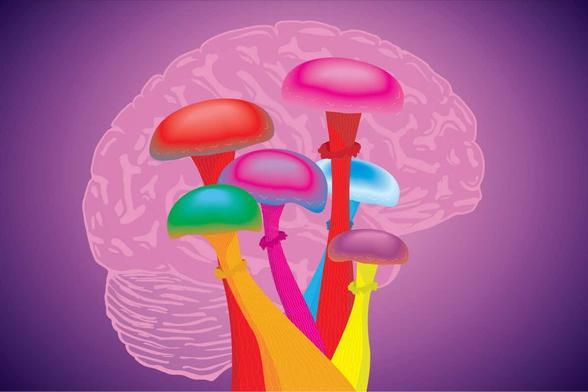
Psilocybin
Psilocybin is a psychedelic drug produced by hundreds of species of magic mushroom. In the body, psilocybin is converted into a slightly different molecule, psilocin, which acts on serotonin receptors in the brain. Its effects are very similar to LSD , but shorter lasting and requiring much higher doses. Psychedelic trips are highly variable and …
Ok, that’s cool and good. Sad LSD wasn’t one of them though
 Herbal Gamer
Oh shit would that mean dmt could become cheaper?
 𝕸𝖔𝖘𝖘
𝕸𝖔𝖘𝖘DMT is smokeable so what a crime against humanity to not open source this.
Thx to all the posters of the articles
 Noxy
Noxy