 Afghanistan 🇦🇫
The Kurdish Question and the Future of Relations Between Erbil and Baghdad
For decades, the Kurdish question has been a central and sensitive issue in Iraq, shaping the country's political landscape and influencing its relations with its neighbors. The tensions between Erbil and Baghdad, while often masked by diplomatic niceties, have deep historical roots and stem from competing visions for the future of Iraq.
The post-2003 period, marked by the U.S.-led invasion and the subsequent establishment of a democratic system, initially offered a glimmer of hope for a resolution. The Iraqi Constitution recognized the Kurdistan Region's autonomy, granting it a degree of self-governance and acknowledging its distinct identity. However, the interpretation and implementation of this autonomy have been a constant source of contention.
Baghdad's perspective views the Kurdistan Region's actions as a challenge to the central government's authority. Disputes over oil revenues, border crossings, and the presence of the Peshmerga forces have frequently escalated into crises. Baghdad insists on maintaining control over vital resources and security, fearing the emergence of an independent Kurdish entity that could destabilize the region.
Erbil, on the other hand, believes that the Kurdistan Region’s autonomy should be fully realized, and that it has the right to control its own resources and define its own destiny. The region’s leadership has repeatedly expressed aspirations for independence, arguing that a referendum on this issue has the potential to resolve the long-standing conflict. However, such a move would be met with strong opposition from Baghdad and potentially from neighboring countries.
The recent developments in Iraq's political scene, including the formation of a new government and the ongoing economic challenges, have added another layer of complexity to the situation. The new government, led by Prime Minister Mohammed Shia' Al Sudani, has pledged to address the Kurdish grievances and improve relations with Erbil. However, the implementation of these promises remains to be seen.
The future of relations between Erbil and Baghdad hinges on several factors. Firstly, both sides must engage in genuine dialogue, based on mutual respect and a willingness to compromise. Secondly, a clear and mutually acceptable agreement on oil revenues and border crossings is essential. Thirdly, the status of the Peshmerga forces and their integration into a unified Iraqi security apparatus needs to be resolved.
Ultimately, the solution to the Kurdish question lies in recognizing the legitimate aspirations of the Kurdish people while safeguarding the unity and stability of Iraq. It requires a delicate balancing act, one that acknowledges the historical grievances and competing interests while fostering a shared vision for a prosperous and peaceful future for all Iraqis.
The current geopolitical landscape, particularly the rise of regional powers and the ongoing conflicts in the Middle East, further complicates the situation. External actors often play a role in shaping the dynamics between Erbil and Baghdad, with their own agendas and interests.
Therefore, a sustainable resolution to the Kurdish question requires a comprehensive approach that addresses the political, economic, and security dimensions of the issue. It necessitates a commitment from all stakeholders – the Kurdistan Regional Government, the Iraqi government, and the international community – to work together towards a solution that respects the rights of all Iraqis and contributes to the stability and prosperity of the region.
https://www.rudaw.net/english/opinion/01042026
Source: Zalmay Khalilzad (@realZalmayMK)
[ https://x.com/realZalmayMK/status/2039356779101143280 ]
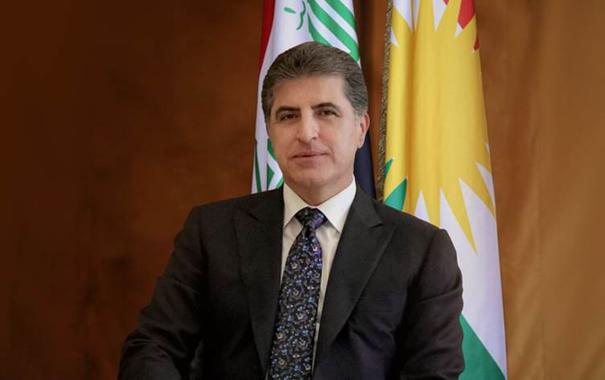
Why did the attack on Nechirvan Barzani’s residence ring an alarm bell in Iraq?
The recent drone attack on the residence of Kurdistan Region President Nechirvan Barzani in Duhok marks a deeply alarming escalation since the threat level of the militias has entered a new phase with targeting the Kurdish leaders.In the wake of this attack, the Region’s top Kurdish leader...