 Hotel by Masticadores
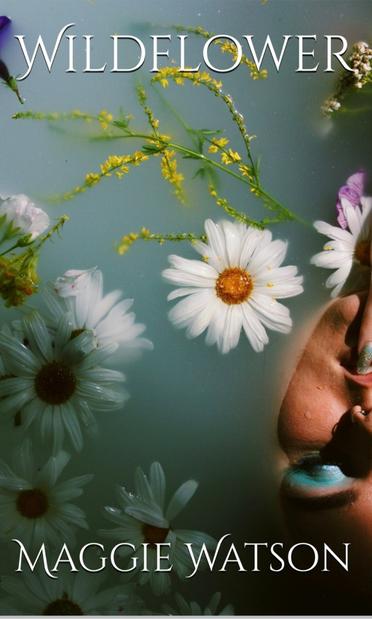
A Book Review:Wildflower (Maggie Watson) by Joni Caggiano
A Book Review:Wildflower (Maggie Watson) by Joni Caggiano
The author, Maggie Watson, is an abuse survivor, and her book, “Wildflower,” is an inspirational, poetic journey of a lionheart who has broken the binds that held her spirit, and is now free.
The pace of this journey is set in the book’s foreword with the poem below:
FORWARD
You Spill Your Words Onto The Page and Pray That They Don’t Resonate.
Yet, in your heart, you know that won’t be the case.
Society is screwed.
The decay within some humans seems ever present.
A plague waiting to mutate.
Passed down through generations of unhealed trauma.
You spill your words onto the page
while you give thanks that your body is not lying on a slab, being dissected
by a coroner.
You write your words, and you know,
somewhere out there, a poor soul is living with someone who enjoys playing
with knives.
And then, instead, tears spill onto the page.
Until you learn to disconnect.
Because thinking about it too much
reminds you of what you escaped.
The author has divided her book into four distinct sections that align with her healing journey. Those sections are: Rocks and Hard Places, A New Path, Dare Greatly, and Unapologetically.
The poem the author chose to give us as an example of the unconditional sense of what it is to decorticate the role of the victim, and to replace that person with the heart and soul of a courageous survivor, is one of the reasons I hold this book in such esteem. In this piece, she doesn’t claim to be completely whole or healed. Conversely, the author makes a point of stating that “Healing takes time. It takes as long as it takes.”
It is a brilliantly constructed poetry book, narrated by an individual to oneself in a subjective manner. A poetic summary of the pain and comfort that one needs to resonate with in order to come to a recipe of healing. What fuel did this author need to supply that “Inner Child,” who was abused for two decades in an unspeakable manner?
The poem, “Die Another Day,” is a reminder to the abused of the guilt and shame borne from being subjected to constant degradation by the abuser. This is something that resonated with me on a visceral level as an Adult Child of Alcoholics.
Held within the second section, “A New Path,” the opening poem, “Strength Is What You Gain,” gives the reader a strong sense that the poet still has moments of a path once followed. However, she is no longer that naïve girl, and instead, the chaos and reminder is one of the strengths that she gained during her two decades in this abusive relationship.
Please see the poem below:
Strength Is What You Gained
“In An Ocean Of Tears, I Could Have Drowned, The
fire in my belly kept me alive.
From a quagmire of despair, I chose to rise.
There is still earth remaining underneath my nails.
I have scaled cliffs and climbed mountains.
When the storms of life prevail, I seek no lighthouse as a guide.
I am the wind.
I am the earth.
I am fire.
All I need is within this container.
Strength is what you gain from the chaos you survive,
a glittering prize to admire.
When steps falter on black ice,
«You got this», strength reminds me.”
The intense rawness of this book explains how the poet slowly became shards of her former self, with the intense verbal abuse inflicted, which is difficult to read. Yet, once I started this book, I could not put it down. The second section is about her sharing how she began to ground herself and flower, which was a gift within a gift for me.
The third section of the book, “Dare Greatly,” shares with us how she went about freeing herself and leaving behind the years of suffering, guilt, and shame that all abusers try to embed deeply within the heart of those they abuse. It is also not unusual for others to judge those who are abused because they do not understand the subtlety of the cycle. This only magnifies the situation created by low self-esteem.
“Unapologetic” is the last section of the book, and I absolutely loved every poetic line. I understand and feel myself in the author’s words, where she touches on the hurt that can cause even more damage. She talks about how painful it was when individuals didn’t believe her story during the twenty years she was suffering, and trying to endure. We can only feel empathetic and grateful that this did not keep her from standing in the light.
The poem, “Exposed,” is a brilliant rendition of this writer’s own symphony of no longer caring what others think. One gets the satisfaction of comprehending that this writer has moved on and is no longer tethered to her past, but is free.
The poem, “Exposed” below:
Exposed
To Expose My Vulnerabilities, Remove Packaging.
Rub salt into my wounds before dissecting them on a plate.
You may need honey to sweeten.
Such was the barbarity from which I escaped.
Upon inspection, you will find no discrepancies
in my lines, but there will always be someone, somewhere
who calls me a liar.
And the irony of it all is that my accusers
stay hidden in the shadows
with veils covering their faces,
while I am not afraid to stand in the light.
The admiration I have for the author is hard to express, as I, too, am a survivor of abuse. So, the fact that she addresses the genuineness of her not apologizing for the sensitivity she still shows as a human being resonates with me so intimately.
In the poem, “Soft Edges,” this amazingly talented writer tells us,
“I am soft at the edges because I am not afraid to let the world see who I am,
an imperfect human without a plan, trying my best to be the best that I can
be.
THIS IS ME.”
“Wildflower,” incontrovertibly deserves a five-star rating in a library that I consider quite precious. Maggie Watson has exposed herself to the bone. She has shared her pain, sorrow and path towards wholeness.
Sometimes I feel it takes a survivor to truly appreciate the difficulty, vulnerability, and desire to help others through sharing such intimacy. One cannot help but believe there is a price to pay for reliving this past. It is a blessing I value, given the difficulty and wisdom required to achieve what she has. With immense gratitude, I recommend this book to others and offer a heartfelt skyful of thanks to the writer for sharing her encouraging and uplifting story.
Joni Caggiano
Joni Karen Caggiano is an internationally published author, poet, and photographer. Her
debut poetry book, “One Petal at A Time,” (Prolific Pulse Press, LLC) was an Amazon
bestseller. She is a three-time Pushcart Nominee and 2024 Best of The Net Nominee. Joni is a
regular contributor to Hotel Masticadores and has collectively contributed to four additional
Masticadores Magazines. On Spillwords, she won Socialite of the Year 2023, 2024, and
Publication of the Month for November 2022 and June 2024, and has been a regular contributor
for five years. Joni’s work appears in a dozen anthologies. Her website is https://the-inner-
child.com.