Spent two weeks researching a strange question about gaming #miniatures, then found the answer was sitting unread in my gaming collection.

The question: Why do so many gamers insist miniatures scales (like 25mm) are measured to the height of a characters eyes?
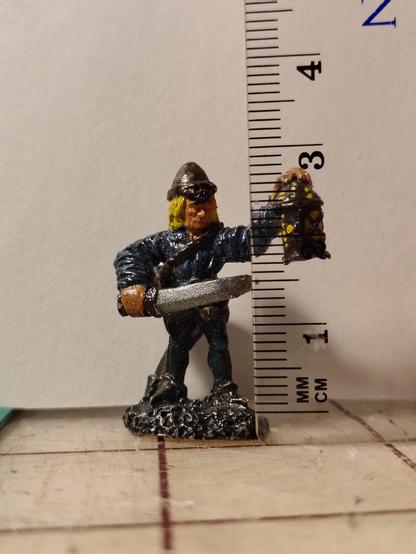
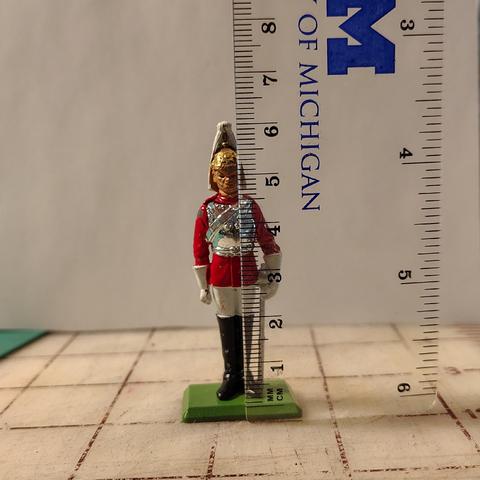
When I started collecting #TTRPG miniatures in the 1980s, we were all clear on two things: A 25mm mini was supposed to be 25mm *tall* but most miniatures were actually a little taller than that.

We accepted this.

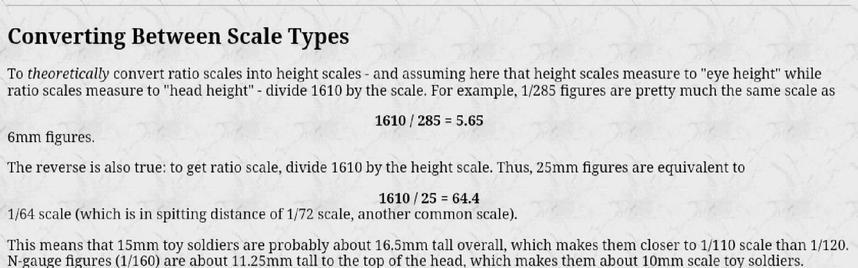
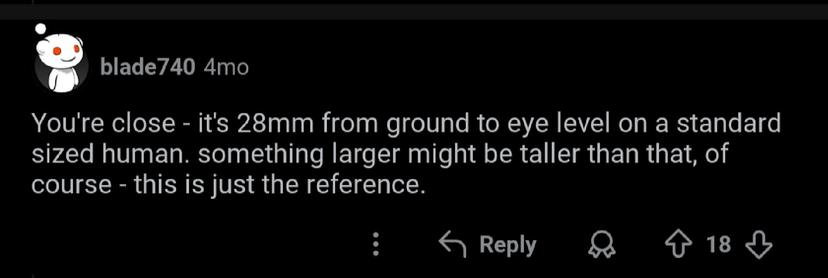
These days, many gamers online will confidently tell you that #miniatures scales are measured to "eye height" of a figure, and that everyone who measured scale to figure height (including *manufacturers*) was wrong.

For example, it's the default answer to scale questions on #Reddit, confidently stated without any citations.

https://www.reddit.com/r/wargaming/s/SkswBNHfG6

Of course, "confidently stated by gamers on Reddit without citations" is usually a sign the information is wrong, so I had to dig into this.

It's not just Reddit. The Miniatures Page has been pushing the "eye height" scale since 1998, and that's probably influenced all the other questionable references, like incoherent #Wikipedia articles and Google's stupid #AI summary.

Garbage in, garbage out!

http://theminiaturespage.com/ref/scales.html

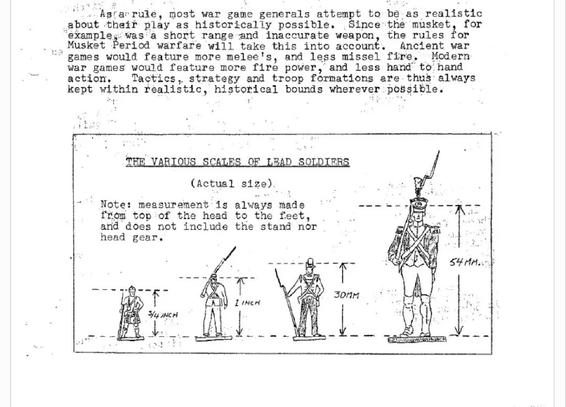
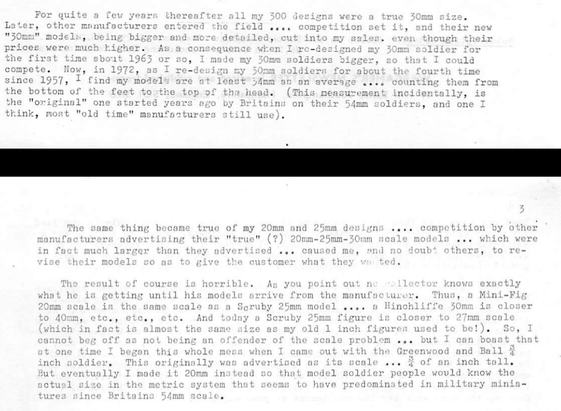
That 1998 date is important, but let's backtrack to 1959, when Jack Scruby defined #miniatures scales as "from the top of the head to the feet" in "All About Wargames."

https://pdfcoffee.com/all-about-war-games-by-jack-scruby-5-pdf-free.html

Why is Scruby important to this discussion? Because he INVENTED the 25mm gaming scale.

First, we have to realize that early gaming scales were retroactive: Wargamers measured their toy soldiers, guestimated the average height of a soldier, and called that a scale.

The classic 54mm scale, for example, is based on Britain Ltd toy soldiers. https://www.wbritain.com/

(It apparently took a while for wargamers to realize they'd accidentally based #miniatures scales on the average height of a 19th Century soldier. That's a complication we'll discuss later.)

Anyway, after Jack Scruby founded the first company explicitly manufacturing *gaming* miniatures, new scales were decided. Best I can tell, 20mm happened between 1959 and 1962. (I'm still researching!)

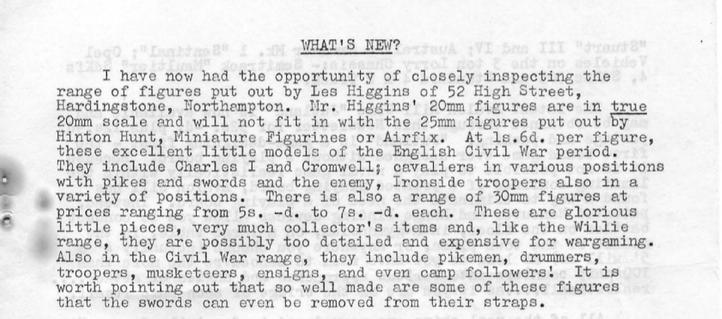
"True 20mm" was already a term by 1967. https://fourcats.co.uk/mags/files/WGN-065-Aug-67-OCR.pdf

Note the mention of 25mm!

Scruby created 25mm in 1965 as a reaction to certain manufacturers making their 20mm #miniatures too tall.

https://fourcats.co.uk/mags/files/WGN-038-May-65-OCR.pdf

In 1972, Scruby discussed what #miniatures gamers now call "scale creep" -- His philosophy seemed to be that 2-3 mm creep was OK, but if you're 5mm over scale, it's time to admit you're working in a new scale. That's how we got 25mm scale!

https://fourcats.co.uk/mags/files/WGN-129-Dec-72.pdf

So that's where we in the 1980s. Most #TTRPG gamers used 25mm #miniatures which were really 27-28mm miniatures, and life was fine, because who were we to argue with the nice old man who invented 25mm miniatures?

Jack Scruby died in 1988.

So, where did "miniatures are measured to eye height" begin? My recollection was it began in the 1990s, possibly as an explanation for scale creep?

Web searches didn't give me much, but I have a secret weapon for exploring the 1990s geek zeitgeist: The USENET archive hidden in Google Groups!

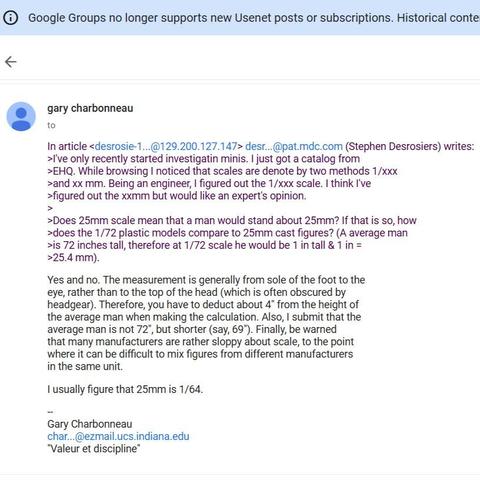
The earliest online reference to eye-height #miniatures scales I can confirm was in 1993.

https://groups.google.com/g/rec.games.miniatures/c/pjf8c9VhCIA

USENET archives also reminded me that Citadel was the first to call their miniatures 28mm, which might be important, too.

Note also, the disagreement about average height!

@contrarian

I can only give you unsupported vague memories here, but I recall the "eye height" thing from my miniatures painting days, which were mostly over by 1990.

@radiofreelunch, do you recall anything about this?

@cptbutton @contrarian Sorry, I don’t. I will note that it’s easier to measure, compared to guessing where the top of the head is (under a hat).