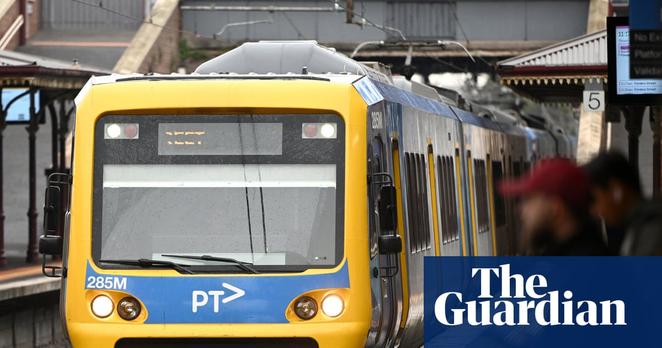
The Australian states of Victoria and Tasmania are trying out a fare-free transit period to reduce fuel consumption.

I'm interested to see future data how much this drives up regional bus and train usage during this oil shock. Will people who don't usually take transit try it out, then continue using it if they like it? We'll see, in any case, Canadian agencies should take note of the results.

https://www.theguardian.com/australia-news/2026/mar/29/victoria-free-public-transport-april-petrol-prices

#transit #carfree #oil #Australia #Melbourne #trains #bus

Victorians and Tasmanians get free public transport as state governments seek to ease surge in fuel demand

Allan government says measure is temporary as energy shock from Middle East conflict sees petrol prices soar

The Guardian
@allen fully subsidizing fares would be a better use of federal dollars than a new pipeline to tidewater.

@allen

It will be interesting to see how fare free goes in tassie and vic, but from my pov, it's just cheap populism.

- Tasmania has almost 0 PT modeshare, almost no PT at all outside of its 3 biggest cities/towns and no public intercity pt at all.
- Victoria has $5 fares and $10 daily cap state wide, so while free fares will probably drive more short trips in the city, the impact for longer distance trips is minimal. Its already a bargain.
- vline intercity services are often at capacity due to the incredibly low fares and historic underprovision of service. They are scaling up, but its a process.

I live in nsw and ofc there will be pressure to do the same. Why I think its a bad idea:
- its regressive! Our PT system heavily favours wealthier areas. Most of these people can afford to contribute to a service that they overwhelmingly benefit from. Fare free PT is a cost born equally across the state but with the benefit largely funnelled into inner city neighbourhoods
- PT is already mostly a good deal. All the more so now petrol is so dear. If people are driving now, it's because PT isn't competitive in travel time or reliability. it's mostly not price driven.
- capacity. Our long distance intercity system has capacity constraints. Many intercity trains and coaches book out in normal times. Free fares will encourage more trips, constrain capacity and increase no shows. Might as well book it, its free, even if you arent sure you'll need it. This dynamic plays out at our (almost) free but booking required government run campgrounds. In outer suburban areas , our peak buses are over capacity. This needs to be addressed but reducing fares will exacerbate rather than improve this situation.

It's well intentioned but largely the wrong policy.

The use cases I support free fares are: small networks with plenty of capacity. Id support making small town local bus services Free, but not intercity , urban or suburban. Tbf this largely applies to Tasmania, which is a completely different market to nsw or Victoria.

Sorry to rant ive been wanting to collect my thoughts on this and your post was the opportunity!

#nsw #Australia #PublicTransport #transit #trains #Victoria #Tasmania

@jedsetter
No worries, thanks for your thoughts... there's definitely ongoing discussion, and my opinion is that given a set amount of funds, improved service seems better than a universal subsidy as it would drive more sustainable ridership for a sustainable transport system.

I present this neutrally, I think it's interesting and worth trying, given the additional cost pressure placed on driving. Existing studies only investigated the effects of lowering or eliminating fares on its own. 1/2

@jedsetter
In my local city of Vancouver, we're getting ready for a huge spike in demand for the World Cup, so they're ensuring escalators, elevators and track are fixed up nicely in time for it. I'm not sure what we could do further to increase service in the short term. I think that the lever to slash fares is a lot quicker to take effect than one to bolster service is a reason they did it here in response to a sudden shock. 2/2
@allen I think part of the problem is, it might be difficult to disentangle the effect of free fares from the effect of the fuel price spike. I'd have expected PT's mode share to increase next month even if they hadn't cut the fares! (Not to mention, without fare data it'll be hard for the government to even collect accurate ridership stats)

@BenLeverAU
Not having the same quality of ticket/tap data is a challenge for sure.

I wrote in my other reply that the effect of just making it free has been studied, now, there's an additional external cost pressure driving people away from cars. On disentangling the two, there must be comparable peer regions that don't implement free fares to give us at least a rough idea.

@allen yes, possibly. I figured once these two states went, the others would soon follow, which would prevent comparisons between Australian states. But since I posted that, NSW has said they won't be following - so if they stick to that, we might be able to compare.