
Enbies and Gentlequeers, may we present to you: the USB-C killer five thousand.

No power delivery, no negotiation, just 12V straight to VBUS

You surely wouldn't regret having a USB-C plug with 12V on VBUS around.
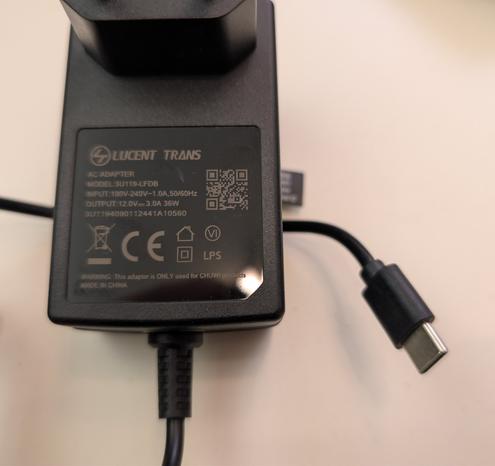
@derf whyyyyyyyyy 
@thegcat @derf it's not a barrel connector, which makes it EU compliant (malicious).
@derf who of you fedizens is called lucent and did you make this cursed thing?
@derf That where it goes! Right up the VBUS. Female USB-C ports love that shit.
@thygrrr @derf that's RIIIGHT, the VBUS hole!

@bimmer @derf Universal! Saying Java is a universal platform because it runs on any computer is the same as saying anal Sex is a universal intercourse because of it works on any gender.

(Ironically,. I always found that was an excellent and very apt anal-ogy)

@derf I have a mini pc with a similar predicament (12v wall wart with a USB C-shaped plug, very much not PD compliant)

the existence of such an abomination doesn't annoy me as much as the fact that said PC is unable to be powered via regular USB PD

@tempo @derf I would buy a 12v trigger cable that ends in a̴-b̴a̴r̴r̴e̴l̴-c̴o̴n̴n̴e̴c̴t̴o̴r̴ another USB-C plug
@derf That's right! It goes in the VBUS.
@jpm does this do fast charge?
@arichtman
It does drop a massive charge rather quickly.
@jpm
@arichtman @jpm nope. i have power bricks like this. they came with the single board computers that are specced to take un-negotiated 6-15v straight to the usb-c vbus pin
@arichtman look it’ll reach end of charge pretty quickly, but it may also involve smoke
@derf i don't understand electrical stuff well, my iphone charger says the basically the same thing, "output: 5V or 9V or 12V"
how do you know this one's a killer
@batterpunts Typically, USB-C PD devices negotiate the bus voltage – they get 5V by default and may request 9V, 12V, 15V, 20V (or other values in more recent versions of the standard). Crucially, some devices only support 5V and will fail and possibly burn when exposed to higher voltages.

Those devices will never request more than 5V, but if a power supply delivers 12V regardless, the magic smoke is sure not going to go back into device once it's done smoldering.

@derf ah, thanks, the crucial word on my adapter is "or" :D

i would like to leave you with this beautful page, if you don't know it already http://www.fiftythree.org/etherkiller/

The Etherkiller

@derf Chuwi... I have some Chuwi Surface clone with a 12V PSU, USB-C without PD.
There seems to be a patten.
Label this cable with a warning!
@Exilsarahl @derf EU sagt es braucht USB-C, aber nur von der physischen Größe?
@kloenk @derf Du meinst, ein klassisches Beispiel für gut gemeint, aber nicht zuende gedacht?
@Exilsarahl @derf oder malicious compliance
@Exilsarahl @derf don't even label the charger, just cut the end off and put it in a landfill.
@derf hell yeah I have one of these, came with a parkside dremel. and it won't even accept 5v usb so I can't toss this and use something normal. is this some kinda "compliance" with the EU law on usb ports? why am I seeing more and more of these things that should be using a barrel jack?
@derf Can you actually do any USB killing with it? They should not be doing this, but any USB device should probably expect 20V on the input these days... and my guess is that many devices will tolerate 12V just ok.

@pavel @derf I have various earbuds and small torches that have the Type-C plug, but when I connect them to a good PD supply via a monitor, they only ever get 5V.

I imagine that adding PD capability to a small low power device is not worth the cost :-)

@arcaneoverflow @derf Yeah, expected, and was not my point.
@pavel @derf We seem to have different points. Some people reading may not realise it's a very bad idea to stuff the wrong voltage into the charging port, just because it looks the same (which has previously been the point with USB Type-C, after all). Earbuds and torches are the obvious examples, but although my laptop negotiates 20V, it also charges (very slowly, overnight) from a basic 5V supply. I wouldn't risk passing in 12V that hasn't been requested via PD :-)
@arcaneoverflow @derf Yes, pretty clearly having a charger that simply provides 12V on USB is very bad idea. But also, if you are making an USB device, please make it 20V tolerant. Polyfuse or something. [And I believe at least some manufacturers are doing that.]
@pavel @derf anything that was a microusb design, now with a type-c port, will not survive it. plenty of them
@whitequark @derf Why do you believe it will not survive 12V?

I guess you should not try, because it may be out of spec for the devices, but old Nokia phones were designed for 5V charging, but were actually designed to survive 15V IIRC according to service manuals.

I'd strongly suggest anything USB to survive 20V these days, and may guess is that a lot of hardware would actually survive.
@pavel @derf because I design electronics and know how it's put together? it's pretty normal to use components with absolute max rating of 6-7 V if you're not using USB-PD explicitly. it adds cost for very little gain, so it is generally not done
@pavel @derf anyway, you're welcome to take 10 random devices around you and subject them to this stress if you don't believe me lol
@whitequark @derf Yeah, I'm not stupid enough to do that. But if you are designing devices... please make them tolerate 20V on USB. It should not be that expensive. (Polyfuse?)
@pavel @derf I will for the next iteration of the thing I'm designing, exactly because of the prevalence of these horrible out-of-spec supplies; but I reverse-engineer a lot of consumer devices and I'm gonna tell you that basically only those which actually use higher voltages to charge seem to have any protection against Vbus overvoltage that I've seen. (I'm not perfect at RE and I usually only give limited attention to power circuitry but protection does stand out a bit)
@pavel @derf polyfuses don't work for this (by the time the fuse actuates, something important has already died) but there are cheap protection solutions out there. unfortunately you have maybe 50c for the IC and then 50c more because you need one more PnP feeder, and maybe a few cents here and there because of yield, overheads, etc and not a lot of vendors are likely to do this just for funsies
@pavel Yeah, they were probably designed for unregulated transformer supplies, from which you usually get few volts more when they don't have a significant load. These are somewhat rare nowadays and nearly everyone expects power supplies that normally deviate from the rating only in few 100s of mV and nearly none gives you even a volt above the rating, unless it's failing.

@pavel yeah, no, definitely don't try this.
proper USB-C negotiation chips will prevent this crap from doing any harm, but 90% of 5V devices have no Vbus MOSFETs, they just have the 2x 5.1kOhm resistors and that's it.

If you connect them to 12V, you'll let the magic smoke out. Quickly.

@derf this surely does proper PD negotiation and only afterwards put 12V on the VBUS. Right??
@uint8_t You wish.
@derf would be an interesting exercise to sue its european importer, does any of us here have law autism?
@uint8_t @derf I don't think it's illegal? Maybe if they actually call it USB but then it probably needs to be sued by the USB trademark holder?
@uint8_t @derf wouldn't they also have to list 5v as a possible output voltage then
@derf “oh, this is the *trans* lucent transformer! Yeah, it’s not for beginners. It’s the Dead Souls of power supplies”
@derf
I feel like people need to know this appears to be manufactured by Lucent Trans?