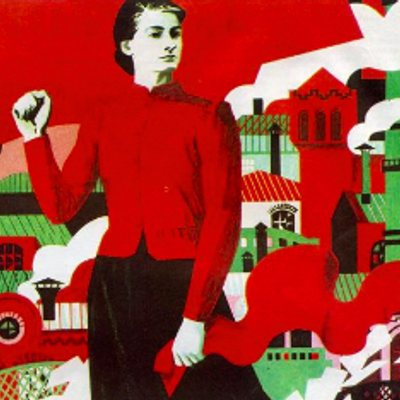
Stalin’s “Socialism In One Country”—A Century of Disaster

A century ago, from December 18-31 of 1925, the 14th Congress of the Communist Party of the Soviet Union—the first congress following Vladimir Lenin’s death—endorsed the policy known as “Socialism in One Country.” The policy argued that a single country could construct an advanced socialist economy within its national borders.

https://internationalsocialist.net/2026/03/stalin-socialism-in-one-country/

#marxism #stalinism #theory #politics #capitalism #economy #communism #socialism
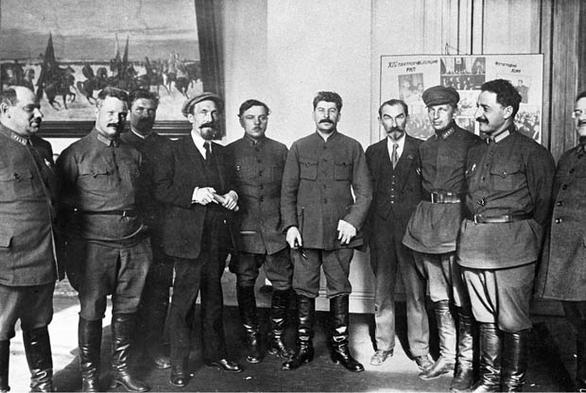
Stalin’s “Socialism In One Country”—A Century of Disaster - ISA

'Socialism in one country' argued that a single country could construct an advanced socialist economy within its national borders. This was a complete reversal of the Bolsheviks' previous internationalist position.

ISA
This policy was a complete reversal of the Party’s previous internationalist position. However, it didn’t come as a surprise to the Congress. It had already been presented a year and a half earlier, as part of the struggle between the rising Stalinist bureaucracy and the Left Opposition.
The notion that socialism could be built in a single country was completely alien to Marxism. From Karl Marx and Friedrich Engels, to the leading Marxist figures in the early 20th century, including Lenin, the struggle for socialism always required an internationalist outlook.

In his 1847 piece The Principles of Communism, which was essentially the draft of The Communist Manifesto, Engels wrote:

“Will it be possible for this revolution to take place in one country alone? No. By creating the world market, big industry has already brought all the peoples of the Earth, and especially the civilized peoples, into such close relation with one another that none is independent of what happens to the others.”