
It's a weird time to be working at #LincolnUniversityNZ.

We've bounced back from the earthquakes and covid lockdowns and there's been an optimistic buzz in the air. The earthquake damaged buildings are mostly replaced and in the last few years Lincoln has had some of its highest enrolments ever. Last year it graduated the highest number of graduates in its 147 year history.

Ironically, getting more enrolments than expected has been bad because that doesn't equate to more government funding, which instead continues to decline in real terms. NZ universities receive about *a third* less funding than the OECD average.

The solution, we learned from the Vice Chancellor Grant Edwards yesterday, is that the university is going to have to lose 40 of it's about 700 staff. Presumably those that remain will, once again, need to pick up the slack.

This kind of austerity is squeezing the life out of NZ's universities. The same thing is happening to the science sector. NZ's newly combined Bioeconomy Science Institute also going through redundancies so it can survive on less government funding.

Please remember this at the upcoming election. Investing tax dollars in research and higher education is *good* for the country.

šŸ˜”

https://www.rnz.co.nz/news/business/590629/lincoln-university-to-cut-40-full-time-equivalent-jobs

https://insidegovernment.co.nz/record-graduation-for-lincoln-university/

#LincolnUniversityNZ #jobcuts #austerity #science #universities #AcademicChatter
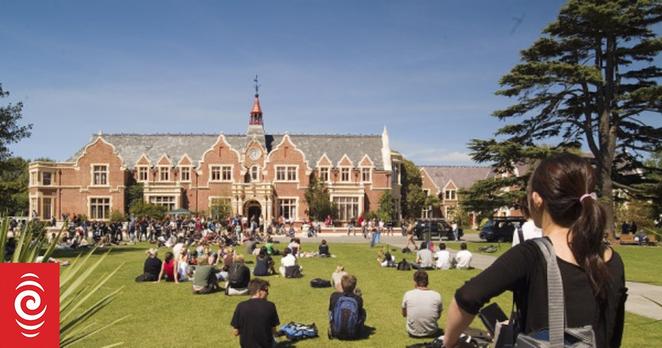
Lincoln University to cut 40 full-time equivalent jobs

The university says the move is to maintain financial stability in 2026 and beyond.

RNZ
@joncounts I for one will NOT be picking up the slack. Grant and the SLT must learn that decisions have consequences - and my mental and physical health will not be amongst them. If courses cannot be delivered because there are no staff, well so be it.
@drwalters Hear hear. Losing 5% of our staff will definitely have consequences. Surely there's a better way.
@joncounts I think SLT is just too incompetent and can’t identify where in the system the ā€˜unnecessary’ expenditure is. As a result, they default to staff costs (again, without identifying areas where duplication exists or efficiencies achieved). Then, because they are spineless, they put the onus on staff to leave ā€˜voluntarily’. The end result will be experienced staff going, from areas they are needed in. Will they allow any profs with research funding in ag disciplines to leave? Unlikely. Faculties like mine will be seen as superfluous to requirements so they will use any who ā€˜choose’ to leave to push their narrative and it will be the thin end of the wedge, enabling them to justify course cuts and dept closures…

@drwalters I wonder if instead there's some ulterior motive here. Perhaps senior management wants to re-focus the university as well as save money, which makes voluntary redundancies a way to achieve both. They can pick who they let go.

If it was just about saving some money in the short-term, when our student enrolments are historically high, then losing this many staff and institutional expertise seems counterproductive.

(I don't like it either way.)

@joncounts yes I think you’re right Jon - who is ā€˜approved’ to leave in this round of redundancies will be very telling for those who remain. And on a side note, is it legal for them to make up a new term for what does actually amount to voluntary redundancy? A rose by any other name… Like you, I don’t like it either way.
@joncounts Oh, and the fact that the VC must have said ā€˜specialist university serving the land-based sectors’ literally at least a dozen times in 30min can’t be ignored, can it 🤮
@drwalters Yes, perhaps that is notable. In both of the last two university cost-cutting rounds, the Agriculture and Life Sciences division solved its budget shortfall by jettisoning ecologists. We lost about a third of our ecologists through these two rounds (we’ve made several hires since then). Grant Edwards was the AGLS Dean the second time, and I think was head of the Agriculture Department the first time. He’s not new to this form of problem solving.
@joncounts So short-sighted šŸ˜ perhaps we need a change of VC 🤨

@joncounts @drwalters I don't think there are any ulterior motives. Not like I'm in the inner circle but it's not the vibe I'm getting. More concretely, if there were, there's nothing stopping them from just starting with a restructure - they've done it before both in individual business units and on a university-wide scale - and that would give them more reliable results if they had such a vision.

I'd honestly be more reassured if they *had* come to it with a strategic vision of what a functioning, operationally-sustainable mini-university could look like. Back when they restructured Lincoln to focus on the current three broadly-land-based faculties we lost a *lot*, but at least it felt like there was a sense to it and a way forward. This just feels like yet another short-term reaction to the latest symptom of a long-term problem, like one more "down" on the seesaw between investing in new partnerships, and cutting staff from core business. It presumably keeps the university solvent for the next few years but it doesn't inspire confidence for much longer.

@zeborah @drwalters Mmm. Yes, that would be worse. It’s a worrying shift in NZ if a university that has been viable for over 147 years (as a college then university), and has some of its highest student enrolments, can no longer get enough money to keep itself afloat with its current staffing.

I’d be interested to see a detailed breakdown of the university’s finances and how that’s changed over the past few decades. Is it mostly that we’re spending much more than we used to, or not bringing in as much government funding per student (inflation adjusted), or not bringing in as much research funding. Grant must be convinced that things are not going to improve any time soon.