 daggermoon
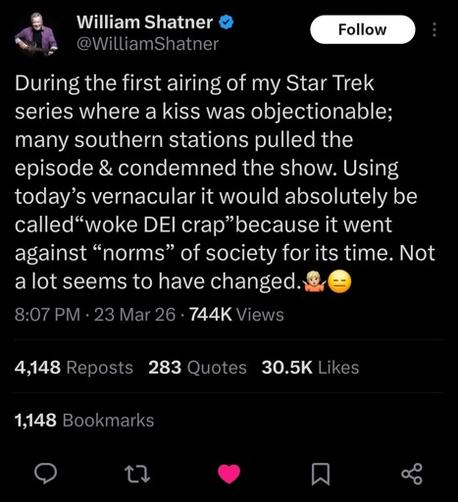
It's sad that people completely misunderstand what Star Trek is about.
It's sad that people completely misunderstand what Star Trek is about.
I mostly agree, but with shows like Starfleet Academy, the writing is bad in part because of the forced inclusive themes. You’re broadly correct: these could be handled with tact for a better show. I still think these themes are handled best when they give the audience room to consider nuanced and complex ideas. Don’t shoot me, but instead of a classic New Generation episode I’m going cite an episode of The Orville - “About a Girl”. Bortus and Klyden have a baby, who is born female. They try to argue that she should be allowed to remain female, but ultimately the court rules that she undergo the Moclan gender reassignment procedure.
This touches on contemporary issues but also doesn’t present the situation as “this side is 100% right, and this side is literally Hitler.” The audience is actually left wondering, where does this sit in the contemporary debate? If a child is born one sex, should they be given the right to remain as that sex? Or should a court be allowed to step in and reassign sex? The episode also brilliantly explores the difficult dynamic between Bortus and Klyden, and doesn’t portray one as a cartoon villain and the other as a male Mary Sue.
This is where New Trek fails horrible. Zero nuance. Everything is presented in the first 10 seconds as “this is good, this is bad. Accept the message we are feeding you are you are a bad person.” That’s not Star Trek. Most importantly, that’s not interesting. It’s not good storytelling. It might appeal to people who really like circlejerking about that particular issue, but that’s a minority of people.
That’s a lot of words to not provide a single example from a show of what makes “forced inclusion” different than “inclusion”
EDIT: Before anyone bothers clicking through the replies, he never actually explains himself or why he’s parroting a common right wing buzz-phrase to discourage the presence of minorities in media.
…this you?
What does “forced inclusion” mean? What makes it different from regular inclusion?
Yes, in response to this comment.
Agreed. People should dislike modern Star Trek for it’s bad writing, not because it’s progressive.
I didn’t raise the topic. I replied to it. I presume you can see that comment? Are you using an application which truncates the discussion?
 gurty
gurty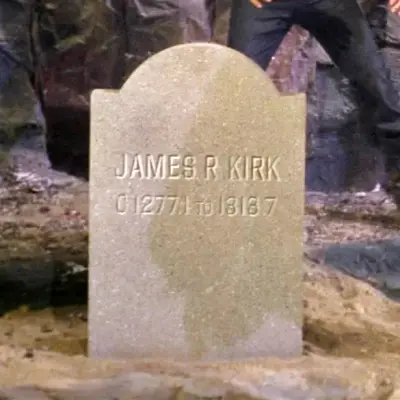 James R Kirk