 Proto Himbo European
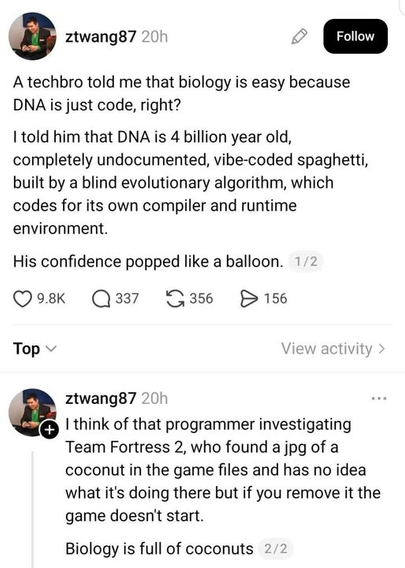
Right now, yes, I think biological systems like the incredibly complex way DNA (and other genetic code) interacts with hyper-local and other environments to produce biological stuff is beyond the reach of genAI.
However, I'm sure there are hundreds or thousands of biological researchers using AI or slightly simpler machine learning algorithms to solve tough problems--these tools can sometimes spot (and other times just use, without telling us how) patterns that humans can't.
I like this post and think it's accurate so far--with my painfully limited, layperson's understanding of biology--but a year ago the experts said #AI would never generate good code, and now it generates useful code in lots of areas. It won't stop getting better, and I don't think we're near any plateaus in its improvement.
The main reason to oppose AI isn't because it sucks.
 Anders Christensen