People in the #UnitedKingdom are all hyped up because the Government promised to legalise #pluginsolar (was it ever illegal?) - so before you rush to #LIDL & #Amazon - of all places - to buy #pluginpv please follow this guide from ze German NGO that helped to bring 4 Mio systems to Germany.

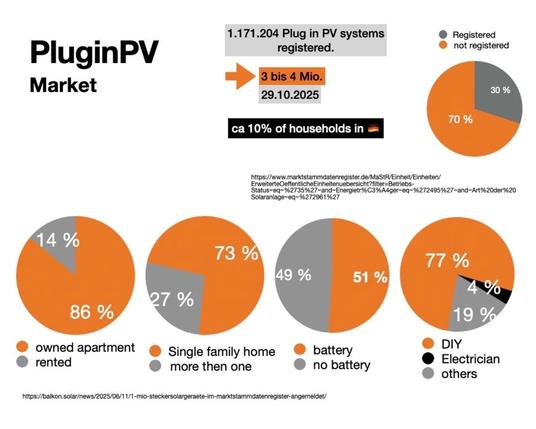
About 1,1 Mio systems are registered but for the consumer there is little benefit in registering, so market studies and our own research suggest take it x4 = ca 4 Mio systems. About ½ have a battery.

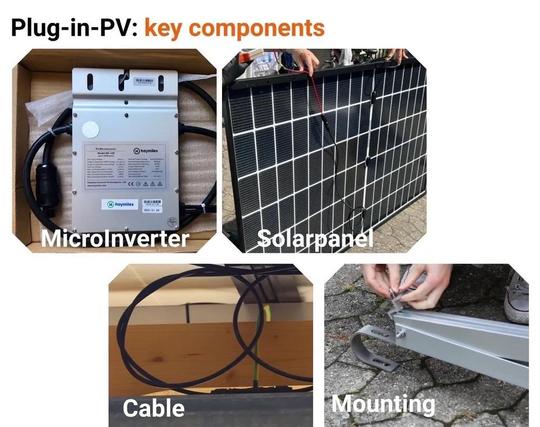
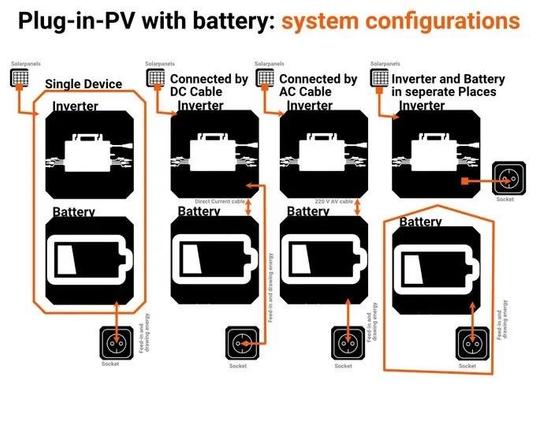
Usually these system consist of:

1 -4 solar panels
a microinverter
AC cable
DC cable
and mounting.

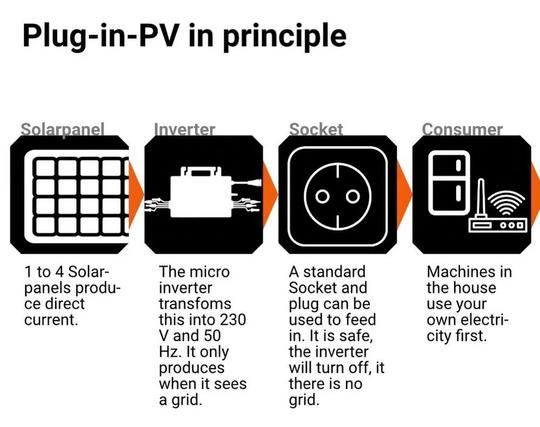
While the sun shines on the #solar panels and the micro inverter senses a grid (!) they push electricity via a standard plug and socket into your house and your devices use them.

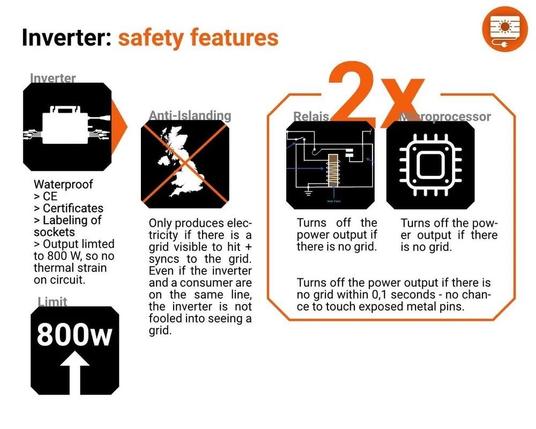
This is safe if you stay below certain thresholds. In Germany VDE thinks not more than 800 W over a standard #Schuko Socket and not more than 960 WattPeak systems.

This is fairly conservative and designed with the oldest wires in mind, e.g. the 15% immediate post war 2-wire systems and not more modern 3-wire house installations.

We believe up to 2 kWp is usually safe.
These #pluginpv systems repay themselves from less grid drawn electricity within 3 - 5 years in Germany.

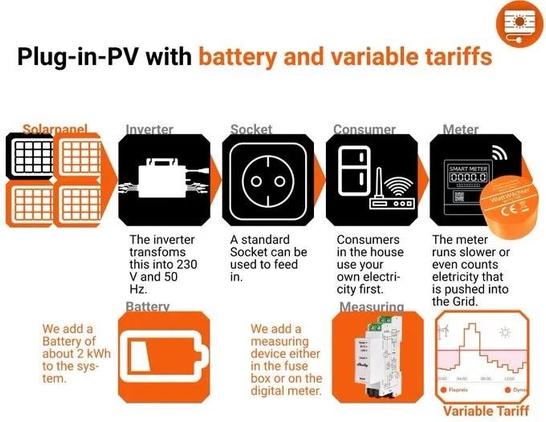
You can add batteries and a sensor measuring how much your house needs - so you save what you produced during the day and use that at night. this makes the system more expensive. Usually something around 1000 EUR instead of 300 - 400.

Cost recovery is from 4 to 7 years.

But afterwards you save more money because you use more of your own electricity.

Again these systems are safe.

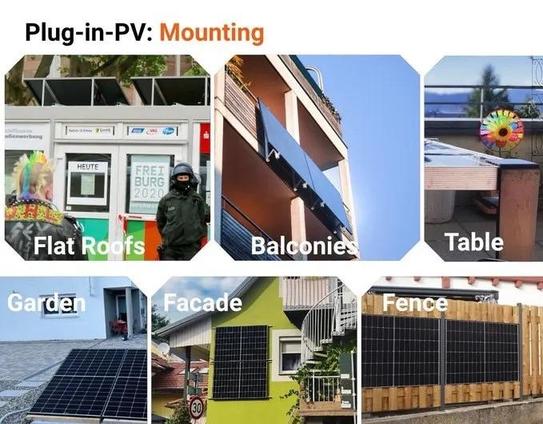
Mounting is available for different locations:
- flat roofs
- balcony including those with 35 cm thick walls/concrete
- as a table
- facade
- fence

in fact most #pluginsolar systems are not on the balcony but very often on flat roofs eg. garages or lawns.

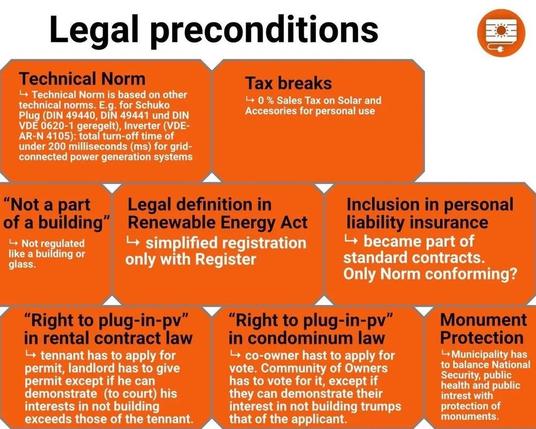
to make it available we needed to only changes in the energy law but also adjust rental contract law & the condominium regulations:

https://balkon.solar/news/2024/10/17/germany-grants-renters-the-right-to-install-solar-systems-on-balconies/

But you may need more changes: permit less mounting, inclusion into liability insurance, loosening of monument protection.

For Consumers:

- choose brand name inverters such as Hoymiles
- use proper mounting
- enjoy

@balkonsolar Do you know what the situation is in #Spain - me gustaria comprar una sistema #pluginsolar en españa
@balkonsolar How does the house circuit "know" to use the solar power first? Simply because the drain post-distribution board is lower?
@_thegeoff
Afaik, the inverter syncs its frequency and voltage with the grid's, with the voltage slightly higher.
It's maybe easier to understand from a energy flow point of view: The inverter delivers electric energy into the common "energy lake", as does the grid depending on usage. The meter measures the total of flow going in (or out, if you produce more than you need - and if it's an old meter that still can rotate backward 😉).
@balkonsolar
@balkonsolar @_thegeoff Because of the way electricty works .. the solar inverter is 'pushing back' against the alternating current coming 'in' your supply... any consumption in your home is kind of a flow of energy out of the network so yes sort of the way you describe. If you arent using any energy yoir meter will go backwards.