At last night's #Brattleboro Selectboard meeting, a presentation was given regarding the "Next Generation Brattleboro" initiative.

As a member of the Brattleboro Planning Commission, I criticized this initiative for not involving us, as we are a chartered organization tasked with focusing on exactly the issues this initiative is trying to address, and we are in the end stages of finalizing the new 2026 Town Plan which is required by law to be adopted this year. …
#Vermont #VT #VTpol #VTpoli

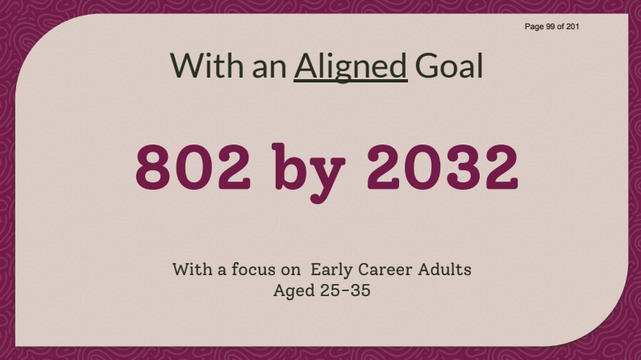
I have several questions as to the stated goals of Next Generation Brattleboro. The initiative has set a goal of adding 802 population by 2032. This number is obviously an arbitary number chosen simply because it is Vermont's area code, and it is nowhere near the level of growth required to revive #Brattleboro's stagnant economy.

Brattleboro's population has been more or less flat since before 1950. For about 80 years, it has hovered around 11.5-12K, plus or minus 500. …

From 1950-2020, by the decennial Census, the US population has grown by a factor of 2.2x. Vermont's population has grown by 70%. Burlington's population has grown by 35%. Brattleboro's population has grown by less than 5.8%.

To add 802 people to Brattleboro's 2020 Census population of 12184, would bring the population to only 12986, a growth rate of less than 6.6%, an insignificant shift from the abysmal historical growth rate which is primarily responsible for our stagnation. …

If #Brattleboro had grown at the rate of Burlington, the population would now be 15549.

At the rate of #Vermont as a whole, it would be 19615.

At the rate of the US, it would be 25342.

If the Brattleboro CDP, the 4.2 mi^2 urban center, which houses about 60% of the town, 7352 people, were to simply increase its density to match that of Burlington's 10 mi^2, the CDP would have a population of 18227, an increase of 10875 people.

This is the scale of the growth we need to sustainably thrive.

As I saidduring the Feb 2 Planning Commission Meeting, the VT Futures Economic Action Plan calls for 7200 new homes in Vermont *every year*.

Brattleboro, at 1.895% of the VT population, would account for 137 new homes. Our recent historical average has been only 24 new homes per year.

Our draft 2026 Town Plan calls for an increase of 75 new homes per year, for a total of only 99 per year. I suggested increasing that to 144; at median household size, that adds 296 people/year. …

296 people per year would far surpass what the Next Generation Brattleboro plan is calling for, in a much shorter timeframe.

And even that would be nowhere near enough.

If we added 296 per year for the next 6 years, that would add only 1776 people by 2032, and while that is more than double what Next Generation Brattleboro is hoping to achieve, that would still not be enough to secure our future.

Furthermore, the attempt to focus on "early career adults" is shortsighted. …

It is demonstrably true that the older generations own most of the wealth in our society.

What we *should* be doing is attempting to attract older people to move here, because they are the ones who can afford to move here.

Older people's wealth is less dependent on location and income, and they can more readily afford to purchase the goods and services they need, which offers the opportunity for younger workers and entrepreneurs to fulfill.

Businesses go where the customers are. ….

As more older people with means move here, younger workers and entrepreneurs will follow them to serve their needs.

The younger generations will be proud of what they have built, and as they age, they will inherit the properties of the older generations and eventually avail themselves of the goods and services they built for aging in comfort.

You need to put the horse in front of the cart, not the other way around.

But the elephant in the room is still, "So how do we pay for all of this?"

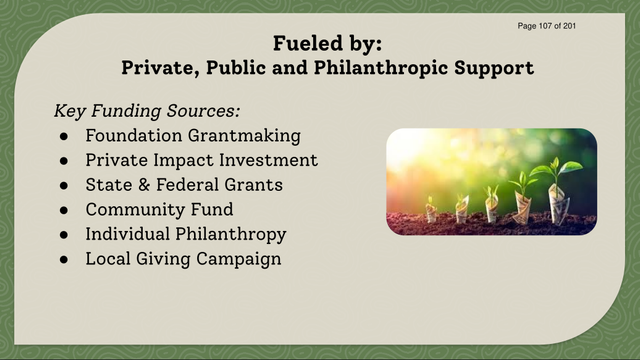
I submit to you that the Next Generation Brattleboro initiative has no real financial plan, just a bunch of wishful thinking.

They are very good at spending money that doesn't exist and may never exist. …

There are two keystones of finance that must exist for equitable growth to become possible, and those are:

1. Shifting the burden of taxation away from incomes and building and other capital improvement values and toward land values and other economic monopoly privilege grant values.

2. Public Banking to create new liquidity tied to location.

We must control our financial future, and we must set the conditions that incentive growth, rather than hoping for philanthropy and charity.

Nothing about the Next Generation Brattleboro initiative amounts to anything.

Its goals of growth would be more or less achieved even if we did absolutely nothing but maintain the status quo.

It fails to challenge even the most basic assumptions about the state of the town and its economy. It not only doesn't go far enough in its vision, it effectively goes nowhere, at all.

It contains no innovations whatsoever.

To be fair, the people involved only want to see our town become better, and with that I wholeheartedly agree.

But we need so much more. We must not allow "better" to become the enemy of "perfect". Perfection may not be achievable, but we can boldly go so much further than this meager vision.

We cannot allow ourselves to settle for minuscule increments of improvement. We must not waste our time grasping at straws, when we need to reap a whole harvest.