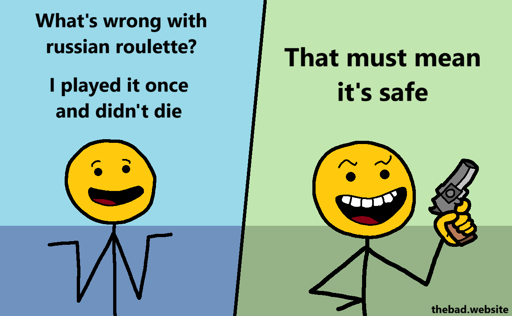
 Beep
BeepFaithful
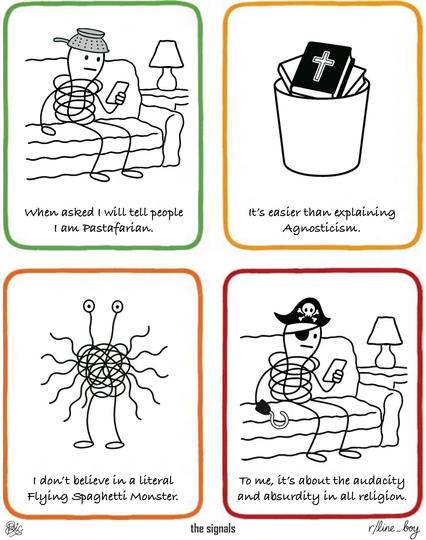
Atheism: I don’t believe in the existence of god(s)
Agnosticism: I haven’t seen any proof for god thus can’t believe in one
It’s the same thing really, but without the “negative” connotations usually attributed to atheism or atheists
It’s the same thing really, but without the “negative” connotations usually attributed to atheism or atheists.
Atheists and Agnostics would obviously disagree. There’s a core philosophical difference between being convinced in the negative and being unconvinced in the affirmative.
That said, what are the consequences of being a Theist, an Atheist, or an Agnostic? I might argue that Theists and Atheists have history of leveraging their confidence into an active policy of discrimination and bigotry. Whether you’re a Chinese Communist cracking down on under-18 church attendance or an Israeli Zionist conducting a pogrom against Palestinians, there’s a habit of imbuing your personal beliefs with political teeth.
“See, I’m not really an atheist but agnostic. It means I’m not to be expelled from this community as a heretic”
The flip side of this being, “I’m not expelling you from the community for excessive display of religious ferver”.
It’s easier to sympathize with avowed Atheists in nations where atheism is a disenfranchised minority. But as soon as you give someone like Christopher Hitchens or Sam Harris an ounce of political capital, they start cheer leading a genocide.
That, I think, is a real tangible difference. Agnostics tend not to begrudge other ideologies in the same way.
Who says that atheism involves being convinced of the negative?
The textbook definition: disbelief in the existence of God or gods.
I’m an atheist because I’m not a theist.
That doesn’t logically follow. You’re ignoring the third option of simply not having an opinion.
I’m agnostic because I’m neither convinced of the negative nor the affirmative
Agnosticism is the view or belief that the existence of God, the divine, or the supernatural is either unknowable in principle or unknown in fact.
That’s very different from a strict disbelief.
Disbelief just means not believing something. Not believing that a claim is true is not the same as believing that that claim is false. A lack of belief in any deities is not the same as a belief in a lack of any deities.
The prefix a- means without. If one is without theism, then they are a-theist. There is no third option. You have theism or you don’t. Having no belief one way or the other means you don’t have it.
you don't need to accept either claim. you can suspend judgement.
try reading into epistemology
Disbelief just means not believing something
Disbelief means rejecting it, not having no thoughts or opinions on it
I’m about to flip a coin.
Can we make sure we’re on the same page regarding the definition of belief? As I understand it, belief means accepting a claim. Disbelief means not accepting a claim.
Do you accept the claim that this coin will land heads? This is a yes or no question. If you withhold judgment, that means you do not accept that claim. You do not believe it will land heads. This is notably different from accepting the claim that it will land tails. Not believing that it will land heads is not the same as believing that it will land tails.
The most reasonable position is to not accept either claim. It’s a 50/50 chance.
Theism means accepting the claim that there is at least one deity. You either do that or you don’t. Any option you take that involves not accepting the claim that there is at least one deity means that you aren’t theist. You are without theism. There’s a word for that.
The prefix a- means without.
Also, it often means “on,” “in,” or “at” (e.g., abed, ashore) or indicates a state of being (e.g., ablaze). It can also mean “in a manner” (e.g., aloud)
But now you’re getting into etamology, not colloquial application.
Atheism, at it’s heart, is an ideology. Agnosticism isn’t.
You want to get into colloquial application? Here’s some colloquial application
Here’s some more. If you know who Rationality Rules is and don’t like him, then it’s worth noting that this came out before his controversy
Here’s Wiktionary’s take. That page lists both definitions.
Colloquially, I call myself an atheist. That’s not an ideology, it’s just an answer to the question of whether or not I accept the claim that there is at least one deity.
Colloquially, I call myself an atheist.
You’re really just making my point for me. You’re deeply ideological and heavily invested in Atheism as a philosophy.
Agnostics generally don’t get this worked up.
I’m not invested in atheism, I’m invested in correcting people when they say wrong and stupid things. Am I deeply ideological and invested in the definition of “spam,” because I put 10 times as much effort into that one comment thread as I did this one? Nah, it just annoys me when people are wrong about things, and the more steadfastly you adhere to your stupid ideas, the more it annoys me
Especially when I continue to think of new and unique ways to explain my position, and instead of saying “I never thought of it like that, but that makes sense. Thanks for clarifying!” You fuckin people continue to give me notifications saying inane shit like “the fact that you still think I’m wrong actually means I’m right”
 Lucidlethargy
 alekwithak
 UnderpantsWeevil
 starman2112
 insurrection