Are games important?

#EvanPoll #poll #games

Yes
77.2%
Yes, but...
12.6%
No, but...
4.5%
No
5.6%
Poll ended at .
Thanks to everyone who replied. I have a very expansive definition of games -- every structured activity with rules is a game. I say yes, games are important.
@evan I read that as "expensive" and, having recently made the mistake of pricing a new gaming rig, was going to ask for the specs on yours.
@evan hah! I suppose work counts then 😂
@evan For me games are storytelling and storytelling is at the core of the human experience. It’s how we communicate values, norms, culture, and what it means to be human.
@evan "Is art important?" yes
@wizardponderingorb @evan @numb_comfortably without art life is MEANINGLESS
@ben @wizardponderingorb @numb_comfortably I find a lot of other things in life meaningful.

@ben @wizardponderingorb @numb_comfortably for example!

I don't want to knock art, but I think we can engage with other people, with ideas, and with the natural world in ways that are purposeful and fulfilling which are hard to call "art".

@ben @wizardponderingorb @numb_comfortably

I recognize that some definitions of "art" extend to any meaningful act, in which case it's a tautology.

But I think there are more colloquial definitions that cover a few dozen human practices, and while they are wonderful, life is not empty and pointless without them.

@evan @ben @numb_comfortably Art has been vital to the human experience to express abstract concepts that limited languages struggle with.

So I disagree. History has shown art is intrinsic to the human experience for as long as we have creativity, outside-the-box thinking, and emotional resonance with symbols, images, and sounds.

To imagine a world where humans get on without it is a history erasing fantasy and no more than a thought exercise.

@ben @evan @wizardponderingorb @numb_comfortably
As someone who doesn't drink coffee: I don't get it. It's a beverage/drug that you use to achieve an effect like all the others, no? Why celebrate it? (I don't get "beer culture" or "wine culture" either, all they seem to do is cause harm)
@evan games are essential to healthy human growth, development, and existence
@evan especially if you compare them to sports
@muddle aren't sports games?
@evan it depends. Going for a run/swim/bike ride/skiing alone is not a game, only when you make it a competition. @muddle
@kleisli @muddle Oh, is it only a game if it's a competition?
@evan for these examples yes, IMO. You can also make it a competition with yourself, when you try to run faster or longer. But if you run because it makes you feel good, it's not a game.
Other sports like tennis or football are always a game. Tennis can even be a collaborative game when you try to pass the ball as much as possible.
@muddle
@kleisli @muddle I think going for a run is a game. It has rules.
@evan What rules are there for going for a run? I can do it anytime, anywhere, in any outfit and at any speed.
And applying the definition "rules imply game" - the whole life is a game. Or what is not a game then? @muddle

@evan

My team puts a fair amount of effort into table top exercises, phishing simulations, and playbooks,

Myself, I count CTF participation towards my training goals every year, and I almost feel guilty about it because it's so much fun.

@evan They are one of the oldest forms of culture we have. Play is also universal to all cultures. So important at least in some terms.
@evan Play is important. We all have to play toys. It's enrichment. So in that sense, yes, very much. But in the sense of "Is it important who wins sports?" I really wish we lived in a society where the answer was a definitive no.
@BathysphereHat it's interesting to me whether all play is a game. But otherwise I agree.
@evan Sure, but I think adults have a hard time with playing in a way that's not in some way formalised, at least when no children are present. That's why things like tabletop RPGs are so great.
@BathysphereHat that's such a good point! Games are a permission structure for play. "This book of instructions from this box of cardboard disks we spent $64.99 on says we have to do this fun thing, so I guess we have to do it!"
@evan taking this in the broadest, Huizinga, sense
@evan I voted "Yes, but" because they're an intentional part of our design and are therefore important, *but* are relatively less important than "work".
@golemwire "intentional" is an interesting word to use there!

@evan For sure. I'm a theist 🙂

Play seems to be here for a reason. When I'm not engaging with "brainrot", and am not spending *too much* time playing, it seems to add to my life in ways beyond the "fun" I feel during the play.

@evan

I find it really interesting that there are videogames which are basically just virtual jobs. There's a video from the videogame developer Masahiro #Sakurai (associated w/ the Kirby games and the Smash Bros games), where he talks about the "simulator" games. https://youtu.be/4SFOO23m-bI
Many games have imitation as a main part of their foundation, even if they aren't a "simulator".
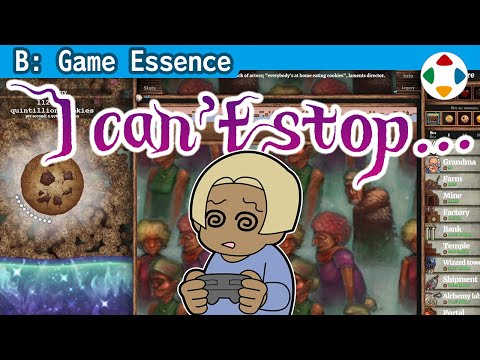
Making "Work" Games Fun [Game Essence]

YouTube
@evan I'm not trying to say that the existence of games proves there's a Creator, BTW. That said, I'll happily say that the existence of play in us looks intentional.

@evan "important" is relative, of course, but I said "yes" because play is an important part of any young mammal's development, and maybe other animals too. Also, enjoyment is an important part of anyone's life, young or old.

That said, I still have a hard time imagining a game as emotionally rich as a book or even a good movie. I don't see how it could be. Am I missing something?
@jamesmarshall @evan As a game enjoyer, I think the missing ingredient is how affecting interactivity can be. Games have the power to stretch the audience's perception of time in a way that other media are limited in, except highly interactive forms of experimental theatre, or LARPing, or communal storytelling experiences like tabletop games. Games have the advantage over the last two in that they're highly multimodal experiences as well, with the capacity for synchronised music and visuals in the manner of cinema.

Some concrete examples of my favourite moments:

In a very old game called Ys II, a villain announces that he's about to execute one of your companions, with a bell chiming some number of times before the execution takes place. It's only a short walk from where the villain makes the announcement to where the execution takes place, but every ringing of the bell stretches that time out in an agonising way that isn't available to passively watching a sequence. Hands on the controller, the experience of time stretching out is much more raw due to the contrast between agency and disempowerment.

In Ys VIII, there is a sequence where you climb a mountain that has been looming in your vision for some time now, to reunite with a friend who was been distant in time and space for some time now. Fighting your way to the top, you catch a glimpse of the ruins she's been sleeping in, before descending through a network of caves, the ruins dipping in and out of sight. Same sense of the elasticity of time again. The game's writing is clever too, as your other non-player character companions will remark on the journey and how they feel about meeting the waiting friend.

On the other side of things, there's a sequence in Final Fantasy XI where you have to traverse some repositories of memory that are breaking down and being unmade by a curse. Being immersed in a deeply reflective state as you wander broken down buildings, giant animal skeletons, a graveyard is a kind of very harrowing walking meditation. In this case time slows down and the subjective experience of the decay of time seeped into me in a way I haven't experienced from other media.

--

Another different example, the director Hideo Kojima is fascinated by the nexus of cinema, games, and their communal nature. The fact that games as a medium are capable of creating a shared, interactive experience of something filmic is really interesting.

Anyway, very long writeup, that's some of my take on how games are incredibly rich as a medium.
@sandriver @evan but can a game really give you the insight about life, love, humanity, philosophy, and whatever else a good book or movie can inspire in you? Can a game make you restructure the way you think about all those things, and bring the kind of wisdom that a well-written movie or book can? Can it take you through that kind of emotional experience? I'm not talking about action movies or special effects.
@jamesmarshall @evan absolutely! Why would there be anything inherent to the medium that should preclude that? Cinema has given us lay theologians like Tarkovsky and lay philosophers like Mamoru Oshii; games have attracted the likes of Tetsuya Takahashi who has brought spirituality and the philosophy of Erich Fromm to games, and cultivated a generation of writers drawing from his same inspirations as well as Bertolt Brecht. Yaeko Sato has written brilliant narratives about found family and pan-spiritual notions of repentance and love. Masato Kato is famous for his Balzac-light cast of thousands worldbuilding and richly interwoven narratives.

The high standard of writing in literature and theatre is just as present in games, just games facilitate unique experiences through their inherent capacity for real-time collaboration between audience members, and the unique nature of their interactivity.
@evan
We don't stop playing when we get old: we get old when we stop playing