#makeShitMonday, #meshtastic edition, in which we made #mesh #radio connections... in a #cave!!

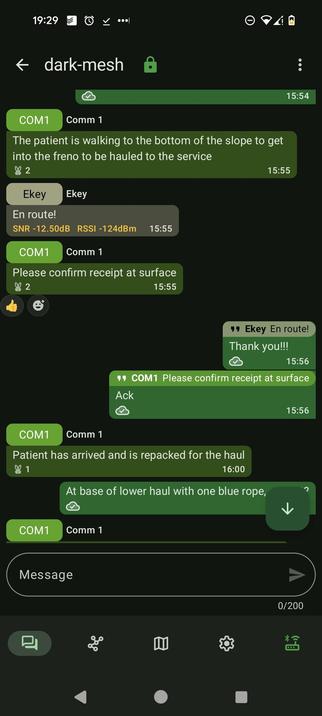
@mbroome and I just completed a weeklong vertical cave rescue certification course, complete with a full-day simulated rescue scenario at the end. Standard comms for cave rescue is over wired field phones - but for this one, we had mesh radios all the way down to one of the main caverns that needed vertical rigging for the rescue.

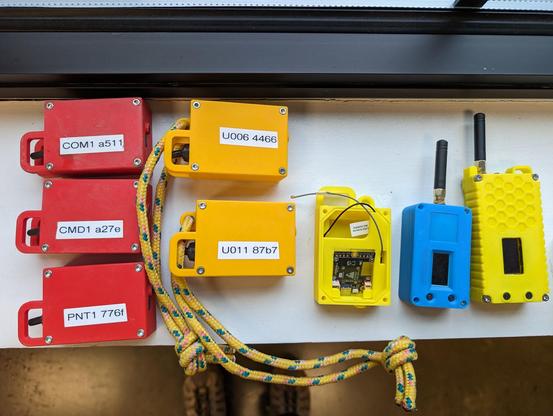
I was Entrance Control (tracks who goes in / out of the cave, relays comms from the cave to Incident Command on the surface) and had my new MeshPocket on their dark mesh, based on [Vangelis]( https://github.com/semper-ad-fundum/vangelis). @mbroome was on comms *in* the cave - and also had my little Muzi R1 mesh radio.

It's definitely not ready to be primary comms - the radios struggle with low-airspace passages and corkscrews - but it's pretty darn close! Need to add some wired bridges like [the Flamingo project](https://github.com/rbreesems/flamingo) - that project has a really [neat video](https://youtu.be/R3LtLcnrpAk) from a test in Tumbling Rock...

Mesh radio is definitely a new paradigm for cave rescue, and I think doing it in parallel with existing field-phone tech will need separate operators. I had a pretty comfy setup with a field phone to the cave in one ear and an FRS radio to Incident Command on the surface in the other - which was fine, they're both auditory processing and push-to-talk so the only challenge was making sure I pushed the right button each time. ๐Ÿ˜ Taking notes was additional cognitive load, and adding mesh comms (visual processing / type to talk) pushed it well beyond anything I could have tracked in a real emergency!

Which is great to know in advance, and I really do think that when this tech matures, it will make a solid replacement for the field phones and comms wire that's been used for the past several decades...
@cannibal

@llorenzin wow, interesting. since meshtastic is line-of-sight, it never even occurred to me to consider it for ... caves! @mbroome @cannibal

@jaythvv @mbroome @cannibal seriously!! I was really impressed with how well it worked. Obviously the nature of the cave will dictate difficulty / how many radios are needed - big booming passage will be a lot easier to span than mazes and duck-unders - but the general principal is surprisingly sound.

They had custom radios with rugged cases, tethers, and short antennae - very suitable for dropping / hanging along passage - and removed the hop limit, since it's really a straight-line comms channel, no worries about flooding. Other than that, it seemed to be pretty standard Meshtastic code - worked just fine with my consumer radios!

#MakeShitMonday, another #meshtastic edition...
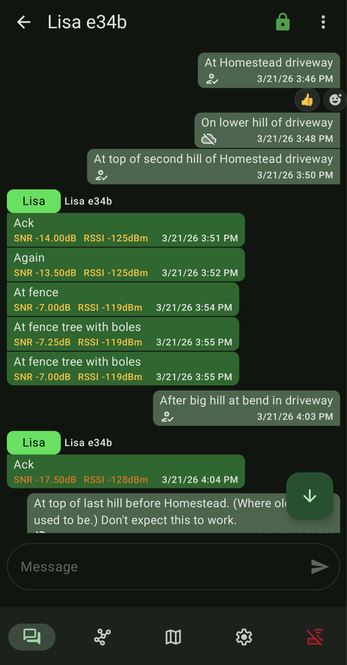
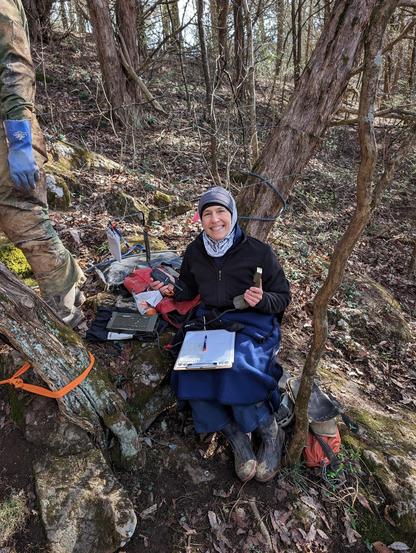
This past weekend, @llorenzin and I were in western Virginia at a get-together for a cave conservation society that we're members of, and we worked on making more #mesh connections. Rather than testing in-cave like L shared above, we were testing how far we could get LoRa signals to reach above ground to see if we can connect the different properties / preserves in the area that the society owns. This would be a big win, since the entire area is in the national radio quiet zone for the Green Bank Observatory, so there's no cell phone reception, and two of the three properties we're trying to link together don't have landline service.

We started with the two closest properties: about .5 miles apart as the crow flies, with a significant hill between the two. L stayed at the first site (and hiked around and up and down one of the hills), and I drove to the other site (and stopped at various places then hiked around and up and down one of the hills).

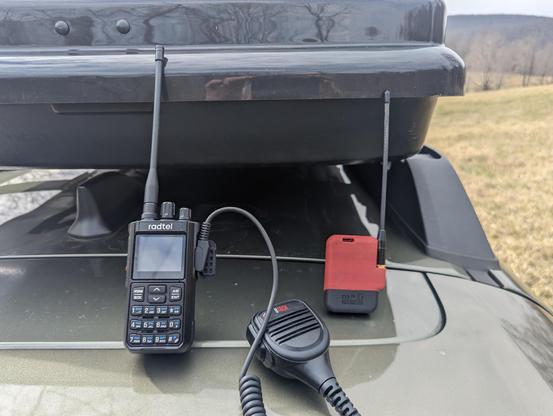
We were armed with a couple of mesh radios, and we also had #GMRS radios so we could be in voice communication in parallel to discuss the testing as the mesh messages worked and didn't work and coordinate our movements.

Overall, the connectivity between our two radios worked much better than I was expecting! We were able to get messages through at many - but not all - of the points we tested, and we have a good idea about where to put a couple of nodes up in trees to get good connectivity between those two properties. (I was also pleased that the GMRS radios didn't have any problem talking at any of the points we tested.)

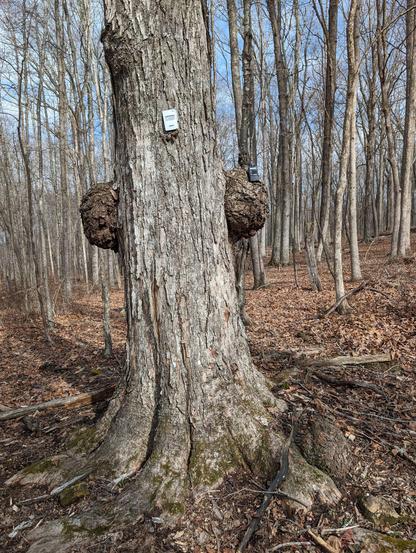
Next time we're in the area, we plan to do similar testing to see how best to connect in the other property. That one's a bit farther away so we'll probably need a bit more planning for where to position radios and may involve asking intermediate landowners whether we can put a radio on a hill in a tree.

@cannibal

@mbroome @llorenzin @cannibal
Wait, you're playing with radios in the NRQZ? Did you coordinate with them, as you're asked to do?

I mean, it's almost a certainty that LoRa would be acceptable, but GMRS?