Advertising accessible products.
I use this one (Envision Ally) as well, but I find this is not a real life demonstration to show how memes can be accessible.

How many people in the world, physically download and print a meme after receiving it?
I'm thinking of comics, graphic novels, this kind of software could be really helpful. But its validity must be shown in real life, even with discomfort. Not in previously created comfort zones.
I'm a product user, accessibility expert, Envision Ally beta-tester... and when I had to create a video for that app, I did it in real life. With a box I had in hand.
With all related mistakes it made.

https://www.youtube.com/shorts/OyVdqe3DFdE?is=CxTBMlD1CrB1BbMs

#accessibility #a11y #AllyEverywhere #advertisement #blind #communication #letsenvision
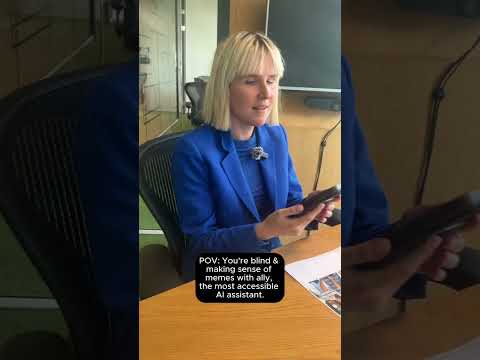
Memes if you’re blind? Ally makes it possible. #shorts

YouTube
@elettrona With respect, the point is to sell to the sighted public, who expect a certain thing, rather than to blind people, who know what they want. That's why the ads are like this.
@techsinger But this specific product is designed (mostly) for blind. So, everyone has their own scenarios. But when someone tells me "this product describes meme" I'd espect it to allow me to share the pic directly. The printing procedure is basically needless.
And, just to add some "spice", I'm not on Instagram, I'm on Fediverse. And where pics are not described by humans, I just open them and share them with... a COMPETITOR app which has the sharing extension enabled.
No, I'm not saying this app is useless, I'm the first one to test it and use it myself. But my duty is distinguish real from built scenarios.
@elettrona I'm sorry to contradict, I don't mean to do so bluntly, but products are not designed for the blind, or they very rarely are. The companies say they are designed for the blind, but they're actually designed for what a sighted designer thinks that sighted family and friends of blind people, or purchasers of products for governments, would find appealing. At best, they are designed for what one sighted designer finds appealing based on his own experience of a few blind people. There are, of course, exceptions, particularly in terms of software. Just for example, https://github.com/trypsynth/ and https://github.com/masonasons but these are exceptions. The rule is that you're appealing to your customer, and the customer isn't the blind guy, it's the person buying for the blind guy. That's what I see all the time, the vast majority of things have features I would never use, for example, and which I know nobody else who was blind would use, but which sound good when advertised to a sighted person because they sort of look like, to some extent, what sighted people do and how they interact with the world.
@techsinger We are many blind people testing these products, and yes, there are (too) many folks complaining. I mostly agree with you when talking about marketing "appealing"; working on inclusion and accessibility myself, I'd never suggest a single product. Explore... and decide...
