The problem those arguing for a 'revival' of Centerism have (this morning Phillip Collins/Observer) is that they draw centrism wide enough to draw in Blairs' Labour & Cameron's Tories.

If that's the liberal centre then its been in power for decades & got us to the stagnating, unequal, failing juncture we have reached.... why would anyone think they now have the answers (other than their feeling of entitlement to govern?) as the are worried less by Reform than the Greens?

#politics #democracy

@ChrisMayLA6

I was struck by this:

"In the 1950s about 70% of manual workers voted Labour and the same percentage of non-manual workers voted Conservative. Today, education and age both predict voting affiliation better than class."

It is an example, I think, of the myopia of centrist or 'liberal' thinking. It misses the point that the current association of education and age with political affiliation comes out of the expansion of higher education in the 60s and 70s, then the generational inequality perpetrated by the single-generation handout of neoliberal privatisation, that has produced a society in the UK (and to some extent elsewhere) in which lots of well-educated young people don't have any assets to fall back on - which is really what being working class means - rather than having a regional accent or liking chips, as 'liberals' would have it - and lots of older people living longer that are less well educated but have both assets and relatively generous pensions.

What is 'social class' supposed to mean if not the difference between having no choice but to keep working all hours for somebody else, or conversely receiving unearned asset income ?

But naturally 'centrists', 'liberals', whatever you call them, must never see this, because if they did they would have to admit the economic interests (in preserving the status-quo) that really lie behind their own supposedly a-historical 'ideas' and 'values'.

@GeofCox

Yes, a really good point... and as you say what centrists are (wilfully) blind to

@ChrisMayLA6 @GeofCox

I disagree

(Not with the assessment of how we got here, but with laying the blindness on "liberals)

Every liberal who calls for a #WealthTax (a lot of them) understand the dynamic you mentioned.

Now, "centrists" - yeah they are probably turning a blind eye.

@TCatInReality @ChrisMayLA6 @GeofCox Every liberal who calls for a wealth tax is ignoring the preponderance of evidence that they are largely ineffective in reducing inequality and raise little revenue. What is needed is higher taxes on unearned income and lower taxes on income derived from working

@rpluim @ChrisMayLA6 @GeofCox

As implemented, with lots of holes, sure the few #WealthTax have barely moved the needle.

And yes, let's tax unearned income more

But the real problem is not income. It's the vast hoards of wealth that underwrite loans and favors - and create an exploitive rentier culture.

Just look at Musk. He has little income (of any type) while sitting on historic wealth.

@TCatInReality @ChrisMayLA6 @GeofCox Whatever the solution to the Musk problem is, confiscation of people's legally acquired wealth cannot be the solution. Of course more investigation into how that wealth was gained might be.

@rpluim @ChrisMayLA6 @GeofCox

Sorry, are you saying a #WealthTax is "confiscation of people's legally acquired wealth"?

Because lots of places already tax property, cars and boats based on the value of the asset. So, I don't see why that same principle cannot extend to stocks, bonds, art, commodities and other sources of wealth storage.

And yes, of course, we need to look at how great wealth was accumulated and where it is being hidden.
#TaxTheRich

@TCatInReality @ChrisMayLA6 @GeofCox Taxing an object every year after it has been legally acquired because you don't like the type of object it is seems pretty confiscatory to me. Taxing it at purchase is fine.

Property taxes are different, they are intended to fund the provision of local services

@rpluim @ChrisMayLA6 @GeofCox

So, if we use a recurring annual wealth tax to fund public services (like property taxes do), then that must be OK too.

Let's do that.

@TCatInReality @ChrisMayLA6 @GeofCox That would be fine, if national taxes funded national spending, which they don't. Property taxes fund local spending, and local authorities don't have the same freedom to spend money into existence that governments have, so they have to make their books balance.

@rpluim @TCatInReality

This exchange raises many issues. The article argues that 'liberals' and 'centrists' are different terms for the same politics (but prefers 'liberals' as 'centrists' are merely defined by their position in the left-right spectrum. Actually, it's the other way round - the centre is merely the political expression of the status-quo, and it's this that creates the left-right spectrum). What particular policies the centre advocates are different in different times and places. The great European Enlightenment philosophers, like Locke and Voltaire, claimed as the progenitors of liberal democracy, and indeed the US Founding Fathers, were apologists for slavery. So it should not be surprising that in some times and places centrists/liberals support a wealth tax (as, incidentally, does the extreme right here in France).

Having said that, the idea that tax is needed to 'raise revenue' or 'fund services' is another aspect of the false 'household analogy' Chris and I have been discussing in another thread - https://climatejustice.social/@GeofCox/116272097415626100 - ie. it is a centrist conception of tax (which should rather be seen as a mechanism for removing money introduced into the economy by government when it's no longer in useful circulation - as defined by political aims - for example when and where it's accumulation is driving up asset values, whatever the assets may be).

@ChrisMayLA6

@GeofCox @TCatInReality @ChrisMayLA6 I reject the household analogy at the national level, but local taxes fund local spending in many countries, and thus the local books need to balance.

Wealth taxes are an example of what I call "management ideas", where the action is easy to describe "just take 1% of the wealth of people worth more than $x", but the implementation is very difficult, since establishing the value of property, art jewellery etc is both difficult and subjective.

@rpluim @GeofCox @ChrisMayLA6

I reject the notion that #WealthTax is too hard. It is made hard with opaque markets, tax shelters and lack of proper registries.

All can be resolved and any disputed valuations should be appealable (based on comparators)

It is only a question of political will. And saying "too hard" is defeatist.

@TCatInReality @GeofCox @ChrisMayLA6 It's not impossible to implement a wealth tax. It's just that the effort required is such that it would be much more productive to focus on reducing tax evasion and fair taxation of income from wealth. If you need an example, look at the ISF in France, which has existed in various forms for 40 years, has raised almost nothing, and is trivially avoidable if you're rich enough.
@rpluim @TCatInReality @GeofCox @ChrisMayLA6
TC, one exampleโ€ฆ say I bought a Rembrandt picture last year for $200 million. But now I claim that the provenance has been questionedโ€ฆ it might even be a modern fake. So in my tax return Iโ€™m valuing it at $20,000. How much time, money and court cases will it take to resolve this one example? Now multiply that by every asset I ownโ€ฆ

@KimSJ @rpluim @TCatInReality @GeofCox

Great example with Rembrandt... because as the current scholarly discussions around hi autograph works play out your wrk bought for $200m, having been rejected from his catalogue & now worth only $20k, might well find its way back into his autograph works & thus gain its value back... so very convenient to time the 'valuation' when the work is in doubt.... which underlines the point about the difficulty of valuation

@rpluim

In the UK at present it's true that council tax funds local expenditure, but this is not true in other countries and easily changed (as we see by the fact that newly created central government funding makes up varying proportions of that local expenditure in the UK too).

The difficulty of implementing wealth taxes is of course a live debate among tax experts, and Richard Murphy for example takes your view. I don't find it convincing - all assets are valued, for example on purchase, for insurance, when a notional value is needed for CGT/IHT, etc...

@TCatInReality @ChrisMayLA6

@GeofCox @TCatInReality @ChrisMayLA6 What's the value of a Picasso or a van Gogh? The only way to find out is to sell it. You can set a value on it when someone inherits it, but then what is it worth 50 years later? And if it turns out to be a fake, do you refund 50 years' worth of wealth taxes?

Taxing earnings is just easier to do, and much easier to justify and explain.

@rpluim @GeofCox @TCatInReality @ChrisMayLA6 Interesting you mention Picasso... https://www.addleshawgoddard.com/en/insights/insights-briefings/2024/finance/bringing-investment-creativity-art-world-art-securitisation-what-how-why/
So there's one answer: the tax value is the size of the loan a bank is willing to have secured by the asset.
Art Securitisation โ€“ what, how and why? | Addleshaw Goddard LLP

Sotheby's has launched a $500 million art-backed debt instrument, securitising loans against artworks valued at $2.85 billion, including pieces by Rembrandt, Warhol, and Picasso.

Addleshaw Goddard
@rpluim @GeofCox @TCatInReality @ChrisMayLA6 There's also the schadenfreude-maximising option: self-assessment, but with a wrinkle.
The owner submits a value, pays the tax as per that value: no muss, no fuss, no evidence needed.
The wrinkle: the tax body may buy the asset at the owner's stated value (or a little above, I won't quibble a wee bump to keep the taxman honest too); if you play silly buggers with the valuation you get exactly what you claim it's worth and society takes the rest.

@jimmynohands @rpluim @GeofCox @ChrisMayLA6

Love this creative thinking

@TCatInReality @jimmynohands @rpluim @GeofCox @ChrisMayLA6 interesting to think through how that might affect hoarded land and buildings.

There are lots of beautiful old buildings near me that are being left to rot. A lot of people (myself included) believe it's on purpose: after a certain point, it can't be maintained, but could be bulldozed and re-developed.

If registering it for tax purposes opened a route for bringing it into public ownership, they'd either risk lose it for a low price or volunteer extra tax for the privilege of hoarding it.

And if that tax is for local spending, then the local public win either way.

@jimmynohands @rpluim @GeofCox @ChrisMayLA6

Also... a great many of these assets are insured for ... Checking notes ...a determined value.

@rpluim @TCatInReality @ChrisMayLA6 @GeofCox
... In which we discover that "legally acquired" is as dodgy as hell and relies on evading the spirit of laws by hair splitting.
And "confiscation" can be lawful.
Is this moral argument or merely legal?
@Andii @TCatInReality @ChrisMayLA6 @GeofCox That's the kind of thing a trial would need to decide. In some jurisdictions "legally correct" but "non-compliant with the spirit" can still get you convicted (including the UK, I believe, when dealing with taxation)

@Andii @rpluim @ChrisMayLA6 @GeofCox

๐Ÿ’ฏ

No one *earns* a billion dollars

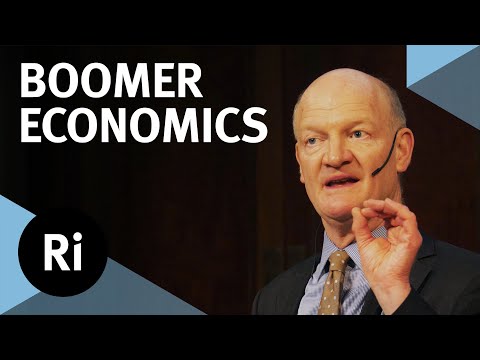
@ChrisMayLA6 @GeofCox where is that talk about how Boomers spent their children money.... I have it somewhere

@ChrisMayLA6 @GeofCox https://youtu.be/ZuXzvjBYW8A?is=9hfjXDLKZmDoTnkH

There. I don't fully agree with his solutions but the data is ... Compelling

Have the Boomers Pinched Their Childrenโ€™s Futures? - with Lord David Willetts

YouTube
@GeofCox @ChrisMayLA6 Or, to paraphase: centrist ideology is inherently right-wing/conservative, they just fooled themselves into thinking they're representative of the workers.

@cstross

It's inherently conservative and often close to the right - and when politics polarises will generally side with the right - but whereas the centre doesn't really want change, is broadly content with existing relations of power and wealth, the right does want change - albeit often to go back to a less liberal real or imagined past when women, black people, etc, 'knew their place'.

@ChrisMayLA6

@GeofCox @cstross

And its that broad satisfaction which I think marks out centrists most clearly, especially when they have little interest in how the current settlement actually was established

@GeofCox
Ah.. But something I've run into continuously with my own parents' aspirational politics: if they constrain "class" to not really exist, then it doesn't and they can conveniently ignore any discussion using that language.

Any discussion of socialism immediately stops when you mention classes. They insist classes don't exist in the US, therefore this entire discussion is factually incorrect, and a waste of time.

It won't matter if you point out their embrace of the Epstein class as "peers" politically. (Aspirational politics) They just won't see it.

It won't matter if you point out our family interactions with the American justice system as white privilege; that we had to interact at all proves to them that there's no privilege.

#Blinders or #LeadPoisoning ? IDK.

@ChrisMayLA6 @cstross

@nolsen311

Among the shibboleths of liberalism/centrism are such ideas as 'equality before the law', equality of opportunity', etc - but without some basic economic equality these are meaningless (if, for example, you can pay for the best lawyers, or private tutors for your kids). It's precisely the same double-think that enabled the Founding Fathers to say 'all men [sic] are created equal' and own slaves - liberalism/centrism must exclude the economic realm - and as Chris points out in another thread of this discussion, must exclude history, or the origins of wealth and privilege - just as it must not extend 'liberal democracy' to the insides of its businesses.

But the denial that social class exists in the US I think relates to two main threads in its history: its foundational assertion of equality as a counter to the royalty/aristocratic class differences of feudalism (in favour of capitalist class differences), and the long disguise of class by race, immigration, etc, in what is really still a post-colonial society.

@ChrisMayLA6 @cstross

"... the generational inequality perpetrated by the single-generation handout of neoliberal privatisation..."

It's amazing how invisible this is to most people, but selling off the public assets accumulated by previous generations to pay for current expenses really warped the political landscape.

Add in burning through our inherited environmental 'assets' and it's no wonder the young are depressed, furious or both.

@GeofCox @ChrisMayLA6