My spouse bought me "Irish fairy tales and folklore" by W.B. Yeats for my birthday.
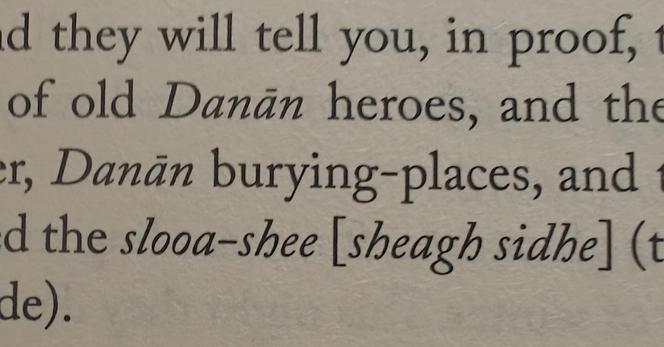
And as a neophyte Gaeilgeoir, I'm confused on page 1

Sheagh sídhe

They provide a pronunciation of slooa-shee. Where does the L come from? Wikipedia says Yeats was from Dublin with childhood trips to Sligo. Abair pronunciations for all 4 dialects they currently support don't give me an L sound there (or my hearing is too poor to catch it) https://abair.ie/synthesis?text=agus%20sheagh%20s%C3%ADdhe%20&dialect=Connemara&gender=female {Agus included in the text as the initial word can be clipped}

Typo or a pronunciation rule I have not learned or already forgotten?

GRMA
#Gaeilge
@billinkc I think Yeats confused two different phrases. In modern spelling, an slua sí = the fairy host. I don't recognise "sheagh".
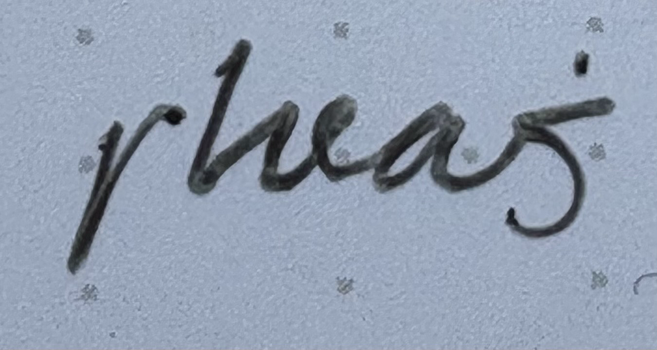
@mhwombat @billinkc I wonder was it transcribed in error from ambiguous handwriting.
@billinkc I checked Dinneen, and I still can't figure out "sheagh" in this context. Anxiously waiting to find out from na daoine líofa: What's "sheagh" when it's at home?

@mhwombat two additional data points. It seems the title I have is special to the publisher. The original was "Fairy and Folk Tales of the Irish Peasantry" which is in Gutenberg but they also have the sheagh as slooa so not a screw up specific to a modern printing

https://www.gutenberg.org/cache/epub/33887/pg33887-images.html

At any rate, thanks for at least confirming "it's not just me"

Fairy and Folk Tales of the Irish Peasantry

@billinkc it's an anglicised version of slua sí (as it's spelled in modern irish)

sidhe is an older/obsolete spelling of sí (and sluagh is an older spelling of slua)

but it looks to me like sheagh is another anglicisation / another attempt to show how sí is pronounced, since the s in sheagh would be slender & pronounced differently to the broad s in slua 🤷