Both the United States and Israel were shaped by political systems built alongside racial hierarchy and contested citizenship.

Each proclaimed democratic ideals while simultaneously managing populations excluded from the full promise of those ideals.

They are both profoundly unfree and racially riven societies..

That shared history matters.

1/14

#iran #history #histodons #israel #blackmastodon

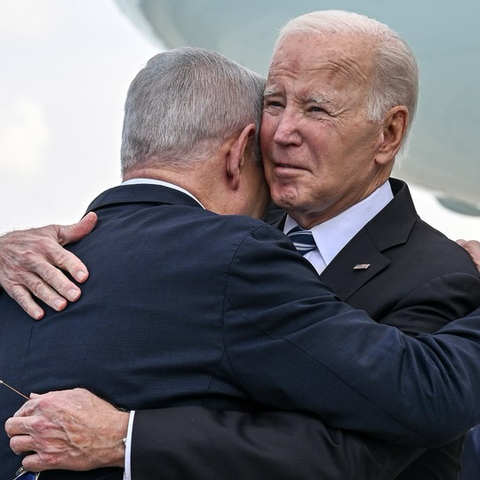
Image: Benjamin Netanyahu hugs Joe Biden at Ben Guirion Airport on October 18, 2023. AFP.

The United States declared universal liberty in 1776 while sustaining a massive system of racial slavery.

After emancipation, the system reorganized itself through Jim Crow—disenfranchisement, segregation, and racial terror.

For nearly a century, American democracy functioned fully for some citizens and only partially for others.

2/14

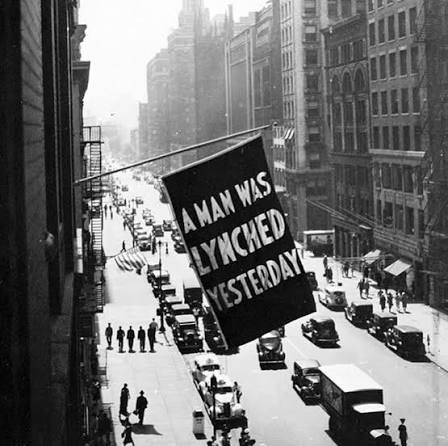
Image: Each time word of a lynching reached the NAACP, a simple, somber flag flew outside the group’s offices at 69 Fifth Avenue in NYC. (Library of Congress).

Israel’s political structure emerged from a different history but a similarly unresolved conflict over land and sovereignty.

The creation of Israel in 1948 produced a Jewish national state alongside the displacement of hundreds of thousands of Palestinians.

Today Israelis and Palestinians live on the same land under profoundly unequal legal and political systems.

3/14

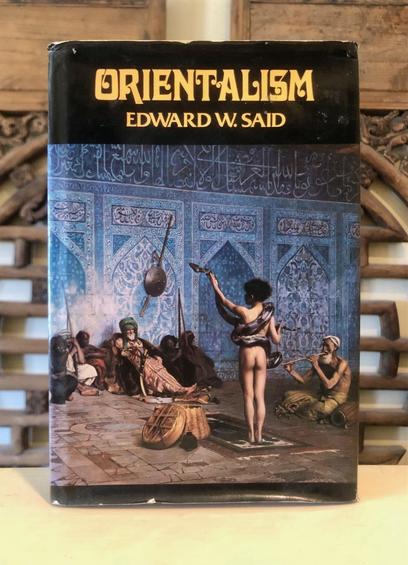
Image: Cover of the 1st edition, showing part of The Snake Charmer by Jean-Léon Gérôme, Clark Art Institute.

In both societies, the language of democracy operates beside enduring structures of hierarchy.

Those shared contradictions shape how each country understands security, territory, and political control.

That parallel history does not fully explain the alliance.

But it helps explain why the two states often recognize themselves in one another.
it.

4/14

Video: Ex-Marine Brian McGinnis is removed as he shouts, “No one wants to fight for Israel.” USA Today.

https://youtu.be/tN-aTVkI5W0?si=vzVpgvZa-EkYs1tIA

Marine gets arm broken amid Iran war protest as police, Senator Tim Sheehy eject him from hearing

YouTube

Intellectual Map

Coates, Ta-Nehisi. Between the World and Me. New York: Spiegel & Grau, 2015.

Coates, Ta-Nehisi. The Message. New York: One World, 2024.

Coates, Ta-Nehisi. We Were Eight Years in Power: An American Tragedy. New York: One World, 2017.

5/14

More Resources

Eberly, Keaton, and Rodney Overton. “ ‘Brian Is Finally Home’: Raleigh Man Injured During Senate Hearing Protest Released from Hospital.” CBS17, March 9, 2026. https://www.cbs17.com/news/local-news/wake-county-news/brian-is-finally-home-raleigh-man-injured-during-senate-hearing-protest-released-from-hospital/amp/.

Erakat, Noura. Justice for Some: Law and the Question of Palestine. Stanford, CA: Stanford University Press, 2019.

Falk, Richard. Palestine’s Horizon: Toward a Just Peace. London: Pluto Press, 2017.

6/14

‘Brian is finally home’: Raleigh man injured during Senate hearing protest released from hospital

RALEIGH, N.C. (WNCN) – A Raleigh firefighter and former U.S. Marine who broke his arm while being removed by police from a congressional hearing last week has been released from the hospital. Video…

CBS17.com

Still More Resources

Finkelstein, Norman G. Gaza: An Inquest into Its Martyrdom. Oakland: University of California Press, 2018.

Finkelstein, Norman G. Image and Reality of the Israel-Palestine Conflict. London: Verso, 1995.

Gorenberg, Gershom. The Accidental Empire: Israel and the Birth of the Settlements, 1967–1977. New York: Times Books, 2006.

Hall, Stuart. "The West and the Rest: Discourse and Power." In Essential Essays (Vol. 2, pp. 185-224). Duke University Press, 1992.

7/14

And More

Khalidi, Rashid. Brokers of Deceit: How the U.S. Has Undermined Peace in the Middle East. Boston: Beacon Press, 2013.

Khalidi, Rashid. The Hundred Years’ War on Palestine: A History of Settler Colonialism and Resistance, 1917–2017. New York: Metropolitan Books, 2020.

Khalidi, Rashid. The Iron Cage: The Story of the Palestinian Struggle for Statehood. Boston: Beacon Press, 2006.

8/14

Still More

Khalidi, Rashid. Palestinian Identity: The Construction of Modern National Consciousness. New York: Columbia University Press, 1998.

Lowe, Lisa. The Intimacies of Four Continents. Durham, NC: Duke University Press, 2015.

Makdisi, Saree. Palestine Inside Out: An Everyday Occupation. New York: W. W. Norton, 2008.

Mearsheimer, John J. The Tragedy of Great Power Politics. New York: W. W. Norton, 2001.

9/14

And still more

Mearsheimer, John J., and Sebastian Rosato. How States Think: The Rationality of Foreign Policy. New Haven, CT: Yale University Press, 2023.

Mearsheimer, John J., and Stephen M. Walt. The Israel Lobby and U.S. Foreign Policy. New York: Farrar, Straus and Giroux, 2007.

Mitchell, Timothy. Carbon Democracy: Political Power in the Age of Oil. London: Verso, 2011.

10/14

More than that

Mitchell, Timothy. Colonising Egypt. Cambridge: Cambridge University Press, 1988.

Morris, Benny. The Birth of the Palestinian Refugee Problem, 1947–1949. Cambridge: Cambridge University Press, 1988.

Morris, Benny. 1948: A History of the First Arab-Israeli War. New Haven, CT: Yale University Press, 2008.

Pappé, Ilan. A History of Modern Palestine: One Land, Two Peoples. Cambridge: Cambridge University Press, 2006.

11/14

Not finished yet

Pappé, Ilan. The Ethnic Cleansing of Palestine. Oxford: Oneworld Publications, 2006.

Pappé, Ilan. The Idea of Israel: A History of Power and Knowledge. London: Verso, 2014.

Pappé, Ilan. Ten Myths About Israel. London: Verso, 2017.

Said, Edward W. Covering Islam: How the Media and the Experts Determine How We See the Rest of the World. New York: Pantheon Books, 1981.

12/14

Still not finished

Said, Edward W. Culture and Imperialism. New York: Alfred A. Knopf, 1993.

Said, Edward W. Orientalism. New York: Pantheon Books, 1979.

Said, Edward W. The Question of Palestine. New York: Vintage Books, 1979.

Shlaim, Avi. Collusion Across the Jordan: King Abdullah, the Zionist Movement, and the Partition of Palestine. New York: Columbia University Press, 1988.

13/14

Finally finished

Shlaim, Avi. The Iron Wall: Israel and the Arab World. New York: W. W. Norton, 1999.

Veracini, Lorenzo. Settler Colonialism: A Theoretical Overview. New York: Palgrave Macmillan, 2010.

Wolfe, Patrick. Settler Colonialism and the Transformation of Anthropology: The Politics and Poetics of an Ethnographic Event. London: Continuum, 1999.

14/14

@Deglassco Thank you for listing all of these resources. This is a stellar list and immensely helpful.
@courtcan No, thank you. I’m glad it helped.

@Deglassco

Thank you for your scholarship. This reference list is great in content and structure

Dr Glassco,

Thank you for this, as for all your threads. They are so illuminating.

Some time ago I asked you to include alternate text on the images you publish.

I'd just like to say that I love the approach you take now, posting context in the post itself and detail of what the image looks like in the alt text.

It's brilliant, and I appreciate that you make that effort.

I thank you for that, for your scholarship, and for sharing your knowledge.

@Deglassco

@Deglassco

I'm going to strike a dissenting note and suggest that this two part perspective on the theory of settler colonialism might be worthy of consideration:

https://thirdnarrative.org/unsettling-ideology-a-deep-dive-into-settler-colonialism-part-i/

'Unsettling Ideology': A deep dive into Settler Colonialism, Part I - The Third Narrative

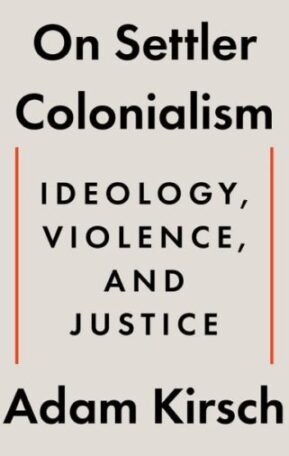
With the permission of the Jewish Review of Books, TTN is posting in two parts, "Unsettling Ideology," Michael Walzer's review of Adam Kirsch's book, "On Settler Colonialism," published in its Fall 2024 issue, beginning here.

The Third Narrative
@Deglassco These countries are not unique in this regard. One could say of Nigeria, India, the Democratic Republic of the Congo, and Rwanda (just to name a few) that “each proclaimed democratic ideals while simultaneously managing populations excluded from the full promise of those ideals.” In all of these societies, “the language of democracy operates beside enduring structures of hierarchy.” In Nigeria it's the Hausa over the Fulani, Yoruba, and Igbo. (1/2)
In India, it's Hindus over Muslims. In Congo, it's Bantu over Kongo, Luba, and Mongo. In Rwanda, it's Tutsi over Hutu, except when it's Hutu over Tutsi. As with the countries you mentioned, “those shared contradictions shape how each county understands security, territory and political control.” (2/2)
@Spacehistory And all these countries have the same thing in common: a history of colonialism.
@blueorchestra All of these countries have the same thing in common: they are made up of humans. I cited these specific countries because they were all founded as pluralistic, democratic nations (which fit with the narrative of the original post). I could’ve picked Germany, I could’ve picked Argentina, I certainly could’ve picked Japan. I could have picked Australia. I could go on.
@Spacehistory @blueorchestra At the moment the United States and Israel are engaged in a conflict that is being framed almost entirely in terms of security—threats, deterrence, stability, defense. But that language sits on top of something deeper. In both cases, ideas about security have long been shaped by how each state has dealt with populations marked as different, subordinate, or outside the full bounds of political belonging.
@Spacehistory @blueorchestra
The point isn’t that every country has inequality. Of course they do. The question is what kind of inequality gets built into how the state actually works. I’m pointing to something specific here: that both developed through expansion and control of land while managing groups of people who weren’t given full political rights—and those distinctions were not just political, but racialized over time.
@Spacehistory @blueorchestra When those kinds of divisions are built into the foundation of a state, they don’t just fade away. They shape how threats are defined, whose lives are prioritized, and how force is justified. Security becomes tied not just to defending borders, but to maintaining a particular social and political order.
@Spacehistory @blueorchestra That’s why the comparison matters. It helps explain why the language of security carries so much weight—and why it often obscures the deeper structures of inequality that continue to shape policy and perception in both countries.
@Deglassco @blueorchestra No one is going to change anyone’s mind here. This is two historians of American civil rights arguing. I will say this: 1. Only by looking outside of one’s paradigm can anything close to an objective analysis be given in this case. There is no question that the United States has been expansion. There is considerable debate over whether Israel has been. 2. (1/2)
To me, this “Two worst countries in the world” narrative is narrow minded and (by lumping in Israel), more than a little bit racist. (2/2)
@Spacehistory Israel is not an expansionist state? Have you seen the west bank or Lebanon recently? How many other countries have a minister of settlements? Which of the countries you mentioned actively steal land from other populations and put them under apartheid? These are the two worst countries in the world, not only because they are among the most racist, but because they are also extremely powerful to get away with genocide. There is nothing racist about that.

@Spacehistory @Deglassco @blueorchestra I don’t know how you can argue that Israel has not been expansionist. There was no “Israeli” population in Israel prior to its founding. It would be hard to find a current Israeli family that was living in Palestine prior to the 1930s. The borders have, during my lifetime, expanded frequently, and are in the process of doing so again.

Your second point is horrific. Leaving aside the issue of conflating political entity with ethnicity, which is, rightly, seen as racist, you accuse a scholar of racism of being racist. This, sir, is what is meant by white privilege. This is not two historians disagreeing. This is raw naked racism in action. Yours.

I know Dr Glassco does not need and probably will not welcome my response. Her silence is more dignified than my outrage. I hope, though, that you will reflect on what you have written here, and either try to be more sensitive to a history of oppression, or more openly proclaim your own allegiance to the same brand of white supremacy that occupies the White House.

@Tattered 1. Yes, because the history of that region began in 1930. I cannot begin to educate you on this history, because you are always right. So we’ll leave it there. You’re right. That’s what you wanted me to say, right? So I’ll say it. You’re right. You’re always right. 2. I am also a scholar of racism. Please don’t lecture me.

@Spacehistory I made no claim to always being right.

1930 was, as you know, an arbitrary date, indicating that the Israeli state is not a continuous occupation by a people. Supporting their ancestral right to a historical homeland is the same as supporting their ancestral removal of the US government and placing the modern state in indigenous hands. This would, no doubt, be an improvement, but hardly fair to the other ethnicities present on the landmass if they suddenly found themselves to be a disenfranchised and subjugated people.

Your work on Black history just makes me more disappointed that you cannot see the wrongness in the second of your original points.

@Deglassco @blueorchestra The Chinese and Israeli Embassies are right next to each other on Van Ness St. in DC. When the Chinese emptied out Xinjiang of Uyghurs and replaced them with Han Chinese, I didn’t see one protester out front chanting. That’s also why comparison matters.

@Spacehistory @Deglassco Probably because Xinjiang wasn't "emptied of Uyghurs".

The genocide narrative is a hoax. Xinjiang is open to tourists; no one visiting the region has found any evidence of extermination because there is nothing to find.

Actual Uyghurs living in China will tell you it's not true. Please don't spread disinformation.

@Spacehistory @Deglassco only one country is talking sbout exterminating a whole population it's called israel

@Deglassco

That shared understanding of how to exercise social control is very important for people living in the US to understand.

The American political and business classes are foursquare behind the Gaza genocide because it is the dry run for their plan for America. Yes, Schumer. Yes Newsom. They genuinely don't understand why people are angry.

@Deglassco
We need to do that, for folks getting murdered by the prison industrial complex, which would include Ice.