
The wild "Starshot" project was conceived to design a probe that could reach Proxima Centauri in about 20 years.

Although project has gone dormant, it has yielded a lot of new ideas (many not widely shared, alas) about how to build a viable interstellar probe.

https://www.centauri-dreams.org/2026/03/10/starshot-is-a-success-part-ii/ #space #science #technology
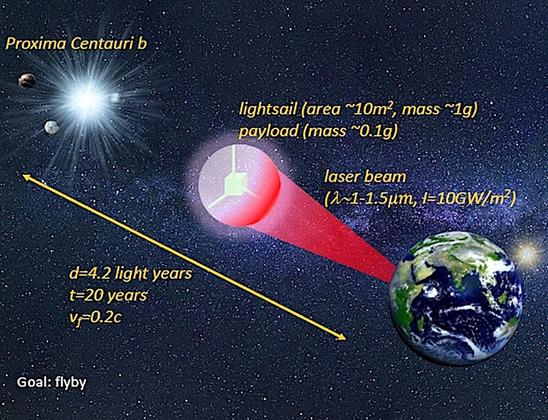
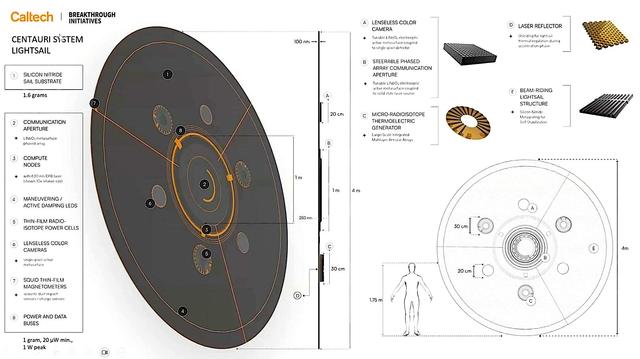
This summary of the Starshot project by one of its team leaders is a bit defensive. But it's a fascinating peek into the minds of the engineers who deeply, passionately wanted to be able to send a spacecraft to another star within their lifetime.

https://www.centauri-dreams.org/2026/03/03/starshot-is-a-success-part-i/ #science #astronomy #space #tech

@coreyspowell The technologies alluded to in that graphic are so speculative! "Thin-film radioisotope generators?" Wouldn't that be neat...

@coreyspowell @jpshoer

Probably the idea there is some kind of betavoltaics, which is a thing. You can get betavoltaics powered RTC modules for ultra high long term reliability applications.

@datenwolf @coreyspowell Must be something like that. From the physics, making it a thin film seems like it would be much less efficient...how much that matters depends on the power budget. There are other techs that still seem aspirational to me, like communications.

@datenwolf @coreyspowell @jpshoer

Betavoltaics are limited in minimum effective size by the absorption cross-section of the electrons.

Just like RTGs are limited in minimum effective size by the absorption cross-section of the alphas.

Extremely thin films do not work either way: Either the electrons are not absorbed and the energy is lost; or the alphas are not absorbed, the energy is lost, and things never get hot enough for a thermal generator to work.