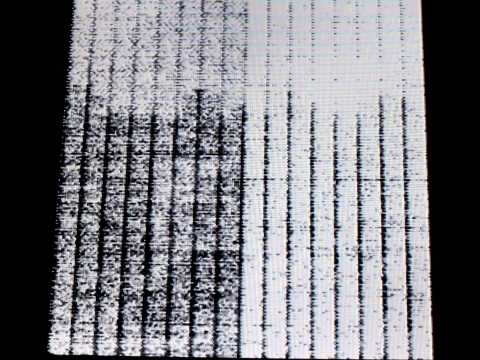
Graphically visualizing the erasure of a 16kbit #EPROM with a UV source in 16 seconds!

This time lapse shows all of the bits being flipped from 0 to 1 over about a 24 minute period. The first bit flips at 8 minutes.

What's fascinating to me is the bits "twinkle" as they flip back and forth before settling.

#RetroComputing #TimeLapse

@paulrickards Almost has a bit of a feel of Conway's Game of Life to it somehow. But with extra fading.
@billgoats Yeah it's really interesting! Like an office building might look at closing time.
@paulrickards Isn't that an upholstery fabric swatch from a '79 Mazda RX-7?
@paulrickards 24 minutes? - I'm sure it used to take us hours. (But I don't remember the part number.)
@paulrickards I like how those columns take a little longer to clear. Is there an obstruction above them on the die?
@astraleureka Yeah, it's curious isn't it? No obstruction that I'm introducing. It's possible that my mapping of the bits visually aren't a match for the bits physically on the die.
@paulrickards I was thinking, maybe read lines for rows of bits?

@paulrickards @astraleureka This is really nice, but I do share your suspicions that the bits may be mapped incorrectly. Do you have the original data for interested people with too much time on their hands?

(The nearest I've done is DRAM decay curves -https://arbitrary.name/blog/all/simm.html - but because reads are destructive it's hard to generate this kind of data set.)

Simon Frankau's blog

@paulrickards @astraleureka i theorize that there is some obstruction of the light by a common electric conductor running along the surface or between
@paulrickards It's an analog process. Like I told our EE kids, the CSE kids think they're the shit, but it's analog all the turtles down
@paulrickards very cool, I wonder what causes the column portions to take longer to fade out, could it be an obstruction causing less UV light to reach it or is it something to do with how the die of the chip is designed?
@Draconic_NEO @paulrickards my guess would be variation in the threshold voltage of the gates responsible for reading the columns.
@Slartybartfast @Draconic_NEO I’m also curious if the twinkling effect could be in part due to simultaneously reading an EPROM (powered in circuit) while exposed to UV light. Testing that would require more effort.
@Slartybartfast @Draconic_NEO @paulrickards
I'd suspect that where the chip was on the wafer would cause variations in the tolerances.
I believe when CPUs are fabricated the different speeds are often a factor of their position on the wafer.
@paulrickards The twinkling will be due to noise. As others have said - digital circuits are just analogue circuits in disguise 😉

@paulrickards does it always take this long to erase them? What UV source is being used?

Also were all the bits flipped to 0 at first? What happens if some were 1 already, would they stay that way or would they flip again?

@colinstu All good questions! It took a little longer because the UV erasing cabinet was taken apart to accommodate the EPROM reader height. Normally it’s a little quicker because it’s closer to the chip (about 15 mins).

Yes, I wrote all zeros to it first. If the bit was already a 1, no change would occur with the UV light.

@paulrickards very interesting! I guess that’s why not every chip has its little window covered after the final product was shipped. Was told about the risks as a kid but hadn’t realized that even in perfect conditions it takes some time for even one cell to flip.

Also do all UV erasers cause them to flip to 1? Or is that up to how the die was produced/designed?

@colinstu I’ve seen some that are years old without a sticker and they seem fine but it’s best practice to cover the window (and label the contents).

All UV EPROMs I’ve encountered are 1 is blank and 0 is programmed but it’s conceivable there exists chips that are the other way around. Adding to the variety, programming these involve lots of variables like timing and higher voltages.

@paulrickards That reminds me of someone hqving msde a camera with an eprom years ago. Slow as fuck, of course, but still funny.
@Nixie @paulrickards There's a faster way involving a DRAM. Micron even made a chip called the OpticRAM which exploited the technique. Crazy tech but still the forerunner of modern CMOS imagers.
@paulrickards lol, I thought a bit was stuck. It was a spec of dirt on my screen
@paulrickards I see stuff like this and think "You could treat a UV EPROM as a photographic plate and take UV pictures with it. Program all zeros, use a lens to focus the scene on the array, then a UV flash lamp. Finally read out the state of the EPROM and reconstruct the image. Possible? Who knows.

@ChuckMcManis @paulrickards

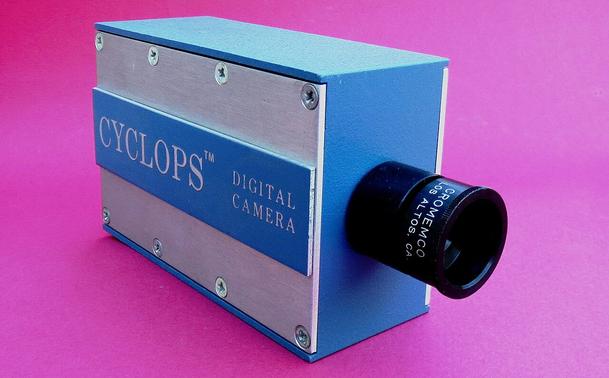
quite possible I'd assume. One of the first commercial digital cameras had a crude image sensor made from a decapped DRAM

https://en.wikipedia.org/wiki/Cromemco_Cyclops

Cromemco Cyclops - Wikipedia

@gloriouscow @paulrickards

I still have some decapped DRAM chips I got when the BYTE article on this dropped. A 64 x 64 monochrome picture was interesting but not great.

@paulrickards I didn't know that could be so satisfying to watch! 💕

@paulrickards Oh, that brings back memories. I did the same thing about a decade ago - https://www.youtube.com/watch?v=eafhFs-ZOgs

Did not expect the twinkling either.

What happens when you expose a memory chip to UV?

YouTube
@theartlav Cool! Interesting to see the same basic patterns emerging with the solid vertical lines being the last to flip.
@paulrickards would be fun to use this to make photos
@paulrickards I find it fascinating that structures appear in the image during the erasing process. I speculate that those are caused by metal routing layers partially shadowing the memory array underneath them, such that the shadowed bit cells erase more slowly. It seems as if you used the EPROM's memory array as an image sensor to capture low resolution images of its own metal routing layers! 💚
@paulrickards hah, I was just reading about Dov Frohman’s invention in a Gordon Moore biography this morning!
@paulrickards very cool! I’d try this with my UV eraser (a toothbrush sanitiser), but it’s so powerful, it erases the EPROM in under 30 seconds.