If you want to understand the underlying reason that the Govt. (in the person of David Lammy) wants to restrict trial by jury, don't take the claims it will resolve the courts backlog too seriously (even Lammy admits it will have only a small effect over time), look at what juries often do.... which is not just take prosecutors claims at face value!

Yup, they're unreliable in the exercise of political repression & so need to be removed!
#politics #protest #TrialByJury

https://www.bbc.co.uk/news/articles/c5yrlpem3d4o

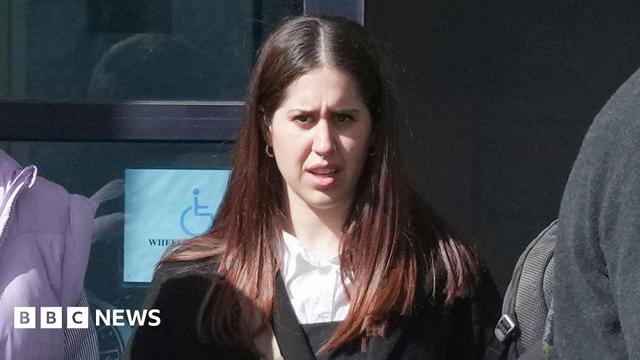
Jury fails to decide if former University of Sussex student supported Hamas

Hanin Barghouthi was accused of supporting the proscribed organisation during a speech in Brighton.

BBC News
@ChrisMayLA6 Isn't the critical question what serves justice best? Do lay people have a tendency to wrongfully acquit people who should be sentenced, and to sentence people who should be acquitted? Surely, it must be possible to find some data on this, Professor May?

@tor

Ha ha, the problem is the comparison is itself loaded... whose to say when a wrongful acquittal happens; of course the state can appeal (and sometimes does), but to say a jury gets it wrong is to assume some privileged access to judicial truth - in an advocacy system like the UK's common law legal system that is at best unlikely & for the most part impossible.

There are (some vey high profile) miscarriages of justice but even then the 'truth' takes year to be surfaced.

@ChrisMayLA6 Right, so then there are some known miscarriages, and one could go in and study those to see the votes of the various judges and jury members? Since Norway abolished the jury system a few years ago, there is strong reasons to believe that such studies exist. It isn't likely that such a momentous decision would be made without reliable data. Sociologists tend not to abandon the concept of data alltogether?

@tor

yes, there is clearly a method, although it would need to be a long-term qualitative driven analytical project to ascertain (more) reliable data. Of course the distinction between common law systems (as in the UK) and civil law systems across the rest of Europe & Scandinavia, with a very different role for the judiciary, which also makes drawing comparisons difficult

@ChrisMayLA6 @tor From a completely anecdotal point of view, I don't recall a documentary where the jury was the problem, it's always new evidence, poor investigation, mistakes in defence, misleading or unchallenged expert opinion and so on.

@Murf @tor

The jury becomes a 'problem' when it doesn't deliver the verdict the prosecution (and by extension the state) wanted

@ChrisMayLA6 oh I can see that point alright @tor