 David Ho
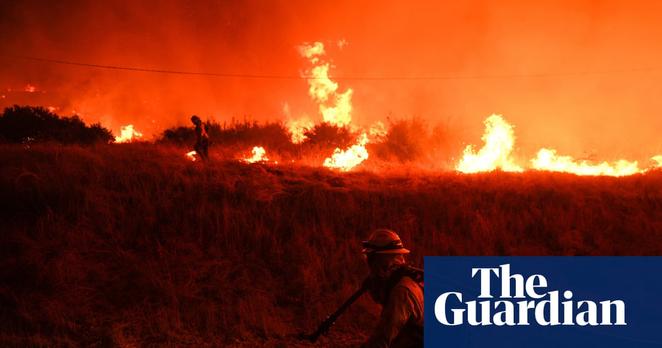
It doesn’t matter whether the rate of global warming is increasing. It’ll never cease to amaze me that people don’t care that it’s happening at all. It should be the most alarming thing ever.
 Jonathan Schofield
@davidho people do care.
But we’re in a learned helplessness predicament https://overcast.fm/+BTumV_9HOY
A Guide to Staying Human (Part 1): Desperately Seeking Agency | Frankly 129 — The Great Simplification with Nate Hagens
In this week’s Frankly, Nate begins a new series called “Staying Human,” which focuses on what he sees as a precondition for everything else: recovering a sense of personal agency. He opens against the backdrop of Operation Epic Fury and the broader turbulence of 2026, but rather than offering geopolitical analysis, he turns inward toward a question that has been reshaping his theory of change: why does growing awareness of the more-than-human predicament so often produce paralysis rather than action? Nate traces the gap between awareness and agency through several layers. He draws on the science of learned helplessness and self-efficacy research to explain how nervous systems learn whether effort leads to outcomes, and how a digital environment designed to fragment attention can train people to stop investing in their own follow-through. He frames this not as a personal failing but as a predictable consequence of living inside a Superorganism that advertises choice while eroding the conditions for it.…
@davidho
…an extract from that link:
1/4
“We are asked to care deeply about outcomes that we have almost no leverage over, and at the same time, the information age is amplifying our awareness of things faster than our collective capacity to intervene and act. But here’s the thing, when awareness grows and agency does not, a sort of paralysis sets in, and that gap produces cynicism and shame and something that feels close to moral injury. People sense the magnitude of our predicament and…
@davidho
2/4
…“they also sense their smallness inside of it. And then they feel, wrongly in my opinion, that their inability to change it is some sort of a personal defect. Guilt and shame and resignation show up and when shame takes hold, people often respond by signaling purity or becoming overly certain and dogmatic, or by withdrawing entirely. People’s nervous systems learn that action is costly and exposure is risky, so people can end up being hyper aware and immobilized at the same time…
3/4
…“and at the macro level, that combination makes us easier to steer because it keeps people in reaction mode instead of proactive mode.
I increasingly think that many of us now live in a kind of soft feudalism. Yeah, we have comfort and convenience and entertainment and abundance of choice in the narrow consumer sense…
4/4
…“At the same time, there are walls and gates around us built out of institutions and incentives, ownership patterns, and the hard physics of a globally interconnected energy-intensive way of life. And those walls in an Orwellian sense we call freedoms in our culture, but for those paying attention, they increasingly look like prison gates. The feeling that nothing we can do makes a difference, is increasingly one of the biggest hurdles we face.”
A Guide to Staying Human (Part 1): Desperately Seeking Agency | Frankly 129 — The Great Simplification with Nate Hagens
In this week’s Frankly, Nate begins a new series called “Staying Human,” which focuses on what he sees as a precondition for everything else: recovering a sense of personal agency. He opens against the backdrop of Operation Epic Fury and the broader turbulence of 2026, but rather than offering geopolitical analysis, he turns inward toward a question that has been reshaping his theory of change: why does growing awareness of the more-than-human predicament so often produce paralysis rather than action? Nate traces the gap between awareness and agency through several layers. He draws on the science of learned helplessness and self-efficacy research to explain how nervous systems learn whether effort leads to outcomes, and how a digital environment designed to fragment attention can train people to stop investing in their own follow-through. He frames this not as a personal failing but as a predictable consequence of living inside a Superorganism that advertises choice while eroding the conditions for it.…