Smackyroon
"China is AuThORItAriAN!" - Liberals

Authoritarian is a meaningless pejorative.
The social credit score isn’t real.
Re: authoritarianism— your opinion.
Some of us aren’t in favour of oppressive regimes that aren’t transparent, surveil, and censor.
Well in the comment I said that you didn’t explain why I was wrong and simply resorted to making a string of ad hominems.
So I’ll reiterate: ad hominem, ad hominem, ad hominem.
I am done arguing across the thread so I am just going to deal with all your bullshit in one go here.
You keep repeating the word “authoritarian” as if it is a self-evident argument, but it is not. It is a vague political insult that Western political discourse applies to states it dislikes and almost never applies to itself. Every state exercises authority: it enforces laws, maintains internal security, regulates media to some extent, surveils threats, and suppresses movements it considers destabilizing. The United States conducts mass digital surveillance, criminalizes whistleblowers, historically infiltrated and destroyed political movements through programs like COINTELPRO, and imprisons more people than any country in the world. Yet it is rarely labeled “authoritarian” by the same commentators who apply the term to China reflexively. That should already tell you the term is being used ideologically rather than analytically. If every state exercises authority, then calling one “authoritarian” without specifying material structures of power, governance mechanisms, or outcomes is just moralizing rhetoric.
The same applies to your claim that China is “fascist,” which is not merely wrong but demonstrates that you do not understand what fascism actually is. Fascism historically emerges in advanced capitalist societies during severe economic crisis when sections of the ruling class mobilize a violent ultra-nationalist movement to crush organized labor and socialist movements in order to preserve capitalist property relations. It is defined by the fusion of corporate and state power, preservation of monopoly capital, destruction of socialist parties and unions, and expansionist militarism. China does not fit this model in any meaningful way. Its political system is led by a communist party whose legitimacy rests on long-term development planning, massive poverty reduction, public infrastructure investment, and a large state-owned economic sector. Private capital exists, but it does not politically dominate the state the way corporate capital dominates Western liberal democracies. You may dislike that system, but lazily labeling it “fascist” simply shows that you are throwing around historical terminology you clearly have not studied.
Your argument about Xinjiang relies on the same pattern: confident assertions built almost entirely on a narrow ecosystem of ideological sources. The modern “Uyghur genocide” narrative traces heavily back to Adrian Zenz, a far-right evangelical researcher who openly states his religious mission is to destroy communism. His methodology (guesswork extrapolated from administrative statistics and speculation about buildings seen in satellite images) has been widely criticized by scholars across multiple fields. Meanwhile, international delegations, journalists, and diplomats have visited Xinjiang repeatedly over the past several years. The Organization of Islamic Cooperation publicly acknowledged China’s efforts in addressing extremism and safeguarding Muslim citizens rather than declaring a genocide. Dozens of Muslim-majority governments have taken similar positions. If a genocide were genuinely occurring, it would be extraordinary for the major international organization representing Muslim states to refuse to recognize it.
Satellite imagery itself proves almost nothing. Images of buildings do not magically become “concentration camps” simply because a Western think tank says so. Every country has prisons, schools, training centers, and administrative facilities. Converting “there are buildings” into “therefore genocide” requires layers of speculation that are rarely demonstrated. The testimonies most widely promoted in Western media frequently come from individuals affiliated with political organizations advocating regime change, such as the World Uyghur Congress. Some prominent figures cited as witnesses have direct institutional connections to U.S. security agencies. That does not automatically invalidate testimony, but it absolutely means the claims require scrutiny rather than blind acceptance because they align with Western geopolitical narratives.
You also dismiss Chinese public opinion entirely because it comes from Chinese institutions. That is not analysis; it is simply prejudice dressed up as skepticism. Multiple long-term studies, including research conducted by Harvard’s Ash Center, have consistently found extremely high satisfaction with the Chinese central government across decades of rapid development. Hundreds of millions of people have experienced massive improvements in living standards, infrastructure, healthcare access, and poverty reduction. China eliminated extreme poverty on a scale unprecedented in human history. These material outcomes are a major reason the government maintains broad legitimacy domestically. Pretending that 1.4 billion people must all be brainwashed or terrified because their views contradict Western narratives says more about your worldview than about China.
Your claims about censorship suffer from the same lack of nuance. China regulates its information space, particularly around political organization and extremist ideology. That is true. But the idea that Chinese society exists in total informational darkness is nonsense. Hundreds of millions of people use Chinese social media platforms every day where public debates, criticism of local officials, policy complaints, and social controversies are common. Domestic media frequently exposes corruption and administrative failures. The system is designed to prevent destabilizing political mobilization and separatist extremism while still allowing broad social discussion. Again, you can disagree with that model, but describing it as total censorship shows you are repeating talking points rather than observing how the system actually operates.
Your repeated insistence that your position cannot possibly contain racist assumptions also misses the point. Criticism of any state is legitimate. What becomes chauvinistic is the underlying assumption that Chinese people are incapable of forming genuine political opinions and must therefore be either brainwashed or coerced if they express support for their own government. That assumption appears constantly in Western commentary about China. When someone dismisses the perspectives of an entire population while elevating a handful of exile activists as the only “real voices,” it reflects a colonial pattern of thinking whether you want to admit it or not.
More broadly, your arguments show a familiar pattern: start with a predetermined conclusion that China must be oppressive, then accept any claim that supports that belief while dismissing contradictory evidence as propaganda. That is not critical thinking; it is ideological confirmation bias. Real analysis requires examining sources, incentives, and historical context rather than repeating whatever narrative is most popular in Western media cycles.
So the issue here is not that criticism of China is forbidden. The issue is that the criticisms you are presenting rely on vague labels, historically illiterate misuse of terms like “fascism,” contested evidence promoted by politically motivated actors, and a reflexive dismissal of the perspectives of the Chinese population itself. That is not a serious argument. It is a collection of slogans and assumptions repeated with confidence but very little understanding.
Self-evident? No, I gave reasons.
I have elaborated and expanded upon my reasoning for the things I said and could continue doing so against what you said, but something tells me you’d respond the same way with some wild reframing of what I say that’s misrepresentive and it’s not really something I’m interested in.
That’s a convenient way to exit the discussion after repeatedly asserting things you never actually substantiated. You say you “gave reasons,” but what you mostly did was repeat a set of political labels (“authoritarian,” “fascist,” “genocide”) and then treat those labels as if they were arguments. When those terms were challenged, instead of defining them or engaging with the structural points being raised, you simply repeated them and shifted to saying you could elaborate “if you wanted to.” That isn’t an explanation; it’s a rhetorical placeholder.
For example, you called China fascist but never addressed what fascism historically refers to: a specific political formation that emerged in capitalist societies to protect monopoly capital by destroying socialist movements and organized labor. If you think that definition applies to China, then you should be able to explain how a state led by a communist party, with a large state-owned sector and long-term developmental planning, fits that model. Simply asserting the label without engaging with what the term actually means is not an argument.
The same pattern appeared with Xinjiang. When the sources behind the genocide narrative were questioned, including the methodological problems with the research that popularized those claims and the fact that organizations such as the Organization of Islamic Cooperation have not endorsed the genocide accusation, you didn’t actually address those points. Instead you returned to repeating that there is “geographic evidence” and “testimonies,” without explaining how satellite images of buildings or politically connected exile testimonies demonstrate genocide as defined under international law.
You also avoided the broader point about how the term “authoritarian” is used. Every state exercises authority through law enforcement, surveillance, media regulation, and political constraints. The meaningful question is how those powers are structured, what social outcomes they produce, and who ultimately holds political influence. Simply calling one country “authoritarian” while treating others with similar mechanisms as “free” is not analysis unless you actually define the criteria being used and apply them consistently.
Now you’re suggesting the discussion is pointless because you assume your arguments will be “reframed.” But nothing that was addressed required reframing, only clarification. If someone challenges the meaning of the terms you’re using and asks you to substantiate your claims with consistent definitions and evidence, that is what debate actually is. Declaring in advance that engagement would be misrepresentation is just another way of avoiding the substance of the discussion.
If you genuinely believe your claims are well-supported, the solution is simple: define the terms you are using, explain the evidence that supports them, and address the counterpoints directly. Saying you could do that but would rather not does not strengthen your position; it just makes it clear that repeating accusations was easier than defending them.
“No investigation, no right to speak”
The direct statements I’ve made are directly against that. You’re arguing in bad faith if you’re going to put words in my mouth for me and insist I said what I didn’t.
I can have a discussion about the present without focusing on the past or future. Saying that it is metaphysics is a non-sequitur. Not everything has to be viewed historically.
I haven’t much evidence for the claim: “In China, the working classses control the state”
sure you will say that is my western bias from living with china bad propaganda, but you could actually provide something to me read on topic if possible
Sure!
The Chinese political system is based on whole-process people’s democracy, a form of consultative democracy. The local government is directly elected, and then these governments elect people to higher rungs, meaning any candidate at the top level must have worked their way up from the bottom and directly proved themselves. Moreover, the economy in the PRC is socialist, with public ownership as the principle aspect of the economy. Combining this consultative, ground-up democracy with top-down economic planning is the key to China’s success.
I highly recommend Roland Boer’s Socialism in Power: On the History and Theory of Socialist Governance. Socialist democracy has been imperfect, but has gone through a number of changes and adaptations over the years as we’ve learned more from testing theory to practice. Boer goes over the history behind socialist democracy in this textbook.
The working classes in socialist countries are the ones dictating the state and its direction.
You can debate whether the system works well, but it isn’t accurate to say there’s no evidence for the claim that the working classes play a central role in the Chinese state.
China’s constitution explicitly defines the PRC as a socialist state “led by the working class and based on the alliance of workers and peasants,” with state power exercised through the National People’s Congress (NPC) system. The NPC is the highest organ of state power, with nearly 3,000 deputies drawn from provinces, the PLA, and different social sectors.
The makeup of the NPC is not just party bureaucrats or business elites. In the 14th NPC there are hundreds of deputies from workers and farmers and large numbers of grassroots representatives, along with 442 ethnic minority deputies covering all 55 minority groups. Most deputies in China’s people’s congress system (about 95%) serve at the county and township level, which are directly elected and involve hundreds of millions of voters. Higher congresses are elected from these lower levels. This structure is what China calls “whole-process people’s democracy.” Sources explaining the system include CGTN’s Who runs the CPC and the State Council white paper China: Democracy That Works.
You can also look at how the state treats capital. China has private capital, but it is clearly subordinated to state goals. When Jack Ma tried to push an aggressive fintech model through Ant Group that would massively expand lightly regulated consumer credit, regulators halted the IPO and forced restructuring under stricter oversight. That is a case of disciplining capital when it conflicts with social stability and the broader economy.
Likewise, China has pursued policies like eliminating extreme poverty and building massive infrastructure networks (including projects that are not monetarily profitable) because they are treated as long-term public development goals. That kind of large-scale, socially oriented investment is difficult to sustain in systems where private capital dominates the state.
So you can disagree with the Chinese model, but there is actually a large amount of Chinese material explaining how their system is supposed to function and why they claim it represents working-class political power.
There is no genocide of Uyghurs. Uyghur genocide atrocity propaganda akin to claiming that there’s “white genocide” in South Africa, Christian genocide in Nigeria, or that Hamas sexually assaulted babies in Operation Al-Aqsa Flood.
In the case of Xinjiang, the area is crucial in the Belt and Road Initiative, so the west backed sepratist groups in order to destabilize the region. China responded with vocational programs and de-radicalization efforts, which the west then twisted into claims of “genocide.” Nevermind that the west responds to seperatism with mass violence, and thus re-education programs focused on rehabilitation are far more humane, the tool was used both for outright violence by the west into a useful narrative to feed its own citizens.
The best and most comprehensive resource I have seen so far is Qiao Collective’s Xinjiang: A Resource and Report Compilation. Qiao Collective is explicitly pro-PRC, but this is an extremely comprehensive write-up of the entire background of the events, the timeline of reports, and real and fake claims.
I also recommend reading the UN report as well as (especially) China’s response to it, which eclipses it in size and detail.These are the most relevant accusations and responses without delving into straight up fantasy like Adrian Zenz, Christian nationalist and professional propagandist for the Victims of Communism Foundation, does. Zenz’ work has been thoroughly discredited, yet is supported by western media for its utility in fearmongering. An example is lying about 8.7% of new IUDs as 80%, to back up claims of “forced sterilization,” from this chart:
Tourists do go to Xinjiang all the time as well. You can watch videos like this one on YouTube, though it obviously isn’t going to be a comprehensive view of a complex situation like this. Has there been mistreatment? Almost certainly to some degree, in a campaign as large as this. Is it genocide, be it cultural or outright? No, Uyghur culture is preserved and there are no mass killings.

Western governments have levied false allegations of genocide and slavery in Xinjiang Uyghur Autonomous Region. A closer look makes clear that the politicization of China’s anti-terrorism policies in Xinjiang is another front of the U.S.-led hybrid war on China.
ushmm.org/…/report-eight-years-on-chinas-repressi…
uhrp.org/uhrp-united-nations-tracker/
hrw.org/…/china-unrelenting-crimes-against-humani…
theguardian.com/…/china-uyghur-muslims-xinjiang-m…
www.bbc.com/news/world-asia-62744522
Shall i go on? Your propaganda wont work.
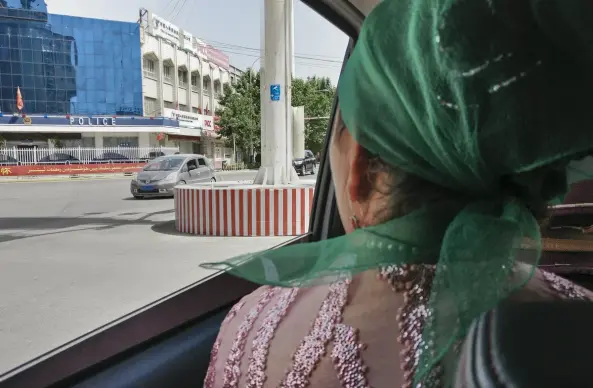
The report seeks to improve our collective understanding of China’s ongoing repressive policies in the predominantly Uyghur province of Xinjiang in western China. It finds that, given the available information, all of the policies that led to accusations of mass atrocities continue, and some are expanding.
Funny how you immediately thought genocide
www.ushmm.org/genocide-prevention/…
You’re not a serious person.
Yes i only linked the BBC, right?
Imagine being you and spending your time defending this. Do you genuinely believe your own nonsense or are you afraid of getting sent to a re-education camp too?
 Yliaster
 QinShiHuangsShlong
 Cowbee [he/they]
 davel
davel ZeroHora