 S★m V★rm★
RE: https://fosstodon.org/@samvarma/116196836374395901
You know what... reply with album covers that changed your life
Let's go #GenX
RE: https://fosstodon.org/@samvarma/116196836374395901
You know what... reply with album covers that changed your life
Let's go #GenX

@samvarma
I still haven’t cracked open Dream Theater. I remember seeing them do a cover of Highway Star and I was really impressed but also didn’t understand the “why.”
@NigelTufnel
I was a keyboard player before I took up guitar and bass, so players like Emerson, Wakeman, and Banks loomed large for me. (Though Vangelis loomed larger: see above re: weirdo). I find a lot of old Genesis very twee, but there’s an early live album that is pretty great. Phil Collins could be mistaken for a thrash drummer at a couple points.
@samvarma @NigelTufnel @geoffduncan
This is my main issue with IEMs. I hate them because it almost guarantees that the band is using backing tracks from the album and won’t likely deviate from the album performance.
I want every live performance to feel unique. Ephemeral. You had to be there.
That’s where the value in live performance comes from.
If I want to listen to the album, I prefer to do that comfortably at home without distractions.
@neverbeaten @samvarma @NigelTufnel
Agreed with others: IEMs and backing tracks are different things. Saying EIMs virtually guarantee a band is using backing tracks is like saying bands that use drum risers have terrible sax players. :) There are instances where that is true, but it's not a strong correlation and it's definitely not causation.
I've been part of one act that used backing tracks in places—we also had to play in sync to film. (Ever wanted to play the music for old Warner Bros cartoons live? It was like that.) No IEMs, all stage wedges. My IEM use has all been to support silent (or near-silent) stages—where we use them the same way we'd use on-stage monitors—or special cases like theater productions were a singer could be on a balcony 50m from the band with no sight line.
@neverbeaten @samvarma @NigelTufnel @geoffduncan
Almost everyone wearing in ear monitors is doing so for a private monitor mix and flexible movement on stage. And that’s it. A drummer -might- get a click. If it’s a dance act, it might be backing tracks.
Are there genres where the audience doesn’t care? Probably.
Well, in ears are also good for voiding monitor wedge feedback.
In the early days of wireless mics, etc, wireless was really good at picking up police radio calls.
@Chancerubbage
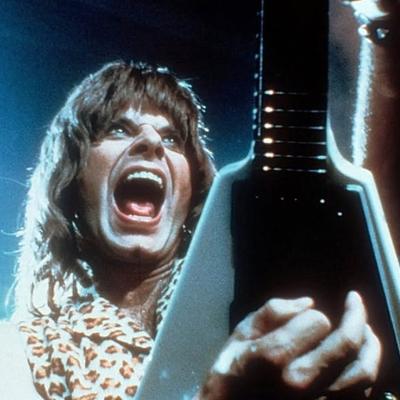
So I learned from Spinal Tap!
The feedback point is good, although on a couple occasions I’ve wanted to get feedback on a silent stage and…welp.
These days there are automated EQs that will notch out monitor feedback as it happens these days.
In ears solved the problem sooner than digital mixers without a sound guy did
Oh, the spinal tap thing was real. Actually, all you needed sometimes to pick up police radio was an unshielded cable
 Geoff Duncan
 NigelTufnel
 neverbeaten
 Ryan Hyde 🇺🇦🏳️⚧️🇵🇸
 Chancerubbage