 Ian.Burnette
 Omar Antolín
There is much truth to this post about about #math textbooks.

@WooShell @oantolin I remembered this article giving a horrifying insight into the American textbook process. Especially the quote "The books are done and we still don't have an author! I must sign someone today!" (The 'author' probably wrote no more than the introduction.)
Found it again and oh wow, it's more than 20 years old. It was fresh in my memory.
Still, here's how things were done in 2004 and I can't imagine it's got any better.
"My assignment was to reduce a stack of pages 17 inches high, supplied by 40 writers, to a 3-inch stack that would sound as if it had all come from one source. The original text was just ore. A few of the original words survived, I suppose, but no whole sentences.
To avoid the unwelcome appearance of originality at this stage, editors send their writers voluminous guidelines. I am one of these writers, and this summer I wrote a ten-page story for a reading program. The guideline for the assignment, delivered to me in a three-ring binder, was 300 pages long."
Don't forget: Everyone ignores the title and just calls it a cutesy nickname based on the author's name, like "Baby Rudin", means this book is probably already on your shelf.
This applies to electronics textbooks as well
@oantolin one of the best textbooks I ever read was Calculus Made Easy
It is 116 years old
It still slaps
Our edition is available here:
https://www.gutenberg.org/ebooks/33283
My old Young & Freedman from undergraduate is holding up one end of my wife's electronic piano and Boas & Stroud is holding up the other end.
@passenger @oantolin Young and Freedman has gone the way of the 300 euro book.
These days you can usually find a good open source alternative no reason to fund academic publishing
@DrSaucy @oantolin - no, they were never that expensive before. The astronomical prices started after digitalization.
In fact, the prices were in the low to mid double digits because that fit with the general cost of education, which was much lower. We went on strike when tuition aka "semester fee" was introduced - 50€ at the time, later deemed unconstitutional and repealed.
@oantolin the 300 euro book will also have no solutions, just final answers to selected exercises. there is a solutions manual (with solutions to selected exercises) but you can only buy it if you are a teacher.
The answer numbers also change by edition to make sure it is an absolute pain to use if you buy the book and the solutions second hand of different editions
I still have my Mathematical Logic and Set Theory textbook from almost 50 years ago - handwritten by the professor, W.W. Tait, xeroxed, and handed out chapter by chapter in the class.
Cover? Certainly not! I hand-wrote my own cover/table of contents on the binders I put them into.
Absolutely the best.
@oantolin Harro Heuser, Analysis. Really thorough and well-structured math textbook. Still was too stupid or not interested enough at the time, grade 2.7 (German grades - 1.0 is the best, 4.0 is narrowly passing) in the exam. But that's not the author's fault.
On the other hand, never really got warm with Albrecht Beutelspacher, Lineare Algebra. Quite short, but maybe that's part of the problem.
@oantolin My favorite math book:
Plain light green cover:
"Advanced Calculus"
Author Nickerson.
1959
Just looked it up: New edition available for Kindle, and someone is selling (replica) first editions, leather bound, for ages 10 and up. [for all those 10 year olds who've had a year of calculus and now want to study calculus on manifolds]. From the description of possible defects due to "age", I'm pretty sure it's one of the companies that gets a book, cuts of the binding, and feeds it into a copier: but now you can get your copy bound in "leather".
@oantolin And Dover Editions! "This is a permanent book".
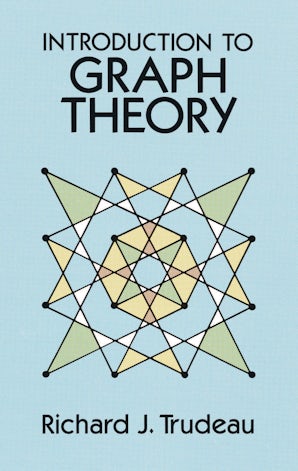
Just picked one off the shelf -- Introduction to Graph Theory -- it falls open about 3/4 of the way through where the four-color theorem is introduced.
*I've* never gotten that far in that book. Treats in store!
Are you referring to _Introduction to Graph Theory_ by Richard J. Trudeau (https://store.doverpublications.com/products/9780486318660)? If so, do you recommend it?
I've been wanting to learn graph theory for a while, and this seems like it could be a good place to start.
 Sarah Sammis
 TheMagicalC
 WooShell
 Robin Adams
 Moriel 🏳️⚧️
 Igigog
 clang-enby
 0xC0DEC0DE07EA
 La Guiri
 Elizabeth

 Elisabeth M
 Blake C. Stacey
 varx/social
 RAK
RAK Project Gutenberg
 Pwassonchat the enby catboy
 CrazyDogLadySezPEACE
 StarkRG
 Emily_S
 Passenger
 iainbertram
 lizzzzard
 Peter Brett
 Ann T. Phở
 Axel Hartmann
 don
don clew
clew Ross Duncan

 enfa
enfa
 Amy
Amy aburka 🫣
 Kevin Boyd (he/him) 🇨🇦
 Moos-a-dee 🫎
 Virginicus
 draNgNon
 Todd Knarr
 chinmay 🐋
 Clifton Royston
 tessarakt
 Analog AI
 /usr/local/goth @ home
 Alex Hedges